
Livraison le jour même ou le lendemain

Qualité garantie

Débloquez vos offres de bienvenue: Livraison GRATUITE | Jusqu'à -80 % | 30 jours d'essai gratuits à JoyPlus
Téléchargez l'application
Choosing a new interior light fixture can transform a room, but the process can quickly become a headache. Between appealing designs and confusing technical sheets, it's easy to end up with a purchase you immediately regret. Poorly planned lighting ruins the atmosphere, not to mention the risks associated with a bad technical choice. This guide is here to help you avoid the pitfalls and focus on the essentials to make the right choice.
Before you pull out your credit card, let's review the most common mistakes that are costly in both time and money.
To get a clearer picture, focus on these three fundamental criteria. They will ensure your choice is relevant and long-lasting.
Every room has its own needs. Kitchen lighting must be functional and powerful over the worktop, while a living room chandelier is primarily about creating atmosphere.
The choice of materials isn't just a matter of looks: it also determines how the light is diffused.
On the technical sheet, two indicators should be examined closely:
To move from theory to practice, here are a few models that perfectly illustrate these criteria, adapted to different needs and preferences.
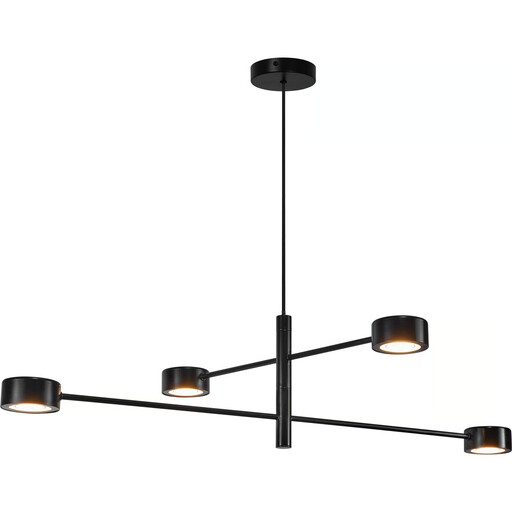
The user profile: Ideal for those seeking a lighting solution that is both modern and high-performance for a kitchen island or a large table. Its linear and clean design doesn't clutter the visual space while providing powerful and adjustable lighting.
This model doesn't sacrifice function for aesthetics. Its Moodmaker feature allows you to vary the intensity in three levels from a standard switch. No more spectacular but rigid designs!
Integrated LED with a 3-step dimmer. Its adjustable arms allow you to direct the light precisely where it's needed.
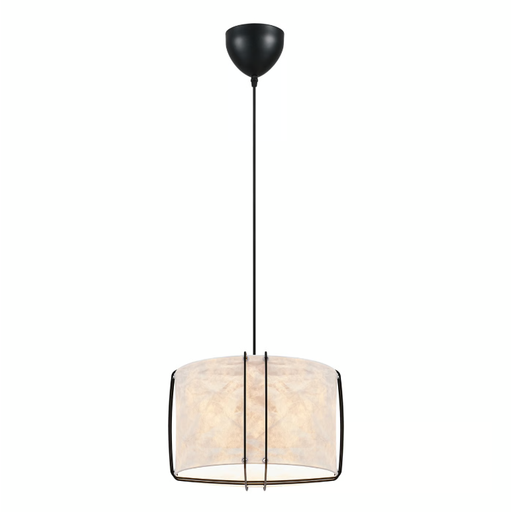
The user profile: Perfect for anyone wanting to create a soft and soothing atmosphere in a living room or bedroom. Its textured paper lampshade fits right in with the Japandi style trend, a successful marriage of Scandinavian minimalism and Japanese Zen spirit.
Here, design serves the light. The paper lampshade was designed to diffuse a pleasant and uniform brightness, without glare or unsightly cast shadows—a typical flaw of purely decorative fixtures.
Creates a bubble of soft, diffused light. Its organic and clean design blends effortlessly into contemporary interiors.
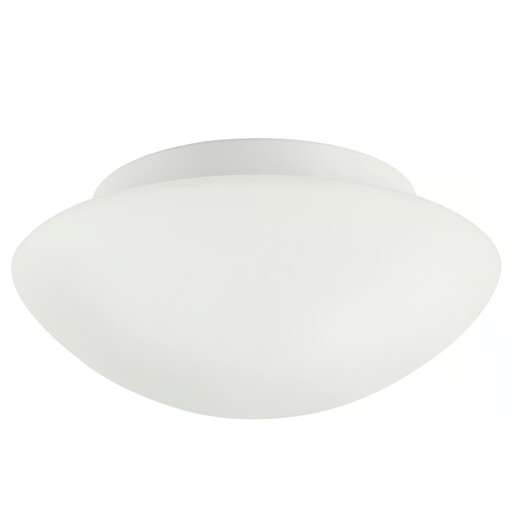
The user profile: The simple, safe, and effective solution for wet rooms (bathroom, toilet) or the laundry room. Its versatile design and flexibility (ceiling or wall mounting) make it a smart choice for technical and high-traffic areas.
With its IP44 rating, this ceiling light ticks the most important safety box: resistance to humidity. It guarantees peace of mind and durability where it matters most.
IP44 rating, the standard for wet rooms. Maximum versatility: can be installed on the wall or ceiling. Compatible with E27 bulbs, including "dimmable" models.
Discover our full selection of light fixtures that meet our quality criteria and the strictest safety standards.
1. What's the difference between lumens and kelvins for an LED?Lumens (lm) measure light intensity: the higher the number, the brighter the bulb. Kelvins (K), on the other hand, indicate the colour temperature. In short: a low number (around 2700?K) produces a warm, yellowish light, perfect for a cosy atmosphere. A high number (4000?K and above) produces a whiter, more neutral light, ideal for concentrating in a kitchen or office.
2. Can a pendant light be installed on any ceiling? In theory, yes, but caution is advised. Two things to check: the weight of the fixture and the type of your ceiling. On a concrete ceiling, there's no problem. On plasterboard (like drywall), using expansion anchors (like Molly bolts) is essential to support the load. Some models require a hook, others a mounting plate. In any case, the best practice is to carefully read the installation manual.
3. How do I choose the right size fixture for my living room? Here's a pro tip for a rough estimate: add the length and width of the room (in metres), then multiply the total by 8. This will give you an approximate diameter in centimetres for your pendant light. For example, for a 5?m x 4?m living room: (5 + 4) x 8 = 72?cm. This is a good starting point. Don't forget the ceiling height: with a standard height of 2.50?m, allow at least 2.10?m between the floor and the lowest point of the fixture to ensure it doesn't obstruct movement.