
Livraison le jour même ou le lendemain

Qualité garantie

Débloquez vos offres de bienvenue: Livraison GRATUITE | Jusqu'à -80 % | 30 jours d'essai gratuits à JoyPlus
Téléchargez l'application
Between laundry, washing-up, floors and kitchen surfaces, home cleaning and laundry products can quickly eat into your household budget. To avoid buying the wrong items, it’s worth looking beyond the scent, the colour of the bottle or a vague promise of effectiveness.
Three mistakes crop up time and again:
To compare a liquid laundry detergent, laundry capsules or powder detergent, start by checking the number of washes stated on the pack. A 1.8-litre bottle designed for 40 washes can’t be directly compared to a 3.15-litre format advertised for 70 washes.
The cost per cycle is simple to work out:
Price of product ÷ number of washes stated = approximate cost per wash
Dosage also plays a part. A heavily soiled load, hard water or a full drum can all affect the recommended amount. Follow the manufacturer’s instructions rather than automatically adding more detergent.
Large-format household products, such as a 5-litre concentrated cleaner or a professional laundry detergent, are most worthwhile for large families, holiday lets, associations and organisations that use the same product regularly.
A cold-wash laundry detergent can be a good choice if your usual programmes run at 20°C or 30°C. Some products in this selection work with several fabrics and temperatures, but the garment label should always be your guide.
Capsules give you a pre-set dose, while liquid detergent makes it easier to adjust the amount. For hand washing, choose a product designed for that purpose. A powder like GENIE SANS FROTTER must be dissolved in water and handled with the right protection – its product sheet includes hazard warnings.
Never put a capsule in the detergent drawer if the instructions say it should be placed at the bottom of the drum. Also, keep them in a dry place out of reach of children.
An all-purpose cleaner is handy for everyday cleaning, but sensitive materials need a bit more thought. To clean a screen, for example, spray the product onto a cloth rather than directly onto the device.
For floors, choose a formula suited to the flooring. A solution intended for a robot mop must be diluted according to the appliance manufacturer’s instructions. The ECOVACS DEEBOT liquid, for instance, specifies a standard dilution of 1:200 and advises against using any household product not designed for its system.
A disinfectant cleaner shouldn’t be used like a simple degreaser. References to standards such as EN 13697, EN 1650 or EN 14476 must be understood alongside the conditions of use, the contact time and any rinsing instructions. On a surface that comes into contact with food, rinsing with drinking water may be necessary.
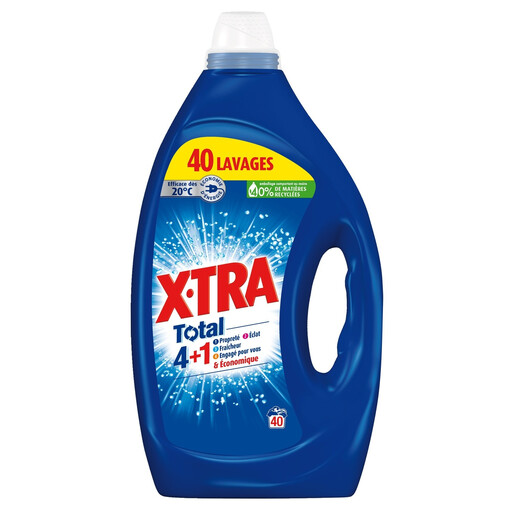
Why this choice suits this profile: A versatile liquid detergent lets you start with just one product for everyday laundry. Its product sheet states 40 washes and use from 20°C.
The number of washes is clearly stated, making it easy to compare with other formats and avoiding the trap of relying solely on the bottle’s volume.
1.8-litre format, 40 washes stated and compatibility indicated with all fabrics as well as low temperatures.
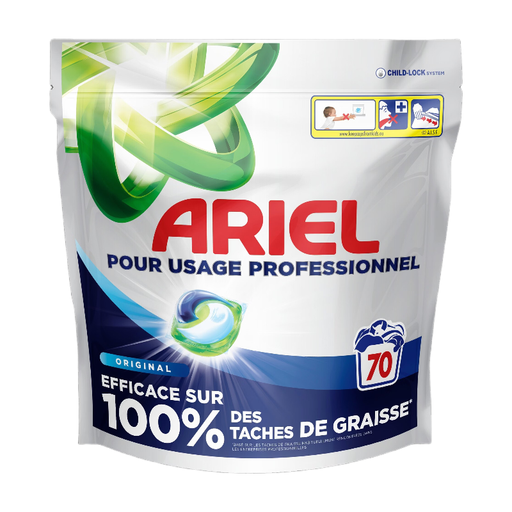
Why this choice suits this profile: Users who value simplicity and a consistent dose can turn to this 70-capsule format, which is particularly well suited to frequent laundry loads.
The pre-set dose prevents guesswork and overuse. However, each capsule must be placed in the drum and stored in a dry place.
70 doses, stated all-in-one formula and water-soluble capsule to be placed directly in the drum.
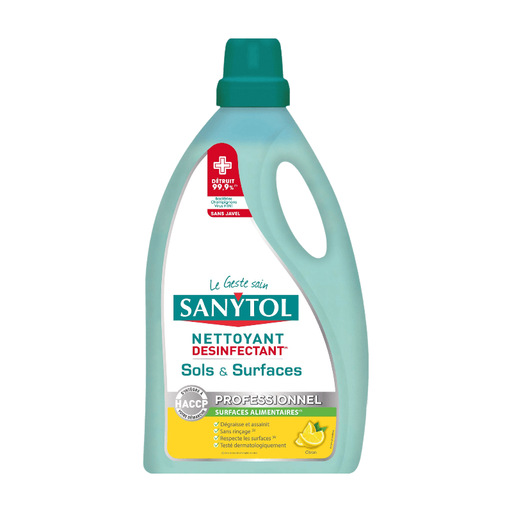
Why this choice suits this profile: This large format is aimed at very busy households, offices, shops and organisations that clean floors and surfaces regularly.
The product sheet specifies the uses, the standards claimed and the dilution instructions. A claim on the label doesn’t mean the product can be used without observing the contact time.
5-litre capacity, bleach-free formula and references to standards EN 13697, EN 1650 and EN 14476 in the description.
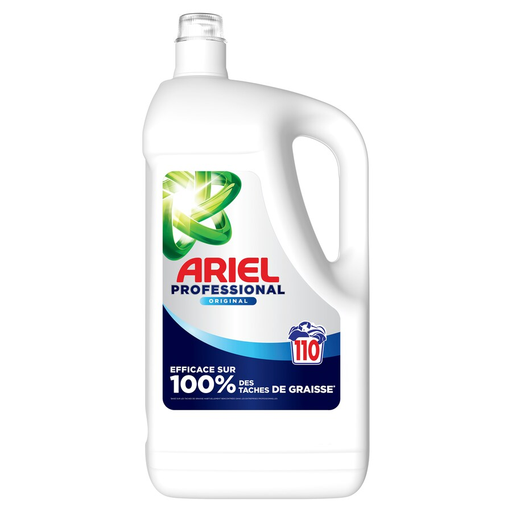
Why this choice suits this profile: With 4.95 litres and 110 washes stated, this format suits users who want to restock less often while adjusting the dose according to the load and level of soiling.
The measuring cap and the guidance for lightly, normally or heavily soiled laundry prevent you from using the same amount every cycle.
Large pack size, adjustable dosage and stated suitability for heavy domestic use as well as professional applications.
We’ve put together a comprehensive, real-time updated list of products that fully meet these strict selection criteria and European safety regulations.
A detergent stated for use from 20°C can work with cold or low-temperature programmes. Still, check the garment label, the recommended dosage and your machine’s capacity. Capsules simplify dosing, while liquid detergent offers more flexibility.
No. Compare the price per wash, per litre or per use. A large format becomes worthwhile if the product is used regularly and can be stored in good conditions. If you don’t clean very often, a smaller pack may actually reduce waste.
Not always. Check its compatibility with the material, especially for wood, marble, screens, varnished surfaces and fabrics. For a robot mop, only use a compatible solution and follow the dilution specified by the appliance manufacturer.