
Same-day & Next-day Delivery

Quality Guaranteed

Unlock Your Welcome Offers: FREE Delivery | Up to 80% OFF | Free 30-day JoyPlus trial
Download the APP
A sophisticated espresso machine, an attractive mug or a thermal bottle packed with promises won’t necessarily be practical for everyday use. To put together a setup that works for you, focus on the essentials: capacity, materials, cleaning and how well each item fits your lifestyle.
Coffee lovers and people who are often on the go tend to come up against three common pitfalls:
When choosing a coffee maker, think about how many people you’re serving and how you usually make your coffee:
Remember to check the diameter and height too. An insulated travel mug may fit some cup holders, but not all. These measurements are also important for accessories designed for use in the car.
Borosilicate glass is better able to withstand changes in temperature than ordinary glass, but it can still break. French presses with a stainless-steel filter do away with paper filters, but need to be cleaned carefully to remove fine particles.
For bottles and mugs, double-walled stainless steel is often chosen for its durability and insulating properties. In particular, check:
A ceramic mug is ideal for home or the office. For a travel mug, though, choose a lid that suits how you’ll actually use it.
For an espresso machine, check the portafilter diameter, temperature settings, pressure display and safety features. An electric coffee grinder with several grind settings can work for espresso, French press or pour-over, as long as you choose the right setting for each method.
The grooves in a dripper, metal filters and lids with a straw need regular rinsing. If you’re buying several black kitchen accessories, also look out for limescale marks and check the cleaning instructions: a matt finish may need different care from glossy plastic.
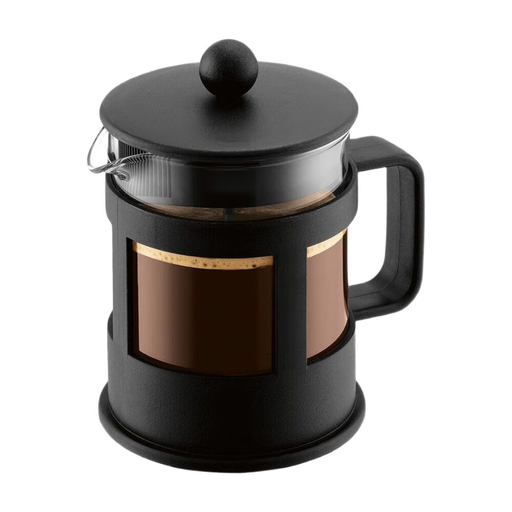
Why it’s a good fit for this profile : Its 500 ml capacity lets you try French press coffee without investing in a large coffee maker. The reusable metal filter is suited to everyday use at home or in the office.
Its mid-sized capacity means you won’t end up with a model that’s too large for one person or a couple.
Borosilicate glass carafe, stainless-steel filter and components listed as dishwasher-safe.
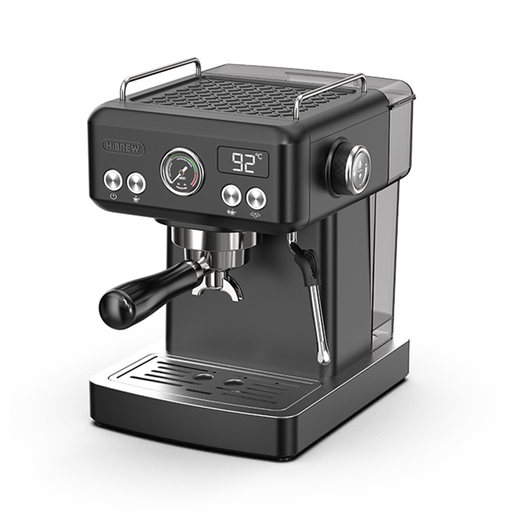
Why it’s a good fit for this profile : This espresso machine is designed for users who want to adjust the temperature, monitor the pressure and use a 58 mm portafilter.
The settings and indicators are clearly labelled, so you can check the parameters instead of relying on a vague marketing promise.
Stainless-steel body, pressure gauges, adjustable temperature for extraction and steaming, safety valve.
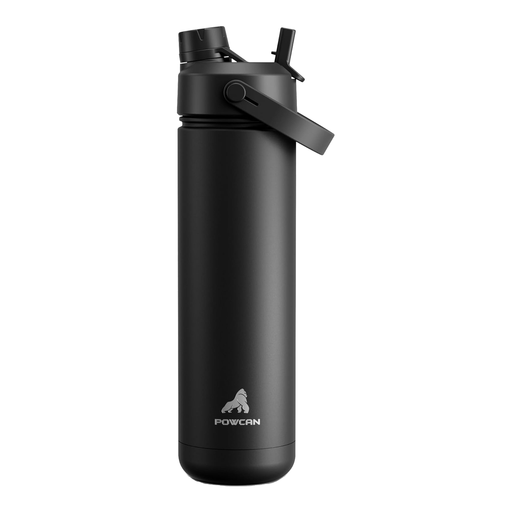
Why it’s a good fit for this profile : Its 769 ml capacity, carry handle and dual-opening lid make it a practical choice for sports enthusiasts, busy people on the go and travellers.
The stated dimensions and compatibility with most cup holders make it easier to check how much space it will take up before you buy.
18/8 stainless steel, double-wall vacuum insulation, straw and drinking spout, lid described as leak-proof.
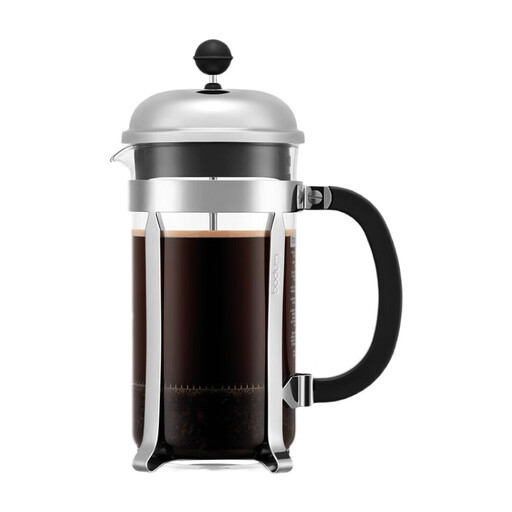
Why it’s a good fit for this profile : Its one-litre capacity is ideal for a household that makes several cups or entertains guests, without relying on a pod machine.
The capacity is given in both litres and cups, making it easier to compare the actual volume with your household’s needs.
Borosilicate glass carafe, stainless-steel frame and filter, stated 1-litre capacity and dishwasher-safe components.
We’ve put together a comprehensive, regularly updated list of products that meet these strict selection criteria and comply with European safety regulations.
A dripper is a good choice for light, manual brewing and should be paired with compatible filters. The TIMEMORE Crystal Eye V01 and V02 models differ in size, so check how many cups they’re designed to make before ordering.
For adjusting your grind, the Ollygrin BG702 electric coffee grinder offers 30 settings and a stated capacity of 2 to 12 cups. This versatility can be handy if you switch between espresso and French press, but you’ll still need to get the dose and brewing time right.
In the kitchen, a two-tier dish drainer can free up space by directing water into the sink. In the car, measure the space available on the centre console: the 2-in-1 cup holder shown here is designed for circular cup holders and won’t suit every shape.
For your daily commute, 250 to 350 ml is usually enough for one serving. If you’ll be out for a long time, a 600 to 800 ml bottle holds more, but will take up more space and weigh more.
You don’t need pods or disposable paper filters. Ongoing costs mainly depend on the ground coffee or beans you use, along with the water and electricity needed to heat it. Rinse the filter after every brew.
Rinse it after every use, remove the seals if the instructions allow it, and leave the different parts to dry separately. Avoid using metal parts in the microwave and regularly check for cracks, distortion or leaks.