
Livraison le jour même ou le lendemain

Qualité garantie

Débloquez vos offres de bienvenue: Livraison GRATUITE | Jusqu'à -80 % | 30 jours d'essai gratuits à JoyPlus
Téléchargez l'application
Whether you're a renter, a student, or just a careful homeowner, the adhesive hook is the game-changing solution for organising and decorating without pulling out the drill. The promise is tempting: a no-drill mount that's quick and reversible. Yet, there's often a huge gap between marketing claims and reality. The wrong choice can turn a practical solution into a source of frustration.
Who hasn't cursed at a hook that gives way without warning, an adhesive that takes a chunk of paint with it upon removal, or a model that peels off in the bathroom? To avoid falling into these traps, you need to learn to read between the lines on the packaging. This guide breaks down the criteria that truly matter for choosing a no-drill wall hook that will live up to its promises.
Before you even start comparing models, let's review the classic mistakes that turn a good idea into a regrettable purchase:
To make the right choice, three technical points need to be inspected closely. They are your guarantee of an effective and stress-free installation.
Load capacity is the first criterion, but it must be analysed in relation to the mounting technology.
The surface is just as crucial as the weight of the object you want to hang. Read the manufacturer's recommendations carefully.
Because function isn't everything, aesthetics also play a role. The transparent hook is the ideal solution for highlighting the suspended object (like string lights or a small decoration) rather than the hook itself. These models blend into the background for nearly invisible organisation.
Instead of an endless catalogue, here are our targeted recommendations to help you find the perfect hook for your needs.
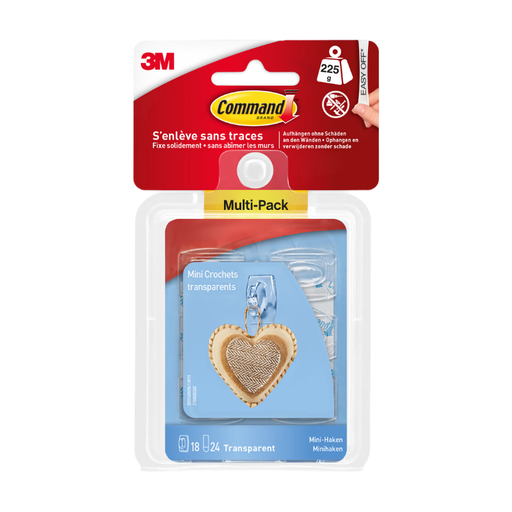
Why we chose it: Perfect for hanging keys, string lights, or lightweight decorations. Their small size and transparency make them nearly invisible, ensuring your decor takes centre stage.
The stretch-release adhesive technology is specifically designed for clean removal, eliminating the risk of stripping paint or leaving residue.
The budget-friendly 18-pack is perfect for creating multiple hanging points throughout your home without breaking the bank.
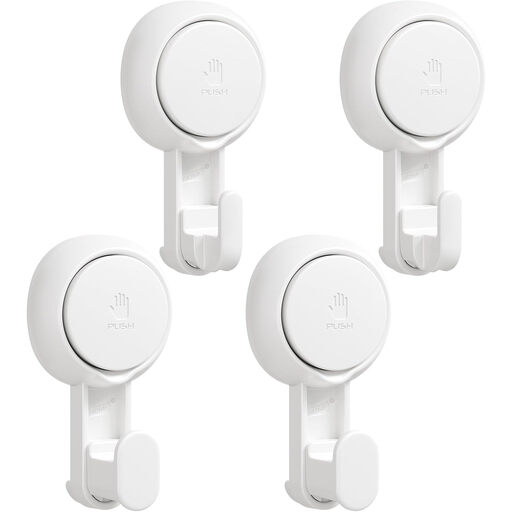
Why we chose it: Designed for very humid environments, this hook uses a powerful vacuum-lock system. It's ideal for hanging towels, bathrobes, or shower loofahs on tile or glass shower doors.
Its suction mounting makes it impervious to water and steam. It bypasses the main challenge in bathrooms: adhesives that peel away.
Tool-free express installation and a weight capacity of up to 5 kg (manufacturer's data) on smooth surfaces. Bonus: it's infinitely repositionable.
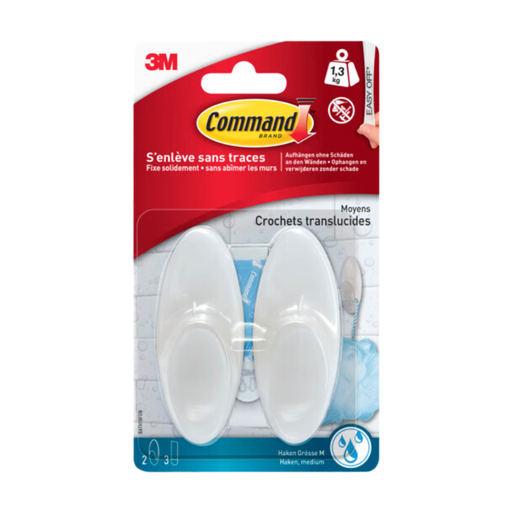
Why we chose it: This is the Swiss Army knife of adhesive hooks. Sturdy enough for a tea towel, a light bag, or a hand towel, its adhesive is water-resistant, making it just as useful in the kitchen as in the bathroom.
Its adhesive strip is designed to be water-resistant, allowing it to hold firm where a standard hook would have already failed.
It combines a practical load capacity (up to 1.3 kg) with the security of a clean removal. A reliable choice for most surfaces, including painted walls.
Discover our full selection of products that meet our selection criteria and current safety standards.
Yes, provided you choose a high-quality model (like one with a stretch-release strip) and follow the instructions to the letter. The secret: pull the tab very slowly, keeping it flat against the wall, and never pull it towards you. For standard adhesives, heating them slightly with a hairdryer can soften the glue, but the risk of damage remains higher.
Immediately forget about wallpaper (the weight will tear the paper), vinyl surfaces, brick, plaster, fabric, and any textured, porous, or fragile surface. The adhesion will not be optimal, and the risk of damaging the surface upon removal is almost certain.
This is a rookie mistake! Most manufacturers recommend waiting at least one hour after application before hanging anything. This curing time is essential for the adhesive to chemically bond with the surface and reach its maximum strength. Skipping this step is the number one cause of premature failure.