
Livraison le jour même ou le lendemain

Qualité garantie

Débloquez vos offres de bienvenue: Livraison GRATUITE | Jusqu'à -80 % | 30 jours d'essai gratuits à JoyPlus
Téléchargez l'application
A hand blender? A piece of cake to choose, you might think. Yet, behind this deceptively simple appliance lies a marketing jungle. Between the advertised wattages, overwhelming accessory kits, and varied designs, it's easy to make the wrong choice and end up with a gadget that gathers dust in a cupboard. Our guide is here to cut through the noise and help you make the right decision.
To avoid any unpleasant surprises (and throwing your money down the drain), here are the 3 most common pitfalls:
To sort through the options, focus on these few technical points. They are decisive in determining whether a model truly fits your cooking habits.
Power, expressed in watts (W), indicates the motor's strength. But be careful, the race for watts isn't always a good idea.
The design of the blending wand is as important as the motor.
Many hand blenders are sold with accessories. Evaluate their real usefulness for you.
A complete kit makes sense if you're starting from scratch. Otherwise, it's better to opt for a simple but high-performing model.
To help you see more clearly, here are a few options that meet specific needs while avoiding the pitfalls mentioned.
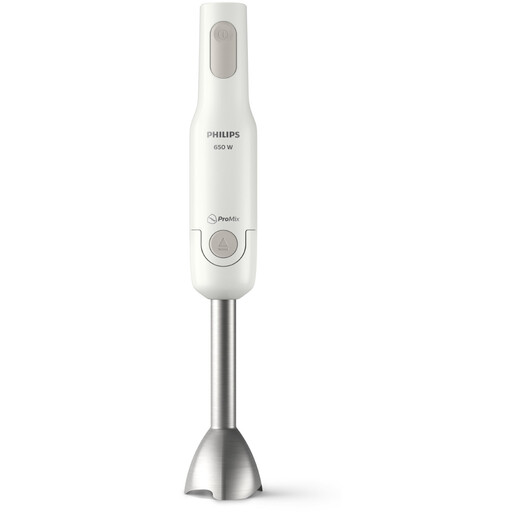
Why we recommend it: Ideal for those who want a simple, reliable appliance for everyday soups, purées, and compotes. Its 650W motor is an excellent balance of efficiency and moderate power consumption.
This model gets straight to the point: blending, and doing it well. No superfluous accessories, just the essentials. Its metal wand and anti-splash bell guard tick the boxes for durability and cleanliness.
ProMix technology for optimal flow and fast blending. Detachable metal wand, suitable for hot preparations and dishwasher-safe.
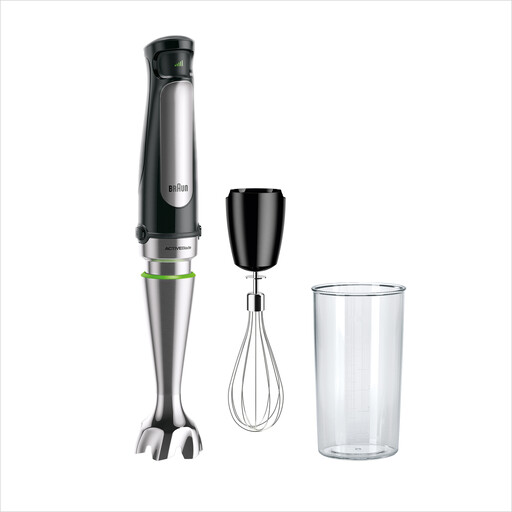
Why we recommend it: For the do-it-all cooks looking for an ultra-versatile appliance. Its 1000W motor and wide range of accessories make it a true Swiss army knife in the kitchen.
Unlike low-end kits, its accessories are robust and its powerful motor delivers on all fronts, from simple blending to chopping.
ACTIVEBlade technology: the moving blade tackles the toughest ingredients. Intuitive SmartSpeed trigger. EasyClick Plus system to change accessories in a snap.
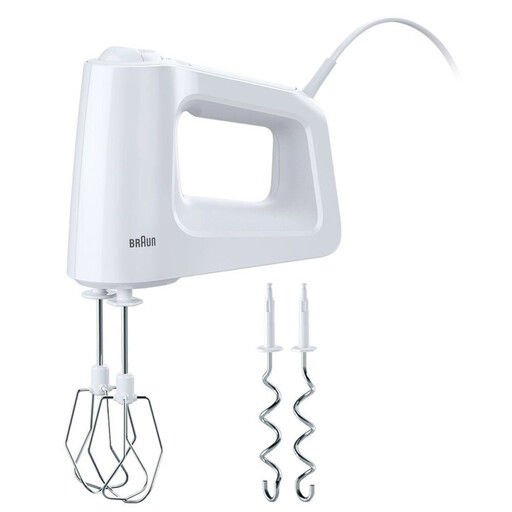
Why we recommend it: Note: this isn't a hand blender, but an electric hand mixer. It's designed for baking, an area where a hand blender's whisk attachment quickly shows its limits.
Rather than a gimmicky accessory, this is a true specialist. It offers the power and precision required for whipping firm egg whites or kneading dough.
SmartMix technology: the weight of the appliance is directed into the bowl, not your hand. 5 speeds + Turbo function. Comes with stainless steel whisks and dough hooks.
Discover our full selection of blenders that meet our quality criteria and safety standards.
For everyday soups, sauces, and compotes, a power of 450 to 650W is more than sufficient. Aim for 800W and above if you plan to blend very hard ingredients (nuts, chickpeas), crush ice (check if the model allows it), or frequently use the chopper attachment.
Absolutely, that's one of the main benefits of a hand blender! On one crucial condition: you must use a model with a stainless steel blending wand. Plastic could warp or release particles. Anti-splash tip: always immerse the blender head in the mixture before turning it on to avoid splashes.
The easiest way: unplug the appliance, detach the removable wand, and rinse it immediately under hot water. Most wands and accessories are dishwasher-safe (check the manual). As for the motor block, never submerge it in water! A simple wipe with a damp cloth is all it needs.