
Livraison le jour même ou le lendemain

Qualité garantie

Débloquez vos offres de bienvenue: Livraison GRATUITE | Jusqu'à -80 % | 30 jours d'essai gratuits à JoyPlus
Téléchargez l'application
Homemade soup, compote, sauce or smoothie: with an immersion blender, you can prepare everything in just a few minutes. You just need to choose the right appliance. A basic model is perfectly suitable for liquid preparations, while a kit with a whisk and chopper is better for a more versatile kitchen.
Before you reach the checkout, it is worth looking beyond the marketing claims. The stated power, number of speeds and list of accessories do not tell you everything about ease of use or the appliance’s lifespan.
An 1000 W immersion blender provides useful extra power for thick preparations. However, this does not guarantee a perfectly smooth result. The shape of the blending shaft, the blade design and the precision of the controls also play a decisive role.
Conversely, a 600 W immersion blender can be perfectly suitable for soups, sauces, purées or smoothies, provided the ingredients are cut into sufficiently small pieces and the recommended usage times are followed.
An immersion blender with accessories can replace several kitchen utensils, but each component takes up space and requires additional cleaning. The whisk is useful for whipping egg whites or cream, while the chopper is mainly suitable for herbs, vegetables, nuts or small quantities of meat, depending on the manufacturer’s recommendations.
If you mainly prepare soups, a blending shaft and beaker may be more than enough. To make a wider variety of recipes, an immersion blender with whisk and chopper offers more possibilities.
The motor unit must never be immersed in water. Removable accessories should be quick to rinse or dishwasher-safe where the manufacturer permits this. Also remember to follow the recommended rest periods: several product listings limit continuous use to around one minute to prevent overheating.
An easy-to-clean immersion blender is often more pleasant to use every day than a sophisticated appliance whose accessories remain dirty or are difficult to dismantle.
Here is a useful guide. Treat it as an indication rather than an absolute verdict on performance:
A corded electric immersion blender plugs into a standard 220–240 V household socket. It benefits from a constant power supply, but you will need to use it near a socket.
For blending soup occasionally, a simple button may be enough. Two speeds already allow you to adapt the appliance to a sauce or compote. A dial offering several levels, as found on some 20-speed models, provides more gradual and precise control.
The turbo button is useful for a quick burst of power, but it cannot replace the right technique: fully immerse the blending head before starting, then move the shaft slowly to minimise splashing.
A stainless-steel shaft will generally withstand stains and repeated use better than a plastic model, although it may be somewhat heavier. Also check the capacity of the supplied beaker: 500 to 600 ml is suitable for individual portions, while a 700 to 800 ml bowl provides more room for family-sized preparations.
For hot liquids, carefully follow the maximum temperature stated in the manual. Some Philips models specify a limit of 80 °C, while others recommend allowing the preparation to cool first. Never blend hot liquid in a sealed container, and protect your hands from splashes.
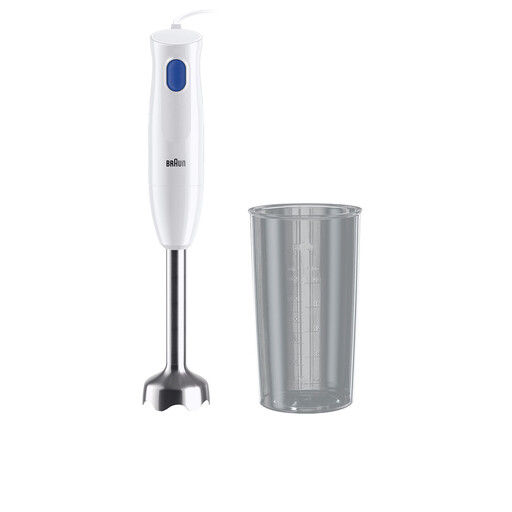
Why this choice suits this profile : Lightweight and easy to use with its single speed, this model is ideal for people who occasionally prepare soups, sauces or smoothies without wanting a multitude of settings.
It saves you paying for accessories that will be left in the cupboard and offers an EasyTwist dismantling system designed to be simple.
450 W motor, 600 ml beaker, and shaft and beaker stated to be dishwasher-safe.
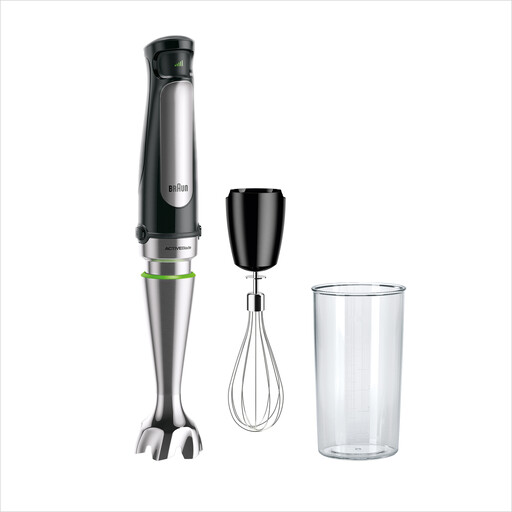
Why this choice suits this profile : This model is designed for users who want to switch from blending to chopping, mashing and whisking without changing the motor unit.
The accessories are clearly identified: blending shaft, whisk, chopper, potato masher and beaker. This makes it quick to choose the right tool for each recipe.
1000 W motor, SmartSpeed control and EasyClick Plus system for changing accessories in one movement.
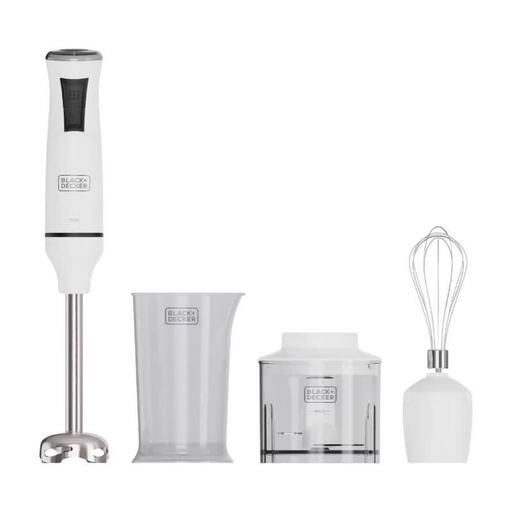
Why this choice suits this profile : Thanks to its graduated control, this blender is ideal for anyone who regularly adjusts the texture of sauces, compotes, soups or smoothies.
Its 20 speeds and turbo function mean you do not have to use the same setting for preparations with very different consistencies.
600 W motor, removable shaft, accessories stated to be dishwasher-safe and splash-resistant design.
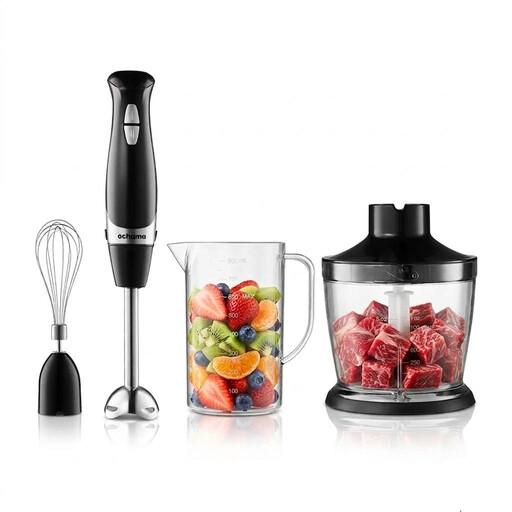
Why this choice suits this profile : With its whisk, chopper, 800 ml beaker and 500 ml bowl, this set is equally suited to family meals and a wide range of recipes.
Each accessory has a clearly defined purpose and detaches easily, avoiding the common problem of a multi-function appliance that is complicated to use.
600 W motor, two speeds, whisk, chopper and removable parts stated to be easy to clean.
We have put together a complete, real-time updated selection of products that meet these demanding criteria and European safety standards.
Yes, provided the manufacturer allows it and you stay within the stated maximum temperature. To reduce the risk of burns and splashes, remove the pan from the heat, allow the preparation to cool slightly and use a suitable container. Instructions may vary from one model to another.
For everyday soups, compotes and sauces, a power rating of 450 to 650 W may be sufficient. For thick purées, frequent use or an appliance supplied with several accessories, a model rated at 800 to 1000 W will provide more power in reserve. Blade design and precise speed control remain just as important.
It depends on the model and the preparation. Some manuals limit continuous use to one minute, while others specify a different duration. Always consult the manual, take breaks and allow the motor to cool when recommended.