
Same-day & Next-day Delivery

Quality Guaranteed

Unlock Your Welcome Offers: FREE Delivery | Up to 80% OFF | Free 30-day JoyPlus trial
Download the APP
Adopting batch cooking (or preparing meals in advance) is a brilliant solution for eating better every day while saving precious time. In this system, the choice of containers is a key step. Glass meal prep containers stand out as the quintessential healthy and sustainable alternative to plastic. However, the market is flooded with products making tempting promises, and it's easy to fall into common traps that will render your purchase completely useless. As a product expert for the Joybuy editorial team, my mission is to guide you toward making the right choice, with full confidence.
Before you take the plunge, let's review the 3 most frequent mistakes when buying glass food containers.
meal prep.To ensure your future containers live up to their promises, focus on these few non-negotiable technical features.
The number one quality to demand for meal storage containers is resistance to thermal shock. This is where borosilicate glass shines. Unlike standard soda-lime glass, its composition allows it to withstand extreme temperature variations (typically from -20?°C to +300?°C, a range to be verified for each model). This means you can:
This versatility is the cornerstone of successful meal prep.
The lid is just as crucial as the glass dish. Here are the points to inspect closely:
pfas-free cookware is a growing concern.A good glass oven dish should be a true Swiss Army knife in the kitchen. Before you check out, verify its compatibility with all your appliances:
Rather than searching for a one-size-fits-all product that doesn't exist, it's better to choose one that perfectly matches your lifestyle. Here is our selection for different needs.

Best For: Perfect for preparing lasagna, a casserole, or a large soup for several days. Its generous 2.3 L capacity meets the needs of families and the storage of large `batch cooking` preparations.
This model directly addresses the faulty lid trap. Its silicone seal ensures perfect airtightness, and its steam vent allows for safe, splatter-free reheating in the microwave.
Ultra-durable borosilicate glass for oven use (without lid). Its stackable design optimizes space in the fridge.
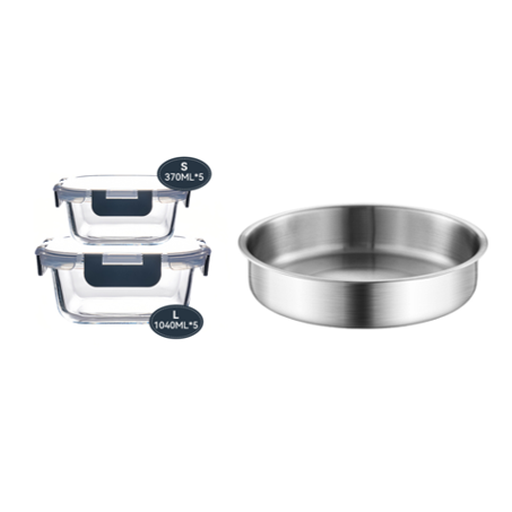
Best For: Those who want to get fully equipped in one go, no questions asked. This 10-piece set offers two sizes (370 ml and 1040 ml), perfect for separating main dishes, sides, and snacks.
This set relies on high-quality borosilicate glass, eliminating the risk of thermal shock. You can plan your meals with peace of mind and move dishes from the freezer to the microwave without fear.
An all-in-one starter kit with robust locking lids for a foolproof seal. The glass is guaranteed BPA-free and built for heavy use.
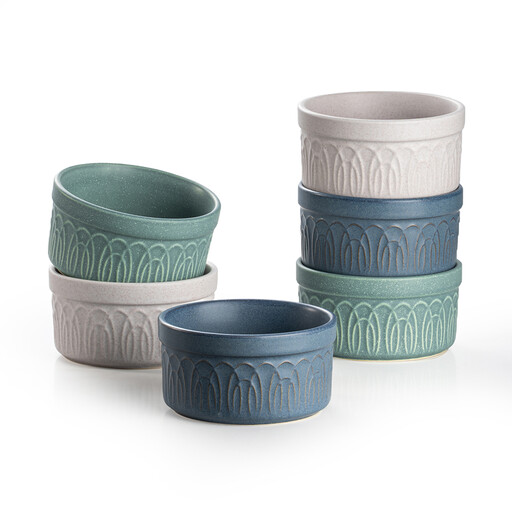
Best For: Essential for fans of individual portions: mini-quiches, crème br?lées, soufflés, or small gratins. These ramekins transition elegantly from oven to table, then to the refrigerator.
These ramekins sidestep the "false versatility" trap. Made from high-quality ceramic, they specialize in oven baking and deliver perfect results where a simple storage container would show its limits.
Non-toxic and lead-free ceramic. Oven, microwave, freezer, and dishwasher safe for maximum versatility in a single-serving format.
We've put together a complete selection of products that meet our quality criteria and current safety standards.
Borosilicate glass incorporates boron trioxide into its composition, which gives it very low thermal expansion. It handles sudden temperature changes much better. Tempered glass, on the other hand, is standard soda-lime glass that has undergone a treatment to improve its mechanical strength. It's more durable against physical impact but remains much more sensitive to thermal shock than borosilicate. For meal prep use (from freezer to oven/microwave), borosilicate is the clear winner.
Yes, but under two strict conditions: the manufacturer must explicitly state it, and the dish must be made of borosilicate glass. Always follow the instructions to the letter. As a general rule, the plastic lid must always be removed before placing it in the oven. As a precaution, you can also let the dish sit at room temperature for a few minutes before putting it in a hot oven.
Maintenance is very simple. Wash the dish and its lid after each use. Most models are dishwasher-safe. To preserve the elasticity of the silicone seal, it's often better to wash the lid by hand. Finally, for storage, do not seal the empty containers tightly: simply place the lid upside down on top or close it without engaging the locking clips. This will prevent putting unnecessary stress on the seal.