
Livraison le jour même ou le lendemain

Qualité garantie

Débloquez vos offres de bienvenue: Livraison GRATUITE | Jusqu'à -80 % | 30 jours d'essai gratuits à JoyPlus
Téléchargez l'application
Garlic is the secret ingredient that turns an ordinary dish into a feast. A cornerstone of cooking, it elevates, perfumes, and enchants our recipes. The only problem: prepping it often turns into a chore. Between fingers that smell for hours, a cutting board to scrub, and a mince that's rarely uniform, it's easy to give up. The garlic press seems like the perfect solution, but be warned: the market is flooded with gadgets that promise the world, only to disappoint.
As the Head of Product Recommendations at Joybuy, I test these utensils daily to help you see things more clearly. Let's cut through the marketing jargon and get straight to the point. Before you choose your next garlic press, here are the pitfalls to avoid so you don't regret your purchase a few weeks down the line.
You don't need to be an expert to avoid these setbacks. Just keep an eye on a few key points that make all the difference. They are the guarantee of a high-performing utensil that will serve you for years.
The material is crucial for the longevity and hygiene of your utensil. A stainless steel garlic press is an excellent starting point, but be aware that not all stainless steels are created equal.
An easy-to-clean garlic press will save you precious time. Before buying, carefully examine its mechanism.
The tool should work for you, not the other way around. A good manual garlic press should multiply your force, not test it.
Every cook has their ideal tool. We've selected three models that meet different needs but all share the quality and practicality criteria we've just detailed.
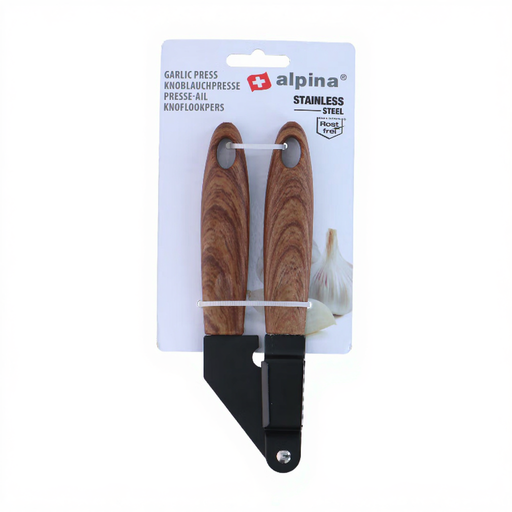
Why we chose it: For those looking for a reliable, no-nonsense tool. Its classic design and full stainless steel construction make it a faithful kitchen companion, built to last.
Its 100% stainless steel construction eliminates the risk of rust or peeling coatings. Its simple mechanism is far less likely to jam or break.
Durability and simplicity. A time-tested design, ergonomic handles, and dishwasher-safe for minimal maintenance.
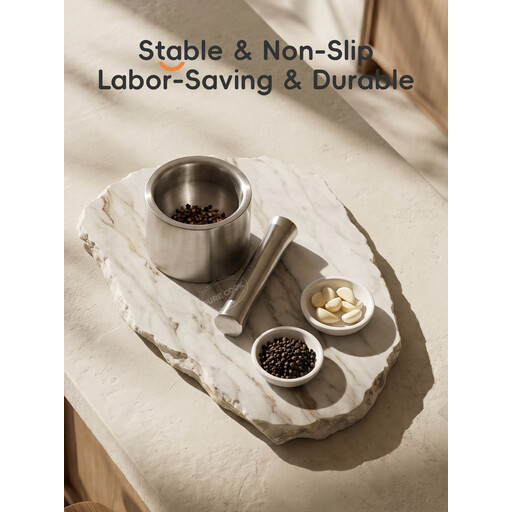
Why we chose it: Ideal for those who want to master the texture of their garlic, from a coarse crush to the finest purée. It's also a versatile tool for spices, herbs, or even cocktails.
It bypasses all the mechanical problems of presses. Its unibody 304 stainless steel construction is virtually indestructible, and its smooth surface cleans in a flash.
Total control over texture and versatility. A single tool for garlic, ginger, nuts, and fresh herbs. Extremely durable and hygienic.
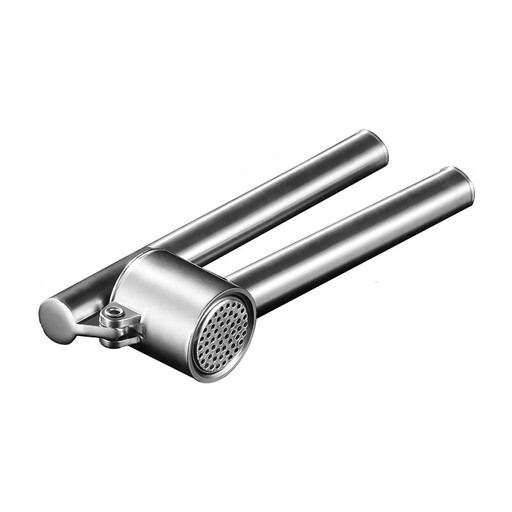
Why we chose it: This rocking garlic press is perfect for small kitchens. Compact and efficient, its rocking motion (pressing down by rocking over the clove) is praised for its comfort and ease of use.
Its open design makes cleaning a breeze. With no closed chamber or hinge, a simple rinse under the tap is all it takes to get it spotless.
Ultra-fast cleaning and easy storage. Its 304 stainless steel construction guarantees its longevity and hygiene.
We have compiled a complete list of products that meet our quality charter and strict selection criteria.
It all depends on the model. Many modern garlic presses are powerful enough to press unpeeled cloves, with the mechanism separating the pulp from the skin. However, for even faster cleaning and a perfect result, we recommend peeling the clove beforehand. For rocking models or a pestle, peeling the garlic is essential.
The secret is to act fast! Rinse your garlic press immediately after use, before the garlic pulp has time to dry. A small stiff brush (an old toothbrush will do the trick perfectly) is your best friend for dislodging particles stuck in the holes. If the damage is done and the residue is dry, let it soak for a few minutes in hot, soapy water.
The garlic press (or garlic crusher) reduces the clove to a fine purée by forcing it through a grid. This process intensely releases the garlic's compounds, resulting in a powerful, pungent flavour perfect for sauces, marinades, and dressings. The garlic mincer, on the other hand, simply cuts the clove into small dice. The texture is more noticeable, and the flavour, while present, is generally milder. It's ideal for stir-fries, persillade, and any dish where you want to find small pieces of garlic.