Hosts preparing individual dessert glasses
You want to divide the fruit into small portions and choose pieces whose shapes and colours work well for presentation.


For individual dessert glasses, choose a fruit cocktail if you want to divide up several fruits quickly, or separate pieces of fruit if you’d rather put each portion together yourself. Small pots make serving easy; if you choose a large tin, compare its drained net weight with the amount you plan to serve. Neither format guarantees a ‘luxury’ presentation on its own.
You want to divide the fruit into small portions and choose pieces whose shapes and colours work well for presentation.
You compare ingredients and sugar per 100 g, even when a recipe is labelled ‘no added sugars’.
You choose between a large tin and individual portions depending on how you plan to serve them, taking into account the amount of fruit once drained.
For a birthday party, first decide how you’ll present the fruit, then compare the recipe and the amount you can actually use.
| What to consider | What to check | Who is this for? |
|---|---|---|
| How the dessert glasses will look | Which fruits are included and how they’re cut: cubes, slices or halves. | I want to arrange fruit in different shapes and colours in each glass; around 42% of consumers would put visual appeal first. |
| Recipe and sugars | The ingredients list and the ‘of which sugars’ figure per 100 g, beyond claims on the front of the pack. | If ingredients guide my choice, I want to compare recipes rather than rely on a single claim; around 33% of consumers would make this their top priority. |
| Quantity and serving | Drained net weight, portion size and instructions for after opening. | To serve my guests without running short of fruit or leaving a large tin partly used, I choose a format to suit the buffet; around 25% of consumers would put this first. |
A recipe carrying this claim may still list sugars in its nutritional information.
Compare the ingredients and the ‘of which sugars’ figure per 100 g on the products you’re thinking of serving.
For fruit preserved in liquid, the weight of the tin doesn’t tell you how much fruit you’ll have to serve.
Use the drained net weight to plan your dessert glasses. The DGCCRF states that this weight must appear on the label of foods presented in a covering liquid.
On its own, this term doesn’t tell you about the recipe, how the fruit is cut or how it will look in a dessert glass.
Check which fruits are included, how they’re presented and how much you’ll have once drained, then plan your presentation accordingly.
Fruit cocktails and fruit salads to consider if you want a ready-made mix for filling dessert glasses.
A range that includes a tinned fruit cocktail and a fruit cocktail in small pots.
E.Leclerc products to explore if you’re deciding between a fruit cocktail, a particular fruit or individual pots.
Large-format fruit and individual pots to compare, depending on how you’d like to serve them.
A five-fruit cocktail in light syrup sold by ALDI.
These products let you choose between pear halves to cut up, a fruit cocktail to divide between portions, and individual fruits to use in dessert glasses or as a garnish. Compare their shape and the quantity you need to serve rather than assuming that a particular fruit or jar will guarantee a ‘luxury’ look.
 Image unavailable
Halved pears to cut up or arrange yourself if you want to put each portion together individually. The title lists a drained net weight of 455 g; check this on the label of the product you buy.
 Image unavailable
A mix of peach, pear, pineapple and grape to divide between several dessert glasses. The listed pack size is 850 g; check the drained net weight on the packaging to work out how much fruit you’ll have to serve.
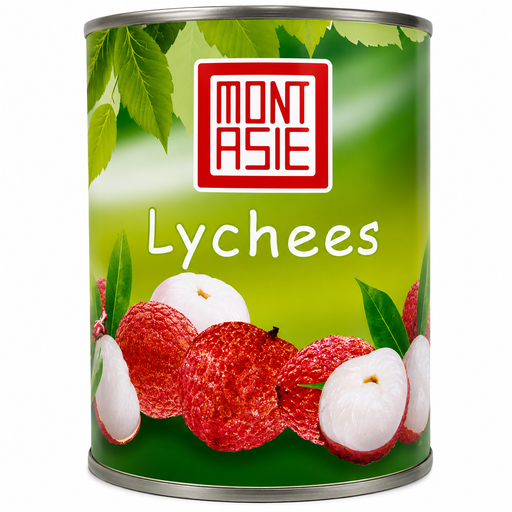 Image unavailable
Lychees to serve on their own or pair with other fruit when putting together your portions. The listed pack size is 567 g; check the drained net weight if you’re planning several dessert glasses.
 Image unavailable
Mango slices to use as a garnish or pair with other fruit. The listed pack size is 425 g; check the drained net weight to plan your portions.
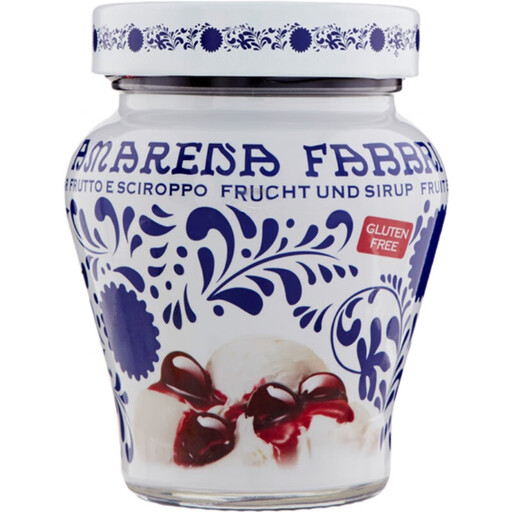 Image unavailable
Cherries to consider as a garnish for portions or cocktails, rather than as a mix for filling dessert glasses. The jar is listed as 230 g; check the label for the quantity of fruit and sugars per 100 g.
No. This claim doesn’t mean that the ‘of which sugars’ figure is zero. To compare two fruits in syrup, check the ingredients and sugars per 100 g for each recipe.
Use the drained net weight to estimate how much fruit you’ll have to serve, rather than the weight of the tin and its liquid. The DGCCRF states that the drained net weight must be shown for food presented in a covering liquid.
When comparing pre-packed fruit in syrup in France, check the product name, ingredients, highlighted allergens, nutritional information, stated quantities and the date shown on the packaging. The DGCCRF outlines the labelling rules that apply to these products.
Follow the instructions for the product you’ve bought, as they may vary. Auchan advises keeping its Williams pears refrigerated in their liquid and consuming them promptly; the Joybuy listing for the 850 g St Mamet cocktail says to keep it refrigerated in a suitable container for 3 to 4 days.