Bakers preparing larger quantities
For a tart, fruit compote or layered dessert, the cut needs to suit the recipe and the drained weight needs to cover the amount of fruit required.


For a tart or several desserts that use a lot of fruit at once, start by choosing the fruit and cut specified in the recipe, then compare the drained net weight. A multipack of smaller units is better for repeated baking, while fruit pots can help reduce leftovers when you only need a small amount. In every case, check the packing liquid and the storage instructions for after opening.
For a tart, fruit compote or layered dessert, the cut needs to suit the recipe and the drained weight needs to cover the amount of fruit required.
A multipack of separate units lets you open fruit as you make different desserts, rather than opening a large tin for a small recipe.
The product description, packing liquid and ingredients list can help you choose between fruit in syrup, fruit in juice and products labelled ‘no added sugar’.
Start with the recipe and the amount you’ll use each time you open a pack. A large tin, multipack and fruit pots won’t necessarily give you the same cut or the same amount of fruit per unit.
| Criteria | What to check | Who it matters to |
|---|---|---|
| Quantity and cut | Drained net weight and the shape of the fruit: halves, slices or pieces. | For a tart topped with neat, even pieces, I want enough usable fruit without having to change the planned presentation. Around 36% of shoppers would put quantity and cut first. |
| Cupboard stock | Number of units, weight of each one and the multipack’s drained net weight. | If I make desserts on several occasions, I’d rather open one unit at a time. Around 29% of shoppers would put this kind of cupboard stock first. |
| Ingredients and liquid | Product description, ingredients list and nutritional information for the product you’re considering. | If my recipe also uses the liquid, I want to know whether it’s syrup or juice before adjusting the other ingredients. Around 21% of shoppers would put the product’s contents first. |
| Leftovers and storage | Quantity per unit, instructions for after opening and the condition of the tin. | For a small recipe, I want to open only the amount I can use and store it according to the label. Around 14% of shoppers would put minimising leftovers first. |
Several small tins are handy for opening one at a time, while a large tin holds everything in a single unit. So the number of packs doesn’t tell you how much fruit you’ll be able to use in a recipe.
Work out how much you need for each recipe, then compare the drained net weight per unit and across the whole multipack.
An oversized unit could leave you with opened fruit that you can’t use within the timeframe stated on the label.
The packing liquid and ingredients matter if your recipe uses the liquid or specifies a particular amount of sugar. A ‘no added sugar’ claim doesn’t guarantee that a product will work in exactly the same way as fruit in syrup.
Check the product description and ingredients for the specific item before adapting your recipe.
The DGCCRF warns that rust, dents or bulging can indicate that a product has deteriorated. Anses also advises against eating food from a dented or bulging tin, or from a tin that gives off a suspicious smell when opened.
Do not use a tin showing these signs, and follow the product’s storage instructions after opening.
Carrefour sells fruit under this brand in large tins, multipacks and small pots, depending on the fruit and intended use.
The retailer sells products including large tins of peach halves and fruit-in-syrup pots.
The range includes fruit cocktails and individual portions, sold by retailers including Carrefour and Auchan.
The brand features among Auchan’s canned pineapple options, with pieces or slices available depending on the product.
This selection includes fruit halves for toppings, fruit cocktails in large tins or multipacks, and mango slices. Choose the cut before the pack size, then check how much fruit your recipe needs.
 Image unavailable
Worth considering for a tart or dessert that calls for fruit halves. The 455 g figure is given as the drained weight; check the quantity on the packaging before planning your portions.
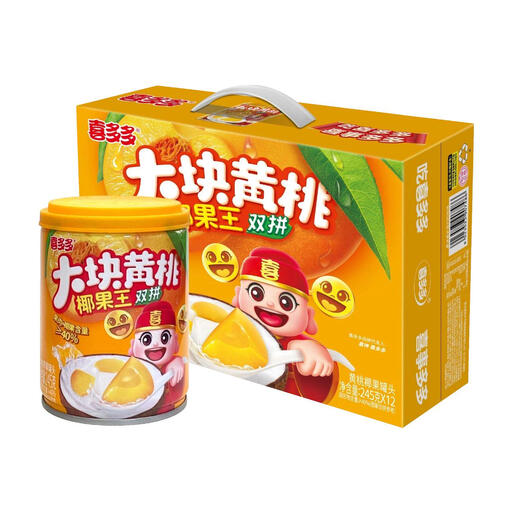 Image unavailable
The 12-unit multipack is a good option if you want to open the tins separately for desserts that work with this combination. Yellow peach and nata de coco aren’t a substitute for a single fruit in a recipe that calls for one, so check the drained weight of each unit.
 Image unavailable
The three units may suit desserts made on different occasions, rather than one large batch. To find out how much fruit you’ll have each time you open a unit, check its drained weight.
 Image unavailable
Consider this 850 g tin for a recipe that uses a generous amount of fruit cocktail. The total weight won’t necessarily match the amount of drained fruit, so check this figure when scaling your recipe.
 Image unavailable
This single tin may suit a dessert that calls for mango slices. To work out how many tins you’ll need, compare the drained weight shown on the product with the amount specified in the recipe.
Choose a large tin if one recipe uses a lot of fruit at once, and a multipack if you plan to open the units as you make several desserts. Compare the drained net weight per unit and the cut, not just the total weight shown on the pack.
Not necessarily: the fruit, its cut and the packing liquid also need to suit the recipe. Check the description and ingredients of the exact product before adjusting the other ingredients in your recipe.
Follow the instructions on the product you’ve bought, including guidance on the container, refrigeration and how soon to use it. The DGCCRF points out that the date shown for an unopened pack doesn’t replace the instructions for after opening.
Don’t use a tin showing these signs of damage. The DGCCRF identifies them as possible signs of deterioration, and Anses advises against eating food from dented or bulging tins, or from tins that give off a suspicious smell when opened.
Not automatically: the French Ministry for the Economy says that a product can still be eaten after its best-before date if the packaging is intact, although its taste may have changed. Check the condition of the tin and the storage instructions, and don’t confuse a best-before date with a use-by date.