Hosts looking for a special dessert
If you’d rather plate the dessert than put the tin on the table, consider the shape of the fruit. Halves or evenly sized pieces can be drained and served in glasses.


To round off a raclette with fruit in syrup, start by choosing a shape that’s easy to drain and serve in small portions: fruit halves are ideal for plating, while individual cups make serving simple. Then compare the packing liquid, ingredients and drained net weight. Neither smart packaging nor an evocative name is enough to establish that a product belongs to a “luxury” range.
If you’d rather plate the dessert than put the tin on the table, consider the shape of the fruit. Halves or evenly sized pieces can be drained and served in glasses.
If the ingredients matter more to you than presentation, compare the packing liquid, ingredient list and nutritional information for each product. “In juice”, “light syrup” and “no added sugar” are not interchangeable claims.
A tin to share lets you choose the portions and presentation, while individual cups save you having to portion out the fruit when serving. For a tin, check the drained net weight and storage instructions after opening.
First decide whether you want to plate the fruit yourself or serve pre-portioned servings. You can then use the label to compare the quantity of fruit and the ingredients in the products you’re considering.
| Criteria | What to check | Consumers concerned |
|---|---|---|
| Presentation | Fruit shape and drained net weight to help plan how to plate it. | If I’m making dessert glasses, I want fruit I can arrange without leaving too much liquid in the dessert. Around 33% of consumers would make presentation their priority. |
| Ingredients | Packing liquid, ingredients and sugars listed in the nutritional information. | When I want to limit added sugars, I look at the ingredients rather than relying on the claim on the front of the pack. This would be a priority for around 25% of consumers. |
| Serving | Number and capacity of the individual cups, or whether a tin can be portioned out. | When I have several desserts to serve, I prefer portions that are already defined so I don’t have to prepare each plate at the last minute. Around 25% of consumers would prioritise this convenience. |
| Leftovers and availability | How much fruit you’ll use, storage after opening and availability at your chosen shop. | If I’m only serving a few portions, I want to avoid opening more fruit than I need or relying on a product that isn’t stocked at my local shop. For around 17% of consumers, reducing leftovers would be the main concern. |
These claims don’t necessarily describe the same ingredients. “No added sugar” doesn’t mean the fruit contains no sugar.
To compare two products, read their ingredient lists and check the sugars listed in their nutritional information.
The total weight includes the packing liquid, so it doesn’t tell you how much fruit you’ll be able to drain and serve.
Use the drained net weight to estimate portions, and allow time to drain the fruit before plating.
A product page or limited-time offer doesn’t guarantee that the product will be available at the shop where you’re doing your food shopping.
Check your chosen shop or collection service before planning your dessert around a particular fruit.
According to the DGCCRF, dents or other deformation, rust or bulging can be signs that a tin has deteriorated.
Avoid tins showing these signs and, if in doubt, don’t eat the contents.
Carrefour France stocks Carrefour Classic' fruit in syrup in a range of varieties and formats.
This E.Leclerc range includes fruit in tins and individual cups.
Auchan France stocks peaches, lychees and fruit mixes in syrup, among other options.
Carrefour France and Auchan France stock St Mamet fruit, including individual cups and some products labelled as having no added sugar.
Auchan France stocks Del Monte fruit in juice, including a product called “Edition Gold Peach Halves in Juice”.
ALDI France stocks BACCARA® peach halves in light syrup among its dessert products.
This selection includes pear halves, peach halves and three other fruits in syrup to consider for dessert after raclette. Choose according to the fruit you’d like and how much you need to serve; this selection should not be taken to mean that these products belong to a “luxury” range.
 Image unavailable
Williams pear halves are easy to arrange yourself when putting together plates or dessert glasses.
The title states that the drained fruit weighs 455 g. If added sugars are a factor in your choice, check the ingredients on the label.
 Image unavailable
These peach halves are a good choice for a dessert you want to plate up after raclette.
The title states that the drained fruit weighs 230 g. Compare this amount with the number of portions you’re planning.
 Image unavailable
Longans offer a different fruit option for putting together a dessert after raclette.
The stated pack size is 565 g. To work out how much fruit you’ll have to serve, check the drained net weight on the packaging.
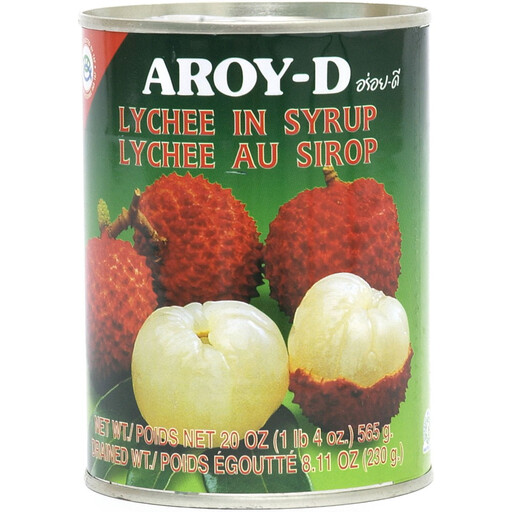 Image unavailable
If you’d prefer to serve lychees after raclette, this product lets you choose them instead of a fruit mix.
The stated pack size is 565 g. Check the drained net weight and the shape of the fruit before deciding on portions or presentation.
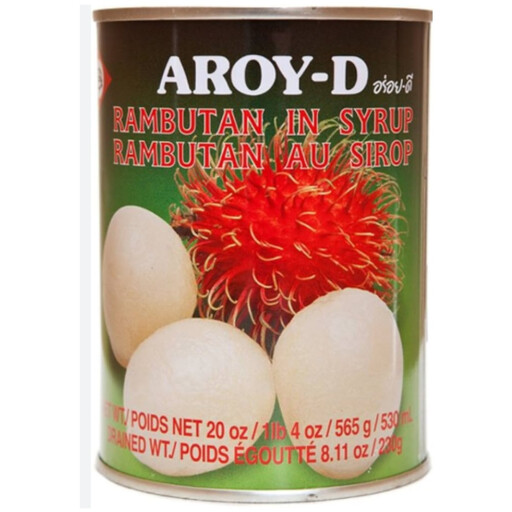 Image unavailable
Rambutans are another fruit option for making individual portions of dessert after raclette.
The stated pack size is 565 g. Check the packaging for the drained net weight, then choose a presentation to suit the shape of the fruit.
Yes. Choose fruit in a shape that’s easy to plate, drain it and serve it in portions. However, a name such as “Gold” or attractive packaging isn’t enough to establish that a product belongs to a “luxury” range.
Compare the ingredient list and the sugars shown in the nutritional information for each product, rather than relying on the claim on the front of the pack. To plan portions, also check the drained net weight if it’s given.
Follow the instructions on the product you’ve bought. As an example for this product only, Auchan France advises transferring its 840 g tin of peach halves in light syrup to a suitable airtight container, refrigerating them and eating them within two days.
Don’t use a tin showing signs of deterioration. The DGCCRF lists dents or other deformation, rust and bulging among the warning signs; if in doubt, it advises against eating the contents.