
Livraison le jour même ou le lendemain

Qualité garantie

Débloquez vos offres de bienvenue: Livraison GRATUITE | Jusqu'à -80 % | 30 jours d'essai gratuits à JoyPlus
Téléchargez l'application
A charcuterie enthusiast, a fan of homemade food, or simply looking for more efficiency in the kitchen? A food slicer can quickly become your best friend. But with an overwhelming number of options on the market, the pitfalls are numerous. Underperforming appliances, impossible cleaning, and even safety hazards: a promising investment can quickly turn into a nightmare. This guide breaks down the essential criteria and the mistakes to avoid to find the slicer that will truly meet your needs.
Marketing often highlights appealing features while hiding design flaws that only become apparent with use. Here are the three most common traps.
To ensure you make the right decision, focus on these key features that are true indicators of performance, safety, and durability.
Power, measured in watts (W), is the number one indicator of an electric slicer's performance. For all-purpose use (bread, cheese, charcuterie), a power rating of 130 to 150 W is an excellent sweet spot. For heavy-duty use or for slicing raw meat (for carpaccio, for example), aim for over 150 W.
The blade type is just as important:
The ability to adjust slice thickness is fundamental. A good slicer should offer precise control over the slicing thickness, typically from 0 to 15 mm, or even more. The adjustment knob must be stable and should not shift during operation.
On the safety front, check for a sturdy food carriage that holds the food firmly and protects your hands. A safety switch (to prevent accidental start-up) and suction cup feet to stabilise the machine are essential for peace of mind.
Favour models designed with a maximum of stainless steel components (blade, carriage, tray): it's a durable, hygienic, and easy-to-clean material. The body of the machine can be metal (more stable and robust) or high-quality plastic. Ensure that all parts that come into contact with food (blade, carriage, pusher) are easily removable for a deep clean.
Rather than searching for a non-existent "one-size-fits-all" model, it's better to find the one that perfectly matches your needs.
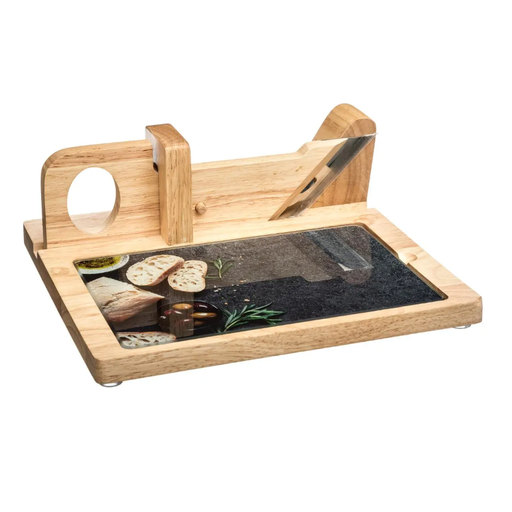
Who it's for: Perfect for those who love to entertain and elegantly present charcuterie and cheese boards. This manual device combines the aesthetic of wood with the efficiency of a guillotine blade for serving directly at the table.
No risk of motor failure, as this is a manual slicer. Its simple, robust design makes cleaning easy and ensures total control over the cut.
Its 2-in-1 design with an integrated board allows you to slice and serve. Its stainless steel blade ensures a clean cut for cured sausages and hard cheeses.
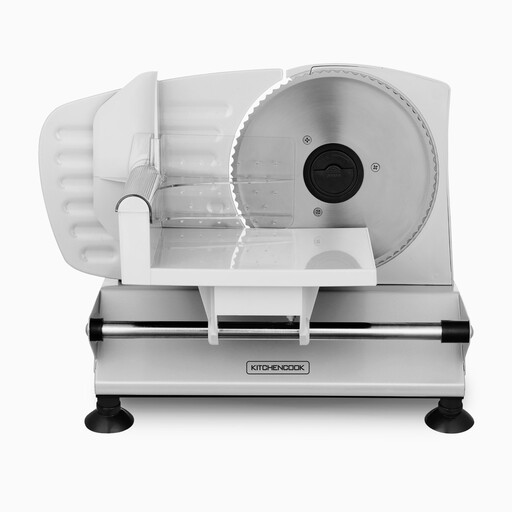
Who it's for: Ideal for families looking for a high-performance appliance for regular use: slicing bread for breakfast, cold cuts for sandwiches, or even the Sunday roast.
With its 150 W motor, it avoids the underpowered trap. Its cast aluminium body and suction cup feet provide excellent stability, eliminating any risk of slipping.
Adjustable slicing thickness from 0 to 15 mm for high precision. The sliding carriage is removable, which greatly simplifies cleaning.
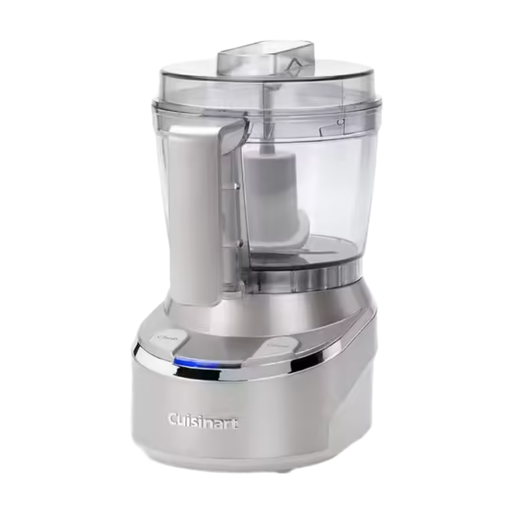
Who it's for: For those who prioritise speed and versatility for small prep tasks (herbs, garlic, onions, nuts). This cordless mini chopper is the perfect complement to a slicer, acting as an ultra-fast vegetable cutter or chopper.
It doesn't pretend to slice large items and focuses on what it does best: chopping quickly. The bowl, lid, and blade are dishwasher-safe, putting an end to the cleaning nightmare.
Its cordless operation offers complete freedom in the kitchen. Its bi-directional stainless steel blades ensure efficient and even chopping.
Discover our full selection of slicers and cutting tools that meet our high standards for quality and safety.
The serrated blade is more versatile, perfect for foods with a hard crust or skin (bread, some types of sausage). The smooth blade is the purist's choice for a ham slicer and fine charcuterie: it's the only way to get ultra-thin, even slices without tearing the meat and while preserving the product's full texture.
Safety first! Before any cleaning, always unplug the appliance. Set the slicing thickness to "0" to cover the blade's edge. Ideally, wear cut-resistant gloves. Disassemble the removable parts (carriage, pusher, and, if possible, the blade, following the manufacturer's instructions). Wash them in hot, soapy water. Clean the body of the appliance with a damp sponge, never immersing it in water. Dry all parts thoroughly before reassembling.
For smaller items (like salami, coppa, or small dry-cured hams), a guillotine-style manual slicer is often sufficient and provides a very satisfying cut. However, for a large whole cured ham (like Prosciutto or Serrano), a robust electric slicer with a smooth blade and a powerful motor is essential for effortlessly achieving thin, even slices.