
Livraison le jour même ou le lendemain

Qualité garantie

Débloquez vos offres de bienvenue: Livraison GRATUITE | Jusqu'à -80 % | 30 jours d'essai gratuits à JoyPlus
Téléchargez l'application
Getting more daily movement, especially when working from home, is often a challenge. The foldable walking pad has emerged as the ideal solution for staying active without sacrificing space. But be warned: the market is flooded with marketing promises that too often lead to buyer's remorse. Before taking the plunge, it's crucial to know how to avoid the most common pitfalls to make the right choice.
As the Head of Product Recommendations at Joybuy, my mission is to give you clear, objective advice. The goal? To help you navigate the jungle of options and identify the features that truly make a difference.
Many devices look perfect on paper but prove disappointing in practice. Here are the three most common issues that can turn your sound investment into a real headache.
To avoid these disappointments, it's best to focus on objective technical criteria. These are the true indicators of an under-desk treadmill's quality and its suitability for your needs.
Don't just rely on the treadmill's folded dimensions. The most important criterion is the running surface.
These few extra centimetres radically change the experience and often justify a small price difference.
The motor's power, expressed in horsepower (HP) or watts (W), directly affects the smoothness of your walk and the device's noise level. An underpowered motor will strain to maintain speed, heat up, and therefore become noisy.
The maximum supported weight isn't just a matter of safety. It's also an excellent indicator of the frame's overall robustness. A treadmill that can handle 120 kg will inherently be more stable and durable than a model limited to 90 kg, even if you weigh much less. A solid frame, often made of a steel alloy, absorbs shock better and prevents annoying creaks and wobbles.
Rather than an endless list, we've selected specific models for specific needs, based on our performance and reliability criteria.
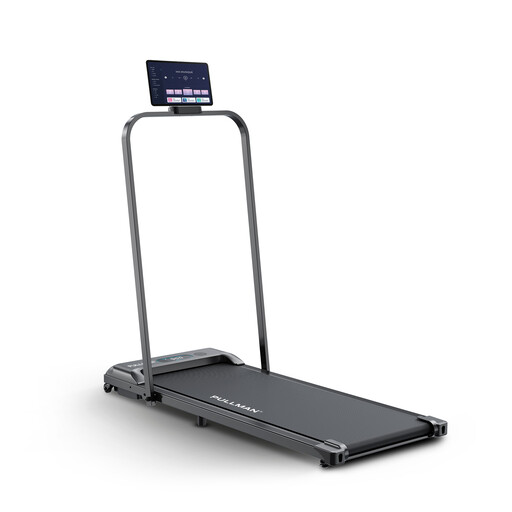
Why we recommend it: This model offers excellent value for money for those new to walking at home without breaking the bank. It checks all the essential boxes for getting started with at-home fitness.
It is transparent about its specs: a 1000 x 380 mm running surface and a maximum weight of 90 kg. No unpleasant surprises—these dimensions avoid the trap of a compact design that sacrifices ergonomics.
Its maximum speed of 9 km/h allows for fast walking, and its Bluetooth connectivity for music is a real bonus in this price range.
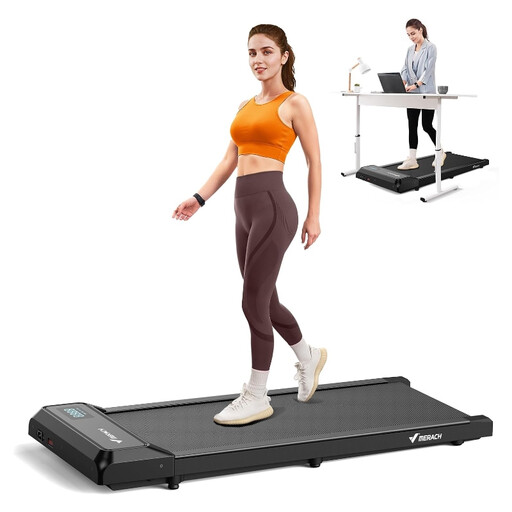
Why we recommend it: Specifically designed as an under-desk treadmill, its one-piece design, quiet operation, and robust structure make it a top-tier choice for intensive and discreet use in the office.
It tackles the pitfalls of noise and fragility head-on. With a stated noise level of 50 dB and an aerospace-grade alloy frame supporting 120 kg, it ensures both quiet and perfectly stable use.
Its seamless one-piece design limits friction points and parasitic noise, while ensuring excellent durability. Syncing with the MERACH app for performance tracking is the icing on the cake.
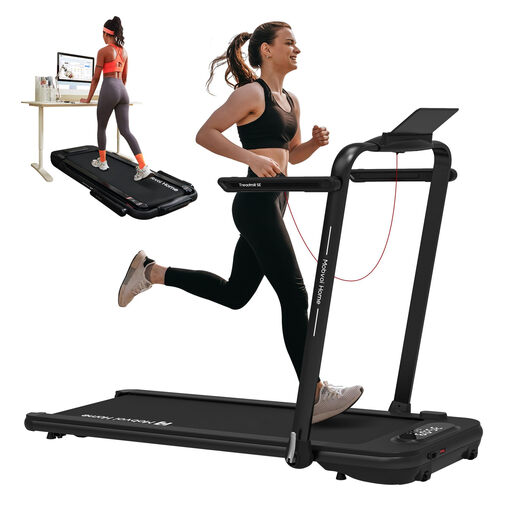
Why we recommend it: For those looking for more than just a simple walking pad. This 3-in-1 model serves as a walking pad, a workstation, and a compact treadmill for jogging. The ultimate in versatility.
It avoids the fragility trap with a powerful 2.5 HP motor, a 120 kg capacity, and a 5-layer running belt that guarantees stability and shock absorption, even at 12 km/h.
Its versatility is its key strength. The speed, which goes up to 12 km/h, and coaching via the TicSports app make it a complete fitness device, much more than just a pad for walking.
We have compiled a complete and up-to-date selection of products that meet our selection criteria and safety standards.
Yes, provided you choose the right one. The noise depends on the quality of the motor and the frame design. Aim for models with a stated noise level below 60 dB. Treadmills equipped with brushless motors are generally quieter and more durable. The Merach Walking Pad, at 50 dB, is an excellent example of acoustic discretion.
Maintenance is simple but essential to ensure its longevity. It boils down to three key steps:
It all depends on its build quality, your frequency of use, and maintenance. An entry-level model, if well-maintained, can last several years with moderate use. A more robust device, with a powerful motor and a solid frame (like those designed to support 120 kg), is an investment built to last, even with intensive use. Adhering to the maximum weight limit and performing regular maintenance are the two keys to maximising its lifespan.