
Livraison le jour même ou le lendemain

Qualité garantie

Débloquez vos offres de bienvenue: Livraison GRATUITE | Jusqu'à -80 % | 30 jours d'essai gratuits à JoyPlus
Téléchargez l'application
A fan can make hot weather more comfortable, but not all models are created equal or designed for the same needs. Whether you are looking at a model marketed as quiet, a rechargeable fan designed to run independently or a high-speed model intended for a workshop, the differences in design are far from minor.
Before you buy, three common pitfalls are worth avoiding:
The right format depends above all on where you plan to use the appliance:
Oscillation also plays an important role. A head oscillating through 60°, 160° or more will not cover the same area. In a room occupied by several people, it is better to choose adjustable air distribution rather than a simple fixed airflow.
The word ‘quiet’ should be treated with caution. Check whether the manufacturer provides a decibel rating and the conditions under which it was measured. A fan rated at 30 dB on low speed will not necessarily be just as discreet at full power.
A high-speed fan can be ideal for a workshop or garage, or for speeding up drying. However, it will rarely be the best choice for a bedroom. Conversely, multiple speed settings and a night mode allow you to adjust the airflow more precisely.
When comparing two models, look in particular at:
A rechargeable fan should be assessed according to its battery capacity, charging time and stated runtime at each speed. Maximum battery life measured at the lowest setting does not necessarily reflect the runtime you will get at full power.
For a USB model, check that it can be used with a mains adaptor, computer, car or power bank. A car fan with a suction cup must be attached to a clean, stable surface without obstructing visibility or access to the vehicle’s controls.
Before buying, also check:
Bladeless fans reduce some of the risks associated with direct contact with blades, but you must still follow the instructions for use.
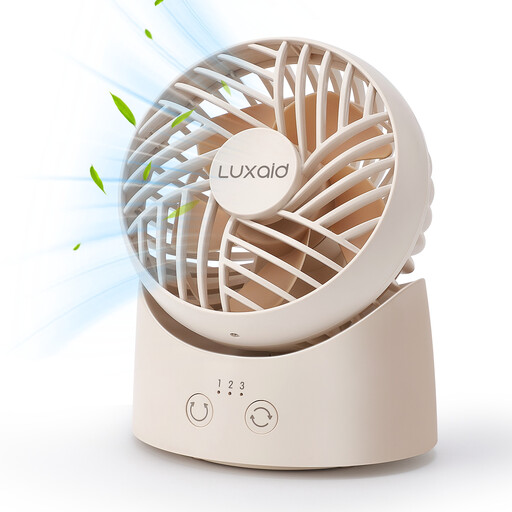
Why this choice suits this profile : Compact and rechargeable, this desk fan is ideal for a desk, bedside table or small space. Its USB-C charging and stated battery life of up to 8 hours mean you can use it without keeping it plugged in all the time.
The product details specify the actual capacity of 1 800 mAh, despite the 2 000 mAh stated on the packaging. This makes it easier to compare battery life on a more transparent basis.
Three speeds, 60° oscillation, Type-C charging and a compact design.
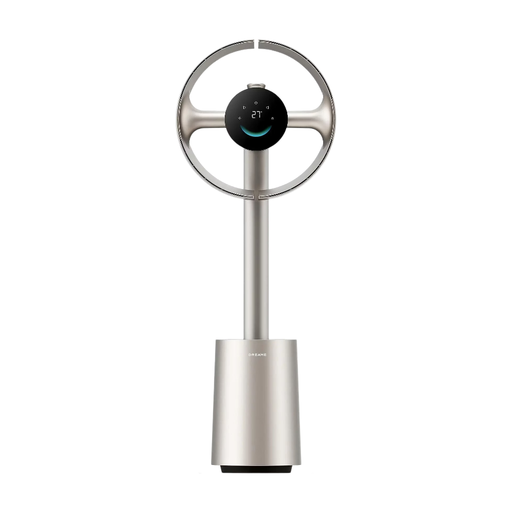
Why this choice suits this profile : This bladeless pedestal fan is designed for users looking for generous air circulation and advanced controls in a living room or bedroom.
The product details specify horizontal oscillation of up to 180° and vertical oscillation of up to 90°, along with a washable primary filter. However, you will need a mains socket and a Wi-Fi connection to use the smart features.
Stated power of 55 W, app control, magnetic remote control and temperature sensor, according to the product details.
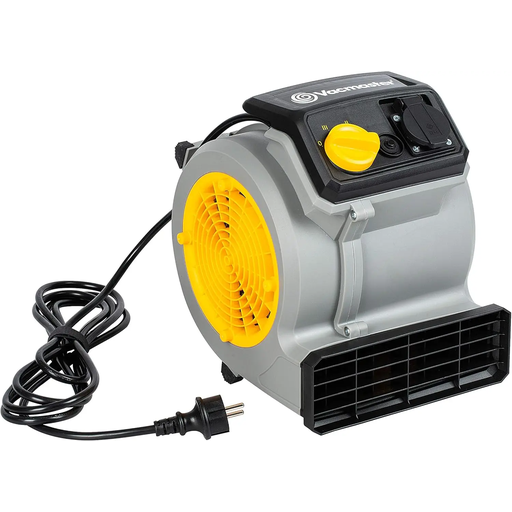
Why this choice suits this profile : This high-speed floor fan is aimed at workshops, basements, gyms and other spaces where air circulation or drying matters more than quiet operation.
The product details specify 124 W, three speeds and a stated airflow of 245 l/s. With a noise level of 75 dB, it is best reserved for environments where noise is not a priority.
Tilt adjustment of up to 45°, three speeds and an integrated socket for connecting up to 12 appliances, according to the description.
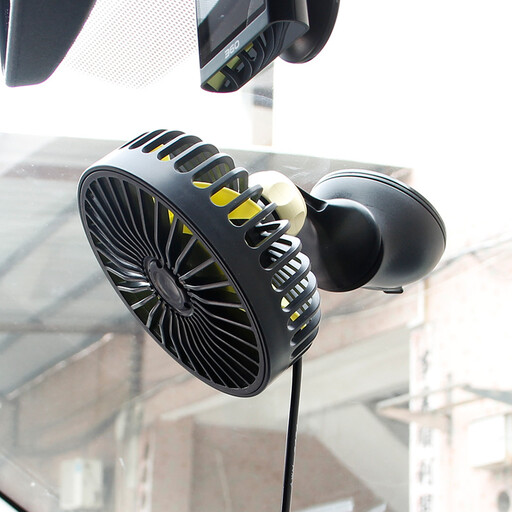
Why this choice suits this profile : This car fan connects via USB and attaches to the dashboard or windscreen with a suction cup. A practical setup for daily commutes, road trips and camping.
Its USB power supply means you do not have to rely on an integrated battery, but you will need a USB port or power bank. The suction cup must be attached to a clean surface and must not obstruct your view.
Stated 360° rotation, five blades and three speed levels.
We have compiled a complete, real-time updated list of products that meet these strict selection criteria and European safety regulations.
In a bedroom, look for a quiet fan with a timer, night mode and gradual speed control. A pedestal model is practical if several people need to benefit from the airflow.
For a desk, a USB or desk fan is generally sufficient. If you often move around, a rechargeable or portable appliance means you will not have to stay near a socket.
In a large living room, an oscillating or connected model can make it easier to distribute the air. A remote control lets you change the speed without getting up, while a ceiling fan requires you to check the ceiling height, the appliance’s diameter and the strength of the support.
Finally, a stove fan operates using the heat produced by the stove, without a conventional power supply. It must be installed in accordance with its instructions, on a suitable surface and away from areas accessible to children.
Consumption mainly depends on the appliance’s power and how long it is used. A 55 W model used for 5 hours theoretically consumes 275 Wh, or 0.275 kWh. To calculate the cost, multiply this consumption by your electricity tariff. Rechargeable models also use energy while charging, but occasional use can reduce the amount of time they need to run from the mains.
Place it on a stable surface, check that the grille is not obstructed and clean the blades or filter regularly, where accessible. Use a low speed or night mode. If the noise is caused by vibrations, check that the appliance is securely tightened and balanced, without dismantling any electrical components.
This depends on the quality of the components, how often it is used and how well it is maintained. To extend its lifespan, unplug the appliance before cleaning it, avoid moisture, do not block the air inlets and follow the instructions concerning the battery. Also remember to check the availability of accessories and the warranty terms before buying.