Shoppers who look for a Fairtrade claim
For your lunchtime decaf, you want to see a Fairtrade claim on the product you buy, without confusing this with organic certification or general statements about responsible sourcing.


If Fairtrade matters most to you when choosing coffee for your lunch break, look for a specific decaffeinated coffee whose product page or packaging clearly carries the relevant claim. Don’t rely on the brand name alone or assume that organic means Fairtrade. Ground coffee requires suitable equipment, while instant coffee only needs hot water. For capsules and coffee pods, check both machine compatibility and the Fairtrade claim on the exact product.
For your lunchtime decaf, you want to see a Fairtrade claim on the product you buy, without confusing this with organic certification or general statements about responsible sourcing.
You make ground coffee at home and take the time to compare the format, origin, stated strength and flavour profile before choosing.
Between meetings, you’re looking for instant decaffeinated coffee or a format that works with the machine you already own.
When choosing decaffeinated coffee for your lunch break, first check for a Fairtrade claim if that’s essential to your purchase. Then make sure the format works with your equipment. You can compare the decaffeination process and flavour for each product afterwards.
| What to consider | What to check | Who it matters to |
|---|---|---|
| Fairtrade | Look for an explicit Fairtrade or fair trade claim on the product page and packaging for the exact product. Organic certification and solvent-free decaffeination are separate criteria. | I want my decaffeinated coffee to meet my Fairtrade requirements, not just a general brand promise. Around 33% of consumers put this verifiable claim at the top of their list. |
| Format and preparation | Choose ground coffee for a suitable coffee maker, instant coffee for hot water, and capsules or pods for the system specified for your machine. | When my break is short, I want to be able to make coffee with the equipment I already own. Compatibility and speed come first for around 27% of consumers. |
| Caffeine and process | Read about the process used and check the residual caffeine content if it’s stated for the product. Don’t assume that “decaffeinated” means completely caffeine-free. | If I’m keeping an eye on my caffeine intake after lunch, product-specific information is more useful than making assumptions about all decaffeinated coffees. Around 20% of consumers focus first on the stated caffeine content or process. |
| Flavour and strength | Compare the flavour notes and stated strength of each coffee. Don’t treat different brands’ strength scales as a universal measure. | Above all, I want a coffee that suits my taste, even when the format and Fairtrade claim are right for me. Flavour comes first for around 20% of consumers. |
These claims relate to different aspects of coffee. Carrefour France states that its Carrefour Bio decaffeinated coffee carries Fairtrade certification, while Auchan Bio’s product page describes an organic, solvent-free decaffeinated coffee without making the same claim for that product.
Check the Fairtrade claim, decaffeination process and format separately for the product you’re thinking of buying.
Details given for one product don’t automatically apply to other formats in the range. For example, the description of NESCAFÉ Spécial Filtre Décaféiné alone isn’t enough to choose it if you require Fairtrade certification.
Look for the claim you want on the packaging and product page for the exact coffee, even if you already know the brand.
Ethiquable gives its decaffeinated Moka Éthiopie a strength rating of 3/10, with floral and honey notes; Auchan Bio gives its own product a strength rating of 5. These details alone can’t tell you which coffee you’ll prefer.
If flavour guides your choice, also consider the origin, stated tasting notes and preparation method.
A product you find online may not be available at the store or collection service you use.
Check availability after selecting your store or delivery area.
Worth a look if you’re searching for ground decaffeinated coffee with a Fairtrade claim and want to find out more about its origin and decaffeination process.
A ground decaffeinated coffee to consider if you’re looking for a Fairtrade claim alongside organic certification.
An option to compare if you prefer instant decaffeinated coffee that you can make with hot water during a short break.
A product to consider if you’re mainly looking for organic ground decaffeinated coffee for a coffee maker.
This selection includes ground coffee as well as capsules and coffee pods for different machine systems. First, choose a format that works with your lunchtime coffee-making routine. If Fairtrade is important to you, check the claim on the exact product before you buy.
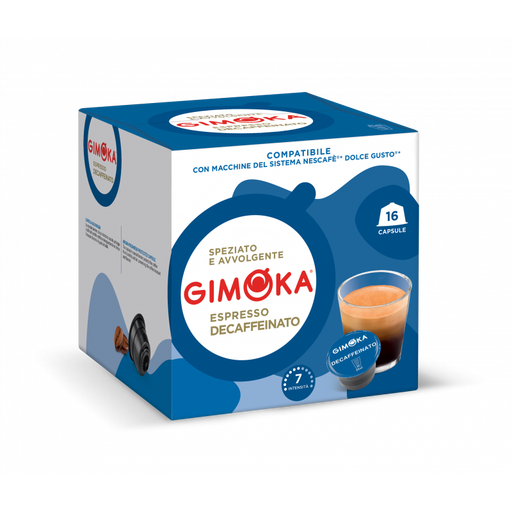 Image unavailable
Worth considering for a break if you have a Dolce Gusto-compatible machine. The pack contains 16 capsules (112 g). Check your machine is compatible and look for a Fairtrade claim if this matters to you.
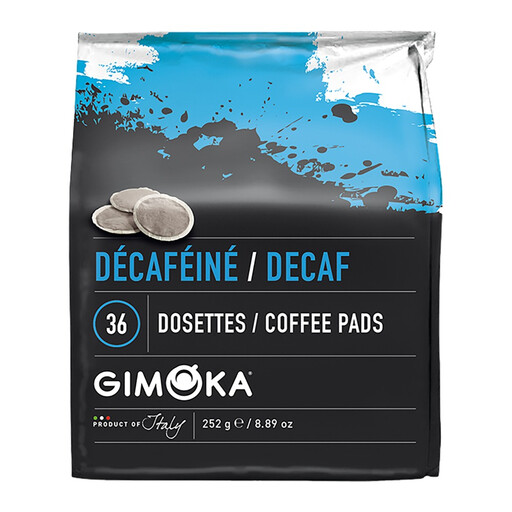 Image unavailable
A decaffeinated option to consider if you use a machine that accepts these Senseo-compatible pods. The pack contains 36 pods (252 g). Check that they’re compatible with your exact machine and look for any Fairtrade claim you require.
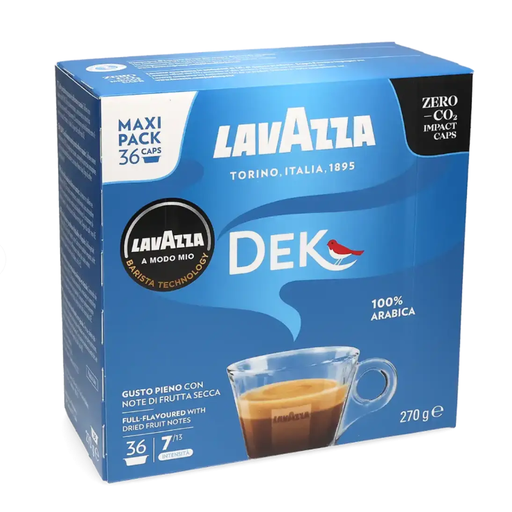 Image unavailable
These 36 decaffeinated capsules are for anyone with a machine that works with the A Modo Mio system. Check your machine model and, if needed, look for a Fairtrade claim on this product.
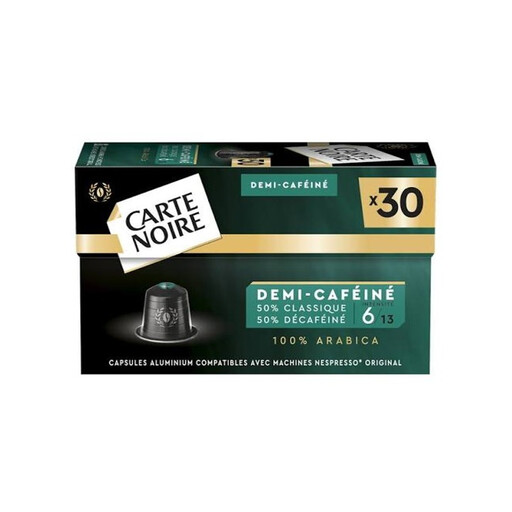 Image unavailable
Worth considering for a break if you have a machine that accepts the Nespresso capsules specified for this product. The pack contains 30 capsules. Check compatibility with your exact machine and don’t assume the product is Fairtrade certified just because of the brand.
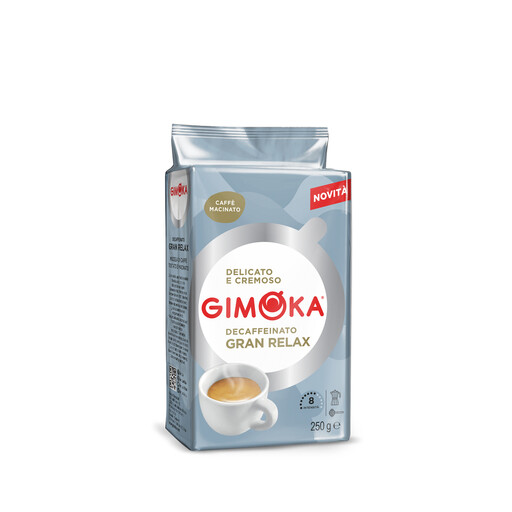 Image unavailable
This 250 g pack is suitable for a coffee maker or another brewing method designed for ground coffee. If you’re specifically looking for Fairtrade coffee or information about the decaffeination process, check the details for this product before choosing.
No. Organic and Fairtrade are separate claims. Carrefour France explicitly states that its Carrefour Bio ground decaffeinated coffee is Fairtrade; for any other product, look for the claim on the product page and packaging rather than assuming it comes with organic certification.
Don’t assume it contains no caffeine at all. Ethiquable states that its decaffeinated Moka Éthiopie has a caffeine content of ≤ 0,1 %; this figure applies to that specific product and not to all decaffeinated coffees.
Instant coffee is a good option if you only have a mug and hot water; NESCAFÉ gives these instructions for Spécial Filtre Décaféiné. Ground coffee needs a suitable coffee maker, while capsules and pods require a machine that works with the specified system.
No. Choose capsules or pods that are specifically compatible with your machine. Dolce Gusto, Senseo, A Modo Mio and Nespresso formats are not interchangeable.