
Livraison le jour même ou le lendemain

Qualité garantie

Débloquez vos offres de bienvenue: Livraison GRATUITE | Jusqu'à -80 % | 30 jours d'essai gratuits à JoyPlus
Téléchargez l'application
An ergonomic neck cushion can support you through the night, during a break at the office, in the car, or simply when you're relaxing. But not all models are interchangeable. A cushion designed for the bed can be too bulky on a car seat, while a massaging neck cushion isn't intended to replace a night-time pillow.
Before you place an order, it's worth looking beyond the words "ergonomic" and "memory foam". Here are the most common pitfalls, the criteria to examine, and a selection of models suited to different needs.
A very firm pillow doesn't necessarily offer better support. If it doesn't follow the natural curve of your neck, it can create uncomfortable pressure or force you into a poor posture. On the other hand, foam that's too soft is likely to sag quickly.
The real question is this: does the height and structure keep your head in place without pushing it forward or to the side?
A memory foam cervical pillow designed for sleeping usually has a wider base and a height carefully chosen to support your head for several hours. An ergonomic car headrest, by contrast, prioritises stability and compatibility with the seat.
When travelling, a compact, lightweight cushion is far more practical. For the bed, shape, ventilation and ease of maintenance take centre stage.
Memory foam generally cannot be machine-washed. So check for a removable cover and the cleaning instructions. A breathable cover can reduce the feeling of heat, but that doesn't make every cushion a comfortable option in all seasons.
After unpacking, some foam products need to be aired for 24 to 48 hours, as per the manufacturer's recommendations.
For a pillow intended for side and back sleeping, the height should match the gap between your head and the mattress. People who sleep on their side often need more pronounced lateral support, while back sleepers may prefer a slightly recessed central area.
The stated dimensions matter, but they don't tell you everything. Also look at:
Slow-recovery memory foam gradually moulds to the contours of your head and neck. Some models layer several types of foam to divide the roles: a soft top layer, intermediate support and a more stable base.
This construction is obviously not a guarantee of medical effectiveness. However, it does allow you to compare the composition of different models more concretely, and how the manufacturer describes their support.
For overnight use, choose a breathable, removable cover where the model allows it, and follow the care instructions. Air channels built into the foam can improve airflow, though they don't guarantee an ideal temperature for every user.
For a neck support cushion intended for travel, instead check the weight, the folded size, whether it comes with a storage cover, and the type of power supply.
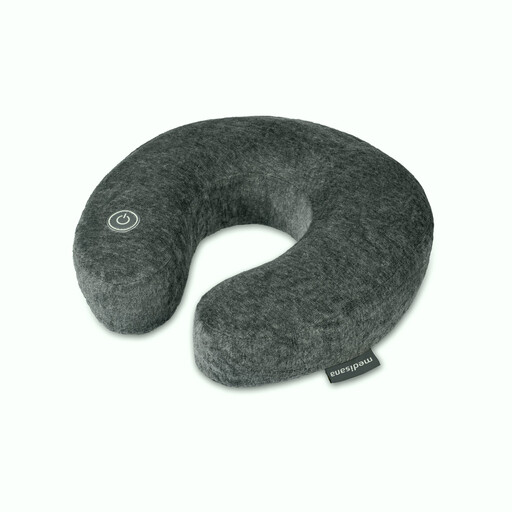
Why this choice suits this profile: This compact cushion is ideal for anyone who wants to try a massaging neck cushion at home or while travelling, without needing to plug it into the mains.
Its features are clearly stated: moulded foam, vibrations, single-button control and power from 2 AA batteries. It doesn't claim to be a versatile night-time pillow.
Approximately 28.5 × 26.5 × 9.5 cm in size, weighs around 250 g without batteries, integrated storage cover and fleece covering.
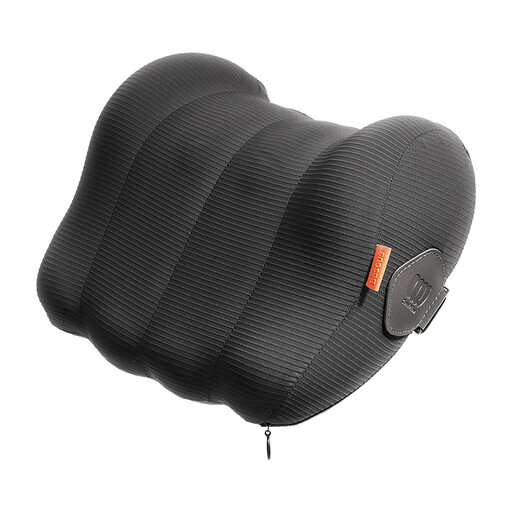
Why this choice suits this profile: It's designed for drivers and passengers who regularly do long journeys and want an ergonomic headrest for their car.
Its use is clearly intended for the car. However, do not use it while driving if it hinders your movements or visibility, and check its compatibility with your seat.
Stated dimensions of 273 × 200 × 113 mm, weighs around 450 g, memory foam and breathable fabric with integrated cooling gel, according to the product sheet.
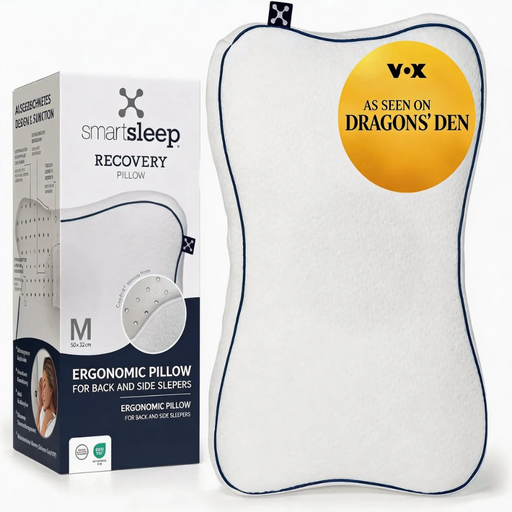
Why this choice suits this profile: This model is suitable for adults looking for an ergonomic pillow for sleeping, with a design that works for both back and side sleeping positions.
The product sheet distinguishes between the viscoelastic foam, the head recess and the air channels. The cover is stated to be certified to the Oeko-Tex standard: check the label and supplied documents for details.
Central recess, memory foam, integrated airflow and a stated 30-night home trial period.
We've put together a comprehensive, real-time updated list of products that meet these strict selection criteria and European safety requirements.
Before the first night, let your foam pillow regain its shape and air it out according to the instructions. Position the cervical area under your neck without lifting your chin excessively. If the position becomes uncomfortable, stop using it and try a different height or shape.
With a massaging cushion, keep the following precautions in mind:
These products are designed for comfort and relaxation. They are not a substitute for medical advice or treatment.
A few nights of adjustment may be necessary, especially if you're replacing a standard pillow with a contoured one. Start with normal use and check that your head stays well aligned with your neck and back. Persistent discomfort may mean the height, firmness or shape isn't right for you.
It depends on the density of the foam, how often you use it, the weight it supports, and how well you maintain it. Look out for signs of wear: permanent sagging, crumbling foam, loss of shape or a damaged cover. Rely on the warranty conditions and the manufacturer's replacement recommendations rather than a theoretical lifespan that applies to all models.
Not necessarily. The medisana NM 870 runs on 2 AA 1.5 V batteries and doesn't need to be plugged into a mains socket. Before buying, check the type of power supply, the stated battery life and the cost of batteries. Remove them if the device will be unused for a long period.