
Livraison le jour même ou le lendemain

Qualité garantie

Débloquez vos offres de bienvenue: Livraison GRATUITE | Jusqu'à -80 % | 30 jours d'essai gratuits à JoyPlus
Téléchargez l'application
Choosing educational toys for children isn’t just about spotting an appealing colour or a developmental promise on the packaging. Between toys that are quickly abandoned, accessories that are fiddly to tidy away, and features that don’t match the child’s age, some purchases can prove disappointing after just a few weeks.
To compare your options effectively, focus on three things: safety, how well the toy matches the child’s abilities, and the practical constraints of your home and daily family life.
Lights, melodies and sound effects easily catch the eye. But a sensory baby toy, such as a musical toy for babies, should above all be simple to use and offer an activity that’s easy to understand. For very young children, a barrage of effects can actually distract them from the activity itself.
A motor skills game designed for a 3-year-old won’t necessarily suit a 12-month-old baby. Similarly, a children’s climbing frame can take up a lot of space in a bedroom or need a larger clear area than you expected.
The age stated by the manufacturer is an essential guide. You also need to consider the child’s size, their independence, and their ability to follow instructions.
A bulky educational toy that’s hard to clean or runs on several batteries can quickly become a hassle in daily life. Before you order, check its dimensions, weight, assembly time, power source, and how easy it is to store once playtime is over.
Check for the CE marking, warnings in English, the minimum recommended age, and the identity of the economic operator established in the European Union. For toys, mention of the EN 71 standard provides a useful technical framework, but it doesn’t replace carefully reading the instructions and warnings.
Small parts require particular vigilance with children under 3 years old. With a toy bow and arrows, adult supervision is essential: the projectiles must never be aimed at the face or eyes.
For a wooden toy, examine the edges, the stability of the structure, and the strength of the handles and joints. A foldable climbing triangle must remain perfectly stable during use and be foldable without any risk of pinching.
Plastic toys, such as a stacking pyramid, should be inspected regularly for cracks or sharp edges. If the base is designed to wobble, place it on a flat, stable surface.
A battery-operated toy should clearly state the type of batteries needed and the replacement procedure. For long-term storage, remove the batteries to reduce the risk of leakage. For electronic products, clean with a slightly damp cloth and never immerse the toy.
Finally, keep a clear distinction between the benefits of using the toy and any overly general promises: stacking, aiming, memorising, climbing or steering all develop certain skills, but they don’t guarantee academic or medical results.
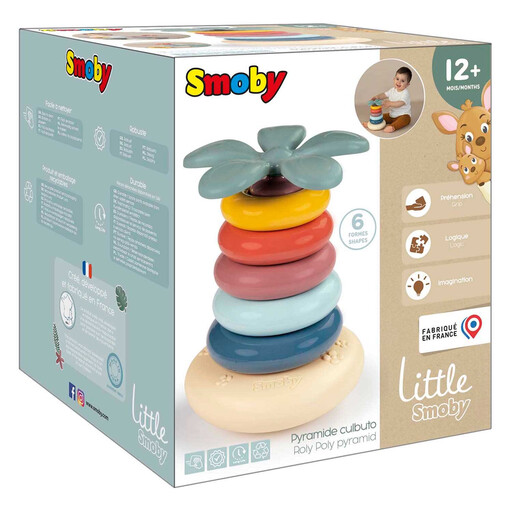
Why this choice suits this profile: This stacking pyramid is ideal for first manipulation activities from 12 months. Its size makes it easy to set up in a bedroom or play area.
The five coloured rings allow progression without adding extra accessories. The rounded base should, however, be used on a stable surface.
Manufactured in France, five rings, rotating top and no batteries required.
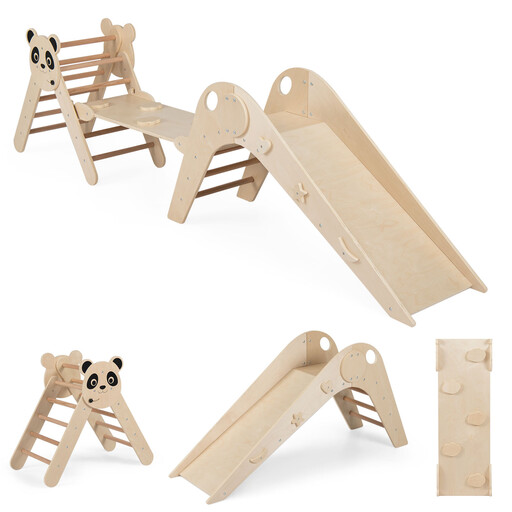
Why this choice suits this profile: This Montessori toy is aimed at families who have a dedicated space and want to vary the configurations within a single structure.
The structure folds for easy storage. It is designed for children aged 3 and over and requires assembly.
Solid beech and plywood, triangle, slide, tunnel and balance bridge, with a stated load capacity of up to 50 kg per element.
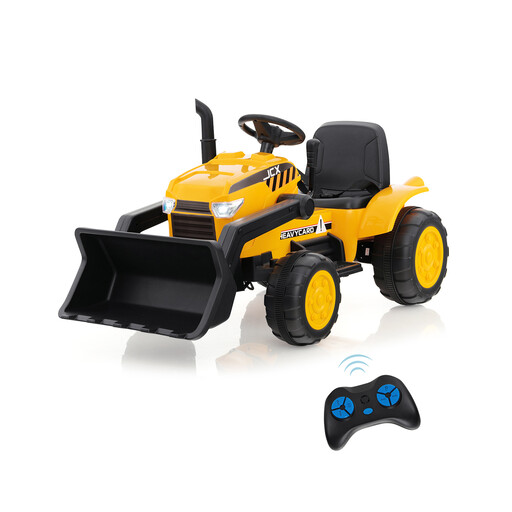
Why this choice suits this profile: This electric excavator is great for role-play outdoors or in a large room, for children aged 3 to 8 years.
The stated speed of 2.5 to 3.5 km/h, gradual start and adult-only remote control offer extra control.
Adjustable bucket, forward and reverse, seat belt, four non-slip wheels and a stated load capacity of up to 30 kg.
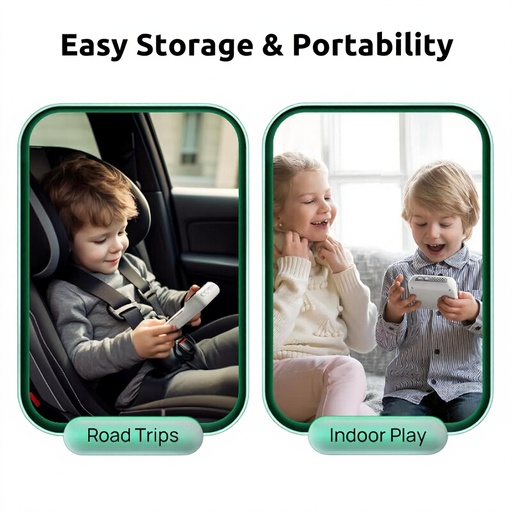
Why this choice suits this profile: From age 5, this compact STEM game easily slips into a bag for journeys, holidays or quiet moments at home.
With its three modes and 100 stated challenges, it offers several types of activity rather than a single repetitive mechanic.
Numbers, observation and memory modes, compact format and powered by three AAA batteries (not included).
For a baby, a musical sensory toy with lights and melodies can complement a sensory selection, as long as you check the volume, batteries and ease of cleaning. A wooden drum and xylophone set will suit children who enjoy making their own sounds: just make sure you have a spot where the noise level remains bearable for the whole family.
From age 6, a toy bow and arrow set with suction cups can introduce an activity focused on precision, with one non-negotiable rule: you only shoot at a target, never at a person or animal. For creative games and STEM toys, compare the actual difficulty, the number of challenges, and whether the child can play alone or with company.
We’ve put together a comprehensive, real-time updated list of products that meet these strict selection criteria and European safety regulations.
A stacking pyramid, large rings or an easy-to-grasp sensory baby toy will generally be better than a game with small pieces. Always check the minimum age stated and stay nearby during first use.
It all depends on its durability, how well it’s maintained, and the child’s development. A toy that supports several stages, such as a pyramid or a multi-level memory game, can stay interesting for longer. Regularly inspect the parts, seams, batteries and any surfaces that come into contact with the child.
Choose a model that uses standard batteries and has an automatic shut-off function if available. Remove the batteries before any long-term storage. To keep costs down, alternate electronic toys with mechanical activities such as stacking, building or handling wooden pieces.