
Livraison le jour même ou le lendemain

Qualité garantie

Débloquez vos offres de bienvenue: Livraison GRATUITE | Jusqu'à -80 % | 30 jours d'essai gratuits à JoyPlus
Téléchargez l'application
Whether you're a renter or a homeowner, the thought of drilling into a wall just to hang a simple picture frame can be daunting. The fear of picking the wrong spot, damaging the wall, or having to patch up holes before a move-out inspection is all too common. Drill-free wall hooks have emerged as a miracle solution, but be warned: the market is flooded with products that often make exaggerated claims.
To avoid disappointment, let's review the most common pitfalls.
To steer clear of these traps, simply take a more rigorous approach based on a few key criteria.
Instead of relying solely on the packaging, focus on three key points that will guarantee your hook's performance and reliability.
The first question to ask isn't "how many kilos can it hold?" but rather "on what type of wall?". The performance of a heavy-duty hook depends entirely on the surface it's applied to.
Each system has its strengths and weaknesses.
A good drill-free hook is one that comes off cleanly. For adhesives, opt for products that guarantee "residue-free" removal, often thanks to a tab you simply pull. As for claw systems, they leave behind only tiny holes, far more discreet than a traditional wall anchor.
Here are a few standout products, chosen for their performance and suitability for specific needs.
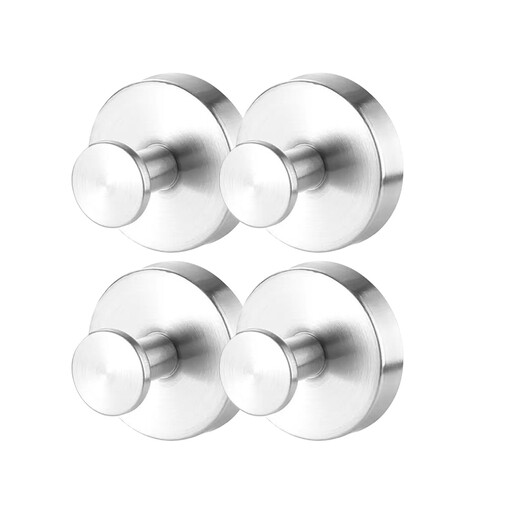
The Verdict: The perfect solution for those seeking a simple, reusable system in the kitchen or bathroom. Ideal for hanging towels, washcloths, or light utensils without any long-term commitment.
This product is designed exclusively for smooth, non-porous surfaces. It thus avoids the trap of the wrong surface type by not promising the impossible on painted or textured walls.
Instant installation and removal, with zero residue. The suction cup system allows you to move them at will, a major asset for reorganising your space whenever you wish.
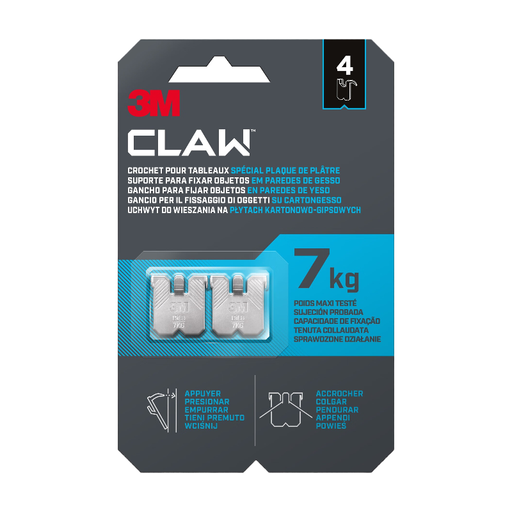
The Verdict: The dream solution for renters (and homeowners!) who want to hang medium-weight frames, mirrors, or decor on drywall without pulling out the drill or searching for studs.
This hardened steel claw system bypasses the trap of adhesives that peel off paint. It creates a mechanical anchor point directly in the plaster, providing a highly reliable hold without ever touching the painted surface.
Tool-free installation with a simple push of the thumb. The weight capacity of 7 kg per hook is realistic and perfectly suited for most wall decorations.
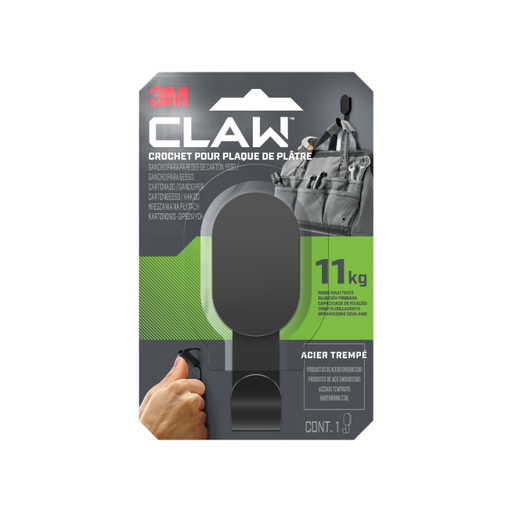
The Verdict: For those who need to hang more substantial items (a full bag, a heavy winter coat, a large bath towel) on a drywall wall, without making any compromises on safety.
This product directly tackles the pitfall of overstated weight capacity. Its design is specifically engineered to support up to 11 kg on drywall, a performance nearly impossible to achieve with simple adhesives.
It finally provides a drill-free heavy-duty hook solution for drywall, a scenario where reliable options are scarce. The mechanical hold is both robust and secure.
We have curated a complete, up-to-date selection of products that meet our strict selection criteria and safety standards.
Yes, but on one crucial condition: you must choose the right technology for the wall. A standard adhesive hook will not hold a heavy load over the long term. Conversely, a claw system like the 3M CLAW is designed to create a robust mechanical anchor in the drywall, allowing it to support up to 11 kg (and even more, depending on the model). The golden rule: always respect the maximum load indicated by the manufacturer for the specific wall type.
For a suction cup hook, simply lift an edge to let the air in. For a quality adhesive hook, look for the removal tab: always pull it slowly and parallel to the wall. Never pull the hook towards you, as this could tear off the paint. As for claw systems, a simple motion is all it takes to extract them, leaving behind only barely visible holes.
It varies greatly. A suction cup can lose its effectiveness after a few years, especially if exposed to wide temperature fluctuations. An adhesive can eventually dry out. On the other hand, a claw system, which provides a mechanical fastening, will have a much longer lifespan, limited only by the condition of the wall. A word of advice: check the stability of your hooks from time to time, especially for heavy or valuable objects.