
Livraison le jour même ou le lendemain

Qualité garantie

Débloquez vos offres de bienvenue: Livraison GRATUITE | Jusqu'à -80 % | 30 jours d'essai gratuits à JoyPlus
Téléchargez l'application
Finding the perfect wall hook might seem simple, but it often turns into a daunting task. Between "ultra-strong" adhesives that give out after a few weeks and "no-drill" solutions that leave permanent marks, it's easy to make a mistake. As a product expert at Joybuy, my mission is to guide you through this maze of options to find a reliable solution that fits your needs. Whether you're a renter anxious about drilling a hole or a homeowner seeking a long-lasting organization solution, this guide is for you.
To avoid buyer's remorse, learn to spot the flaws that make most hooks ineffective in the long run.
To make the right choice, three technical parameters should guide your decision.
Weight is the number one criterion. Never rely solely on the maximum rating displayed on the packaging.
This is the most frequently underestimated factor, and yet, it's crucial. A hook that's perfect on tile will be completely ineffective on drywall.
Each method has its strengths and weaknesses.
Here are our tested and approved recommendations that meet the criteria we've just covered.
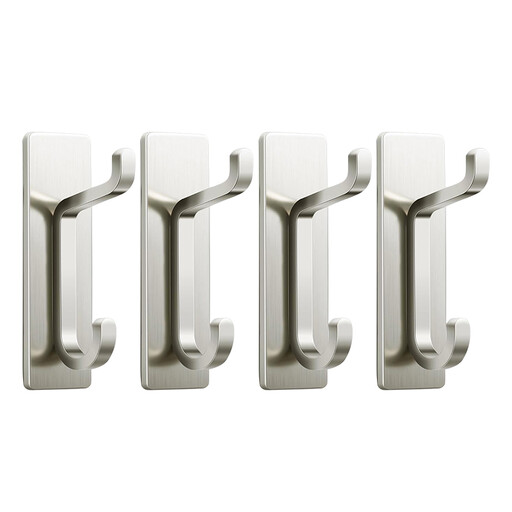
Why we love it: Perfect for renters or anyone looking for a simple, reversible solution. These hooks provide a reliable hold on smooth surfaces (tile, glass, etc.) without any tools, all with a modern stainless steel design.
Designed for damage-free installation and removal, it doesn't fall into the trap of "no-hole" hangers that damage the wall. Its adhesive is specifically made for smooth surfaces and removes cleanly, without leaving sticky residue or stripping paint.
Its metal construction gives it excellent durability. Once in place, it stays put and ensures perfect stability for everyday items, whether in the entryway, bathroom, or office.
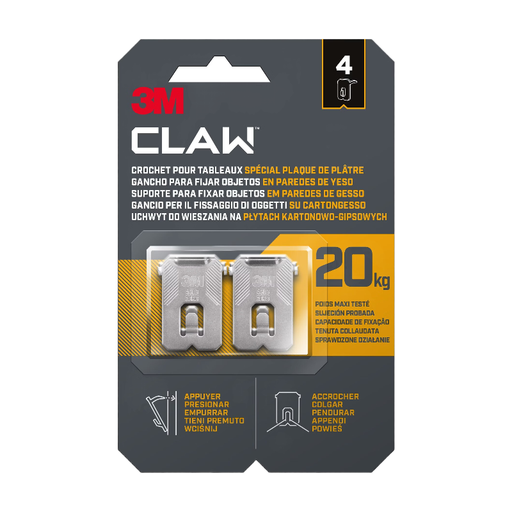
Why we love it: This is THE solution for hanging heavy objects (mirrors, large frames, wall shelves) on drywall, without a drill or a tedious search for a stud. Its design is entirely dedicated to this type of fragile wall.
It demolishes the pitfall of unrealistic load capacity claims. Designed to hold up to 20 kg, its hardened steel claws lock securely into the plaster, distributing the load and providing a level of security that no adhesive can match for this kind of weight.
An installation that's shockingly simple: just push it in with your thumb. No screws, no nails, no anchors. The wall remains intact, but the hold is rock-solid.
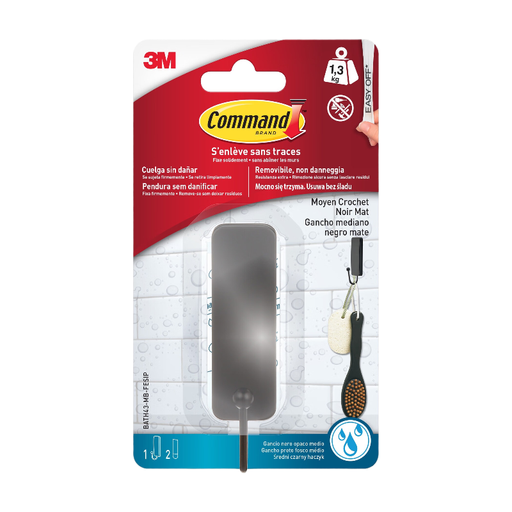
Why we love it: In a bathroom or kitchen, you need a hook that can withstand water and steam while still looking stylish. This model checks all the boxes: a trendy matte black finish and an adhesive specially designed for damp environments.
It doesn't fall for the "universal" adhesive trap that fails in wet conditions. Its strips are specifically water-resistant and remain effective even in a shower or on a wet wall.
It holds up to 1.3 kg, perfect for a towel, bathrobe, or shower accessories. It sticks to many surfaces (tile, glass, painted wood) and removes without a trace.
We've put together a complete collection of products that meet our selection criteria and current safety standards.
1. How do I remove an adhesive hook without stripping the paint? For models with a stretch-release strip (like Command), simply pull the tab straight down, keeping it parallel to the wall. The adhesive will stretch and release without leaving residue or damaging the paint. Most importantly, never pull the hook towards you! For other adhesives, a quick blast with a hairdryer can help soften the glue before you gently pull it off.
2. What's the difference between a drywall hook and a standard hook? A standard hook isn't suited for the brittle nature of drywall. A special drywall hook, like a claw-style model, is designed to anchor behind the plasterboard. This distributes the load over a larger area, which prevents the wall from crumbling under the weight.
3. Can I reuse an adhesive hook? It all depends on the model. Most entry-level adhesive hooks are single-use. However, systems like those from the Command brand are made to be reused: you just need to buy new adhesive strips to move the hook as needed. It's a much more sustainable and cost-effective solution in the long run.