
Livraison le jour même ou le lendemain

Qualité garantie

Débloquez vos offres de bienvenue: Livraison GRATUITE | Jusqu'à -80 % | 30 jours d'essai gratuits à JoyPlus
Téléchargez l'application
In an age where screens dominate our attention, finding a gift that encourages adventure is a real challenge. The dinosaur walkie-talkie emerges as a brilliant idea, a bridge between retro play and prehistoric imagination. But be warned?: the market is a jungle where tempting promises often hide disappointing performance. To save you from disappointment, here is our guide to spotting the pitfalls and choosing a model that will go the distance (and keep you connected!).
Before you make your decision, watch out for these three common pitfalls that can turn a promising gift into a source of frustration.
To ensure the quality and durability of your kids' walkie-talkie, focus on these three fundamental parameters.
Forget the marketing hype about maximum range. Instead, look for terms like "optimised circuitry" or "anti-interference technology." A good walkie-talkie will maintain clear and stable communication at a reasonable distance for playing in a large garden or a park. The presence of multiple channels is also a real bonus to avoid picking up conversations from neighbours or other toys.
The mention of "shockproof ABS plastic" is an excellent indicator of durability. This material is designed to withstand everyday bumps and drops. Also, check for the CE mark, which guarantees compliance with European safety standards. For a 3-year-old, make sure the edges are rounded and that no small parts can come loose.
This is THE essential feature: the "Push-to-Talk" (PTT) button. It should be large, easy to find, and soft enough for little hands to press. Models that automatically pair when turned on are the most convenient: no setup required. That's the secret to an interactive gift that won't end up at the bottom of a drawer.
To help you see how these criteria apply in practice, here are a few options suited to different types of children.
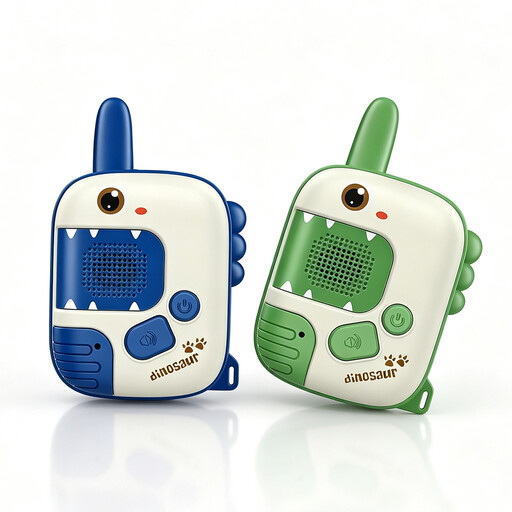
Who is it for? For budding explorers who love role-playing games, secret missions in the garden, and, of course, dinosaurs. This toy is perfect for learning to communicate and cooperate during outdoor adventures.
Made from shockproof ABS plastic, it's built to withstand the most action-packed missions. Its single PTT button and automatic connection make it incredibly easy to use, even for kids as young as 3.
Its cool dinosaur design and handy wrist strap for keeping hands free make it an excellent gift for a dino fan.
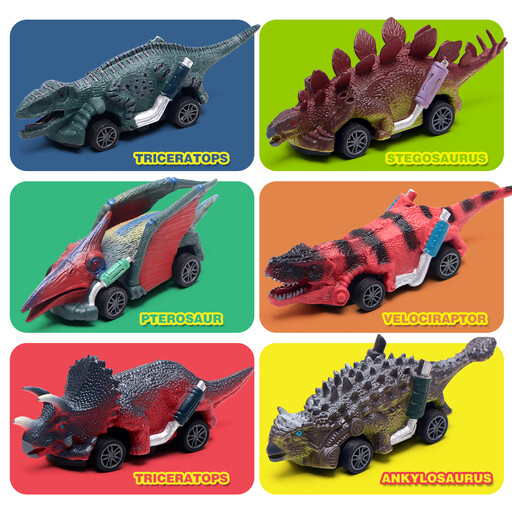
Who is it for? Perfect for younger kids who love instant action. An electronics-free alternative that stimulates fine motor skills and imagination, ideal for organising furious races in the living room.
Zero batteries, zero interference. This toy is made from soft, durable plastic with rounded corners, making it safe even for toddlers (with supervision).
The pull-back mechanism offers immediate and rewarding fun. The 6-pack is perfect for sharing and creating racing scenarios.
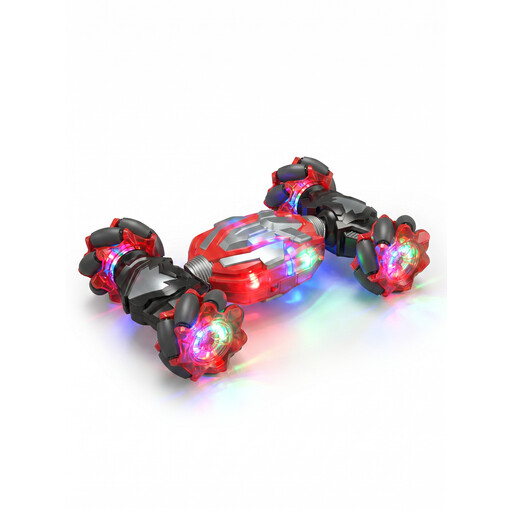
Who is it for? For older kids (ages 8 and up) fascinated by technology and stunts. Its dual control system (classic remote and a motion-sensing watch) offers a truly impressive and comprehensive driving experience.
Its robust structure with a biomimetic spine and thick ABS plastic is designed to withstand twists and impacts, avoiding the fragile high-tech toy trap.
Its ability to transform, drive on both sides, and move laterally. The 2.4G technology allows multiple cars to play together without interference.
Explore our full selection of tested and approved toys that meet our quality criteria and safety standards.
The range advertised by manufacturers (often up to 1 km or more) is measured in an "open field," meaning with no obstacles. In a real-world environment like a house or a park with trees, expect an effective range of 100 to 300 metres for most models. This is more than enough for the majority of children's games.
Most models are recommended for ages 3 and up. Before this age, small parts (like antennas or battery covers) can pose a choking hazard. For a 3-year-old, always check that the battery compartment is secured with a screw and that the toy is made from sturdy, non-toxic materials.
The majority of kids' walkie-talkies run on AAA batteries, typically 3 or 4 per device (meaning 6 to 8 for the pair). Battery life depends on the intensity of use, but expect to change them regularly. To save money and help the planet, we recommend opting for rechargeable batteries. Be sure to read the product description carefully: batteries are rarely included.