
Livraison le jour même ou le lendemain

Qualité garantie

Débloquez vos offres de bienvenue: Livraison GRATUITE | Jusqu'à -80 % | 30 jours d'essai gratuits à JoyPlus
Téléchargez l'application
For new parents, nothing is more important than their child's safety and well-being. The video baby monitor has become an essential tool for keeping an eye and an ear on your baby, day and night, and regaining some peace of mind. But with the overwhelming array of models and technologies, how do you find your way?
This guide is here to help you make sense of it all, breaking down the criteria that truly matter and presenting a selection of reliable products—all without the unnecessary marketing jargon.
Before you take the plunge, let's review the features that really make a difference. These key points will help you find the perfect model for your daily life and your home.
This is often the first dilemma parents face. Each option has its pros and cons.
Connected (Wi-Fi) Baby Monitors: As the name suggests, this type of Wi-Fi baby monitor connects to your home network. Its main advantage: you can monitor your baby from your smartphone or tablet via a dedicated app, wherever you are in the world. Ideal for checking in from the office or while travelling. Security, provided by encryption, also depends on the strength of your own Wi-Fi network.
Dedicated Connection (FHSS/DECT) Baby Monitors: These models operate on a closed-loop system, using a direct radio transmission between the camera (the baby unit) and the monitor (the parent unit). The major advantage: a 100% private and secure connection that is independent of the internet and its whims. It's the go-to solution for simplicity and reliability for at-home monitoring. However, pay close attention to the range, which is a decisive factor: a long-range baby monitor will be essential for large houses or those with thick walls.
This is the heart of the matter: seeing your child clearly. A good resolution (HD 720p minimum, Full HD 1080p ideally) ensures a sharp and detailed image. As for infrared night vision, it isn't an option—it's essential. It allows the baby monitor camera to automatically switch to black and white in complete darkness, providing a perfectly clear picture without ever disturbing your child's sleep.
The parent unit's battery life is a key factor in avoiding being tethered to a power outlet. Check the advertised battery life during operation, especially with the screen on. Other features, far from being gimmicks, can make a real difference in your daily routine:
To guide you, here are three models that caught our attention. Each one caters to different needs and budgets.
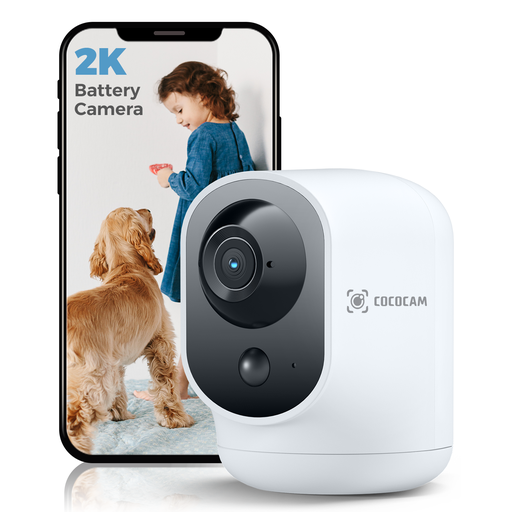
What sets it apart: This versatile Wi-Fi camera stands out with its battery-powered operation, offering complete installation freedom. With its 2K resolution and motorised pan/tilt head, it scans the entire room, all controlled from an app.
Highlights:
Who is it for? For tech-savvy parents looking for a connected baby monitor with excellent image quality and the flexibility of a battery-powered camera that can be viewed from anywhere.
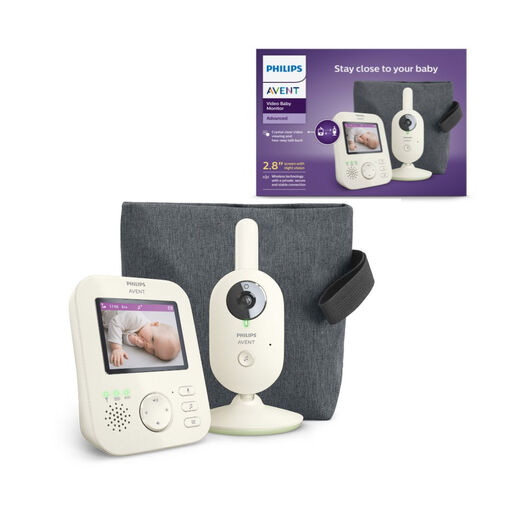
What sets it apart: This Philips Avent model focuses on simplicity and security with its private connection and dedicated monitor. A reassuring choice for those who prefer a turnkey solution without relying on Wi-Fi.
Highlights:
Who is it for? For parents (and grandparents!) who prioritise a reliable, secure, and ready-to-use solution that doesn't depend on an internet connection or a smartphone.
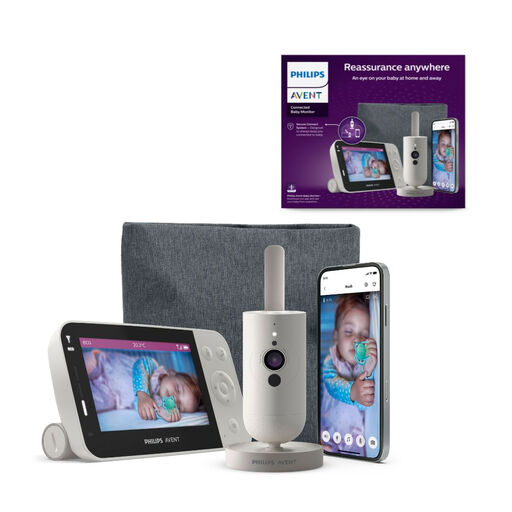
What sets it apart: This hybrid baby monitor combines the best of both worlds: a reliable, direct connection with its parent unit, and Wi-Fi connectivity for remote monitoring via the Baby Monitor+ app.
Highlights:
Who is it for? For parents who don't want to compromise, demanding both the peace of mind of a dedicated monitor at home and the flexibility of a baby monitor with an app to keep an eye on their baby while on the go.
Our selection covers the most common needs, but the baby monitoring market is full of other great finds. Whether you're looking for record-breaking battery life or a system that can connect multiple cameras, other solutions are available.
? Discover our full range of battery-powered security camera systems to find other suitable options.
1. What is the real-world range of a long-range baby monitor?
The range advertised by manufacturers (300m, 400m, etc.) is always an "open field" measurement, meaning without any obstacles. In practice, indoors, walls, floors, and interference from other electronic devices significantly reduce this figure. For a standard house, a theoretical 300 metres is usually sufficient. But be cautious in large buildings or homes with thick walls (concrete, stone), where the signal can drop off quickly.
2. Is a connected (Wi-Fi) baby monitor truly secure?
Reputable brands, like Philips Avent, integrate secure connections with multiple layers of encryption to ensure privacy. However, the overall security also relies on your own network. Remember to use a strong, unique Wi-Fi password and apply firmware updates for your baby monitor as soon as they become available.
3. Can you use a standard security camera as a baby monitor?
Absolutely, and the COCOCAM model is proof of this. A connected baby surveillance camera often offers better image quality and more flexibility. However, a dedicated baby monitor includes features designed specifically for parents (a portable unit, lullabies, temperature sensor, VOX mode, etc.) that aren't always found on standard security cameras. It's all a matter of priorities.