
Livraison le jour même ou le lendemain

Qualité garantie

Débloquez vos offres de bienvenue: Livraison GRATUITE | Jusqu'à -80 % | 30 jours d'essai gratuits à JoyPlus
Téléchargez l'application
Lingerie caught in the drum, socks that go missing or knitwear that loses its shape after just a few washes: delicate laundry bags solve some very real problems. However, you still need to choose a model suited to the size of your clothes and know how to use it correctly.
Some marketing claims also deserve closer scrutiny. An extremely fine mesh is not necessarily more protective if it tears after a few cycles, while a poorly designed fastening may open during the wash. Sets made up solely of small bags can also quickly become impractical for jumpers, blouses or baby clothes.
Here are the criteria to check before buying washing machine laundry nets, along with a selection suited to different household needs.
A small bag is perfectly suitable as a laundry net for socks and lingerie, but it quickly compresses larger items. Conversely, a large net that is only half full allows clothes to move around more inside the drum. A selection of sizes therefore lets you match the bag to each use:
A laundry net with a zip must remain fully closed throughout the cycle. If the zip pull catches on the drum or another textile, it could damage your laundry. Before each wash, check that the zip is fully closed and, where the design allows, tuck the pull underneath its protective flap.
Even a sturdy bag loses much of its usefulness when it is overloaded. The laundry must be able to move and the soapy water must circulate freely. Fill each bag without cramming the items in, leaving a little space around them. The manufacturer’s instructions always take priority, particularly when it comes to wash temperature and drying.
The mesh should be tight enough to hold small items while still allowing water and detergent to pass through. For delicate clothing, choose a design without rough edges or exposed seams that could snag fibres.
A reusable laundry bag should also be checked regularly. After several cycles, inspect the seams, mesh, zip pull and flap: these are generally the first parts to show signs of wear. A product supplied with clear care instructions will also be easier to use day to day.
The stated dimensions are more useful than vague descriptions such as “family size”. To create a versatile set, combining large, medium and small bags makes sorting easier:
These dimensions do not replace the recommendations on the garment care label. They are mainly intended to help organise your laundry and avoid mixing items with very different volumes.
Some bags are designed to withstand washing at up to 40 °C. This limit must be respected, even if your machine offers hotter programmes. Tumble drying may also be discouraged to protect the mesh and fastening. At the end of the cycle, remove the items promptly and leave the bag to air-dry if recommended in the instructions.
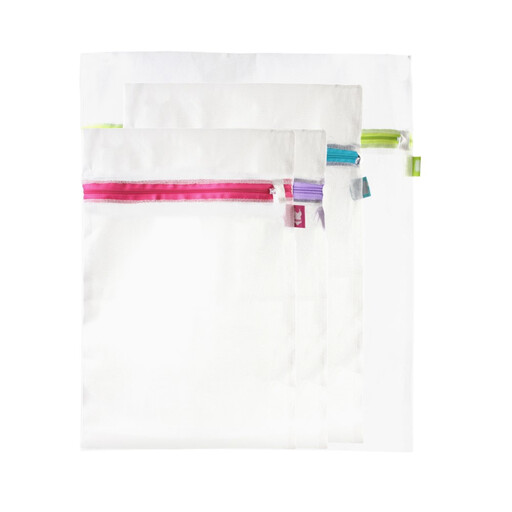
Why this choice suits this profile : This set contains four bags in three sizes. It is a great way to start protecting lingerie, socks and delicate clothing without buying lots of different products.
The range of sizes means you do not have to fit all your laundry into one small net. The zip must be fully closed before washing.
Four bags included: one measuring 45 × 53 cm, one measuring 33 × 46 cm and two measuring 25 × 34 cm. Suitable for washing at up to 40 °C.
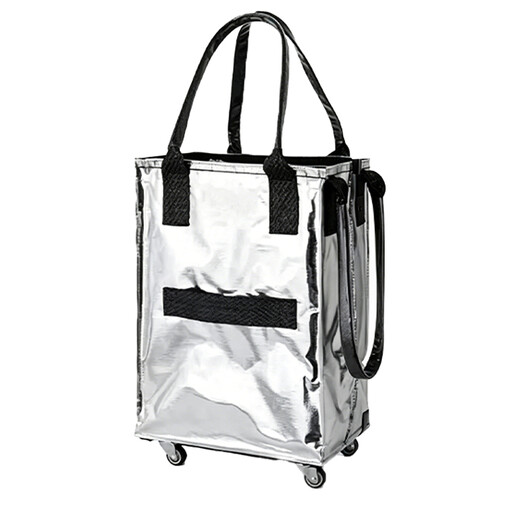
Why this choice suits this profile : This trolley is designed for households that regularly transport laundry bags between home, the launderette and a storage area.
Its purpose is different from that of a laundry net: it is for transport, not for use in the washing machine. This distinction helps you avoid buying the wrong product.
Woven bag with a stated capacity of approximately 60 l and a maximum load of 35 kg. The model is fitted with wheels.
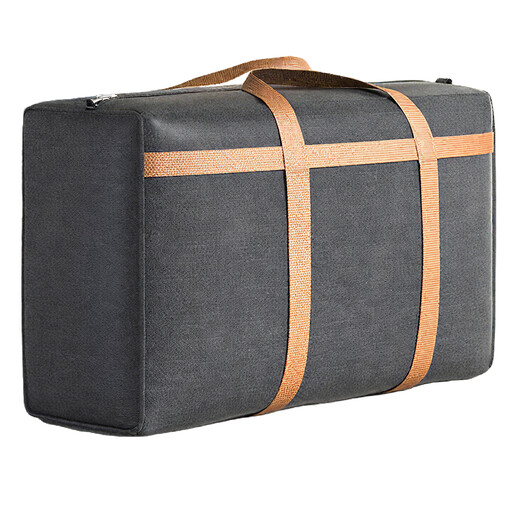
Why this choice suits this profile : These bags are designed to store or transport large volumes. They can complement laundry nets in a well-organised family laundry routine.
It does not replace a delicate laundry net. Reserving it for storage rather than the drum ensures each accessory is used for its intended purpose.
Set of two woven bags with a stated volume of 150 l. A suitable size for clean laundry, seasonal textiles or transport.
We have put together a complete, real-time updated list of products that meet these strict selection criteria and European safety regulations.
These precautions reduce the risk of snagging, but a laundry bag can never replace the recommendations on the garment care label.
No. Start by checking the maximum temperature the bag can withstand and the manufacturer’s instructions. A bag designed to withstand temperatures of up to 40 °C must not be used with a hotter programme. The textile placed inside must also be taken into account: lingerie, knitwear and embroidered items may require a gentle cycle.
It depends on the size of the bag and the thickness of the items. The net should remain flexible and must not be compressed. With smaller models, limit yourself to a few lightweight items. A large bag can hold more laundry, provided that the water can circulate and you avoid mixing clothes that could snag on one another.
This depends on how often it is used, the weight of the laundry and how well it is cared for. To extend its lifespan, always close the zip, avoid overfilling it and leave it to dry after each wash. Replace it as soon as a seam comes undone, a hole appears in the mesh or the fastening no longer stays securely closed.