
Livraison le jour même ou le lendemain

Qualité garantie

Débloquez vos offres de bienvenue: Livraison GRATUITE | Jusqu'à -80 % | 30 jours d'essai gratuits à JoyPlus
Téléchargez l'application
A decorative vase can transform a table, shelf or console, even without a bouquet. Yet some purchases can prove disappointing: wrong dimensions, fragile material or an opening too narrow for the flowers you've chosen. To avoid unpleasant surprises, it's better to consider the intended use, stability and maintenance rather than relying solely on photos.
A vase can look elegant in a photo yet appear completely out of proportion in a living room or on a small table. Before ordering, measure the available space and check the height, diameter and neck width. A 30 cm model will suit a console or large table far better than a bedside table.
A glass vase showcases stems and lets light through beautifully, but it remains vulnerable to knocks and falls. Mentions of thick glass or a reinforced base can be reassuring, without necessarily guaranteeing unbreakable strength. In a home with children or pets, a transparent acrylic vase will often be more practical.
A narrow opening works well for thin stems, tulips or lightweight dried flowers. However, it will be poorly suited to a large bouquet. Artificial flowers and pampas grass arrangements don't behave like fresh flowers either. The neck diameter should therefore be chosen according to the arrangement you have in mind.
The material isn't everything. Also check the base thickness, the stability of the bottom and how easy it is to clean.
For a flower vase, the height should support the stems without making the whole thing unstable. A simple rule is to choose a vase whose height represents roughly one-third to half of the total floral arrangement. This proportion is only a guide: flexible flowers, pampas grass and decorative branches may require a taller container.
The models shown here measure 20 cm, 24.5 cm and 30 cm respectively. A small vase will hold three or four stems, while a taller model can accommodate a more generous arrangement. For a table centrepiece, however, make sure you choose a height that doesn't block the view between guests.
For fresh flowers, ensure the vase can hold water and is easy to clean. A ceramic vase with a waterproof coating can work for fresh arrangements, depending on the product details. Artificial flowers don't need watering, but they do require regular dusting.
Always place the vase on a flat, stable surface. Glass models and heavy arrangements should be kept out of reach of children and pets. Artificial flowers made from fabric or plastic should also be kept away from flames and heat sources.
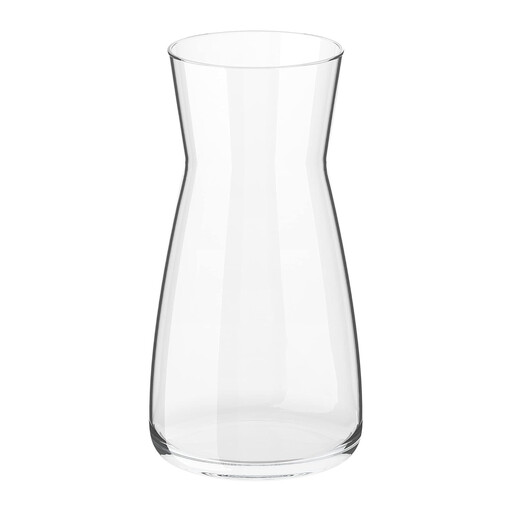
Why this choice suits this profile: At 20 cm tall with a stated diameter of 8.5 cm, this transparent vase is ideal for a small arrangement on a table, shelf or desk.
Its dimensions are clearly stated, reducing the risk of choosing a container that's too large for a small space.
Transparent glass, thickened base according to the product sheet and an opening suited to small arrangements.
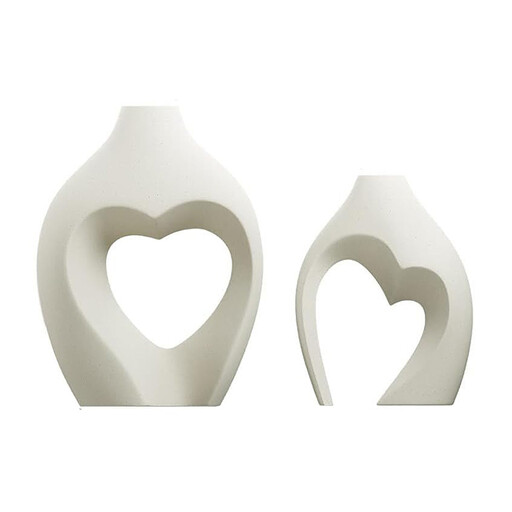
Why this choice suits this profile: This duo brings real decorative presence, even without flowers, thanks to its two sizes and heart-shaped silhouettes.
The two vases can be displayed together or separately, allowing you to place them in different spaces.
High-fired ceramic, matte finish and heights of 21 cm and 17.5 cm according to the product sheet.
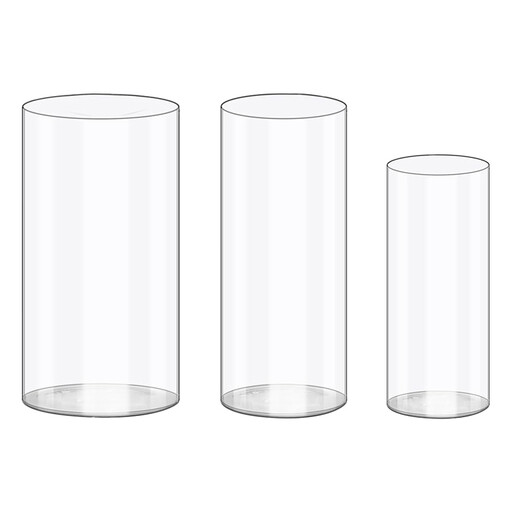
Why this choice suits this profile: With three vases in different sizes, this set adapts to wedding decorations, table centrepieces and high-traffic areas.
The transparent acrylic is described as lightweight and unbreakable, an advantage for transport and repeated setups.
Three sizes, transparent PET acrylic and cleaning with mild soapy water.
We've put together a comprehensive, real-time updated list of products that meet these demanding selection criteria and European safety standards.
For long-lasting décor, artificial flowers can complement a dried flower vase. You'll find sets of six artificial hydrangeas in white, pink, blue or green. Their flexible stems make it easy to adjust the arrangement, while regular dusting helps preserve their appearance.
For a wedding decoration, choose a palette that matches the tablecloths, candles and place-name cards. A set of small glass vases can be spread across the table, while a large 30 cm cylindrical vase will work better for a single central arrangement.
A glass vase or a ceramic model with a waterproof coating will generally work best. Check the stability of the base, the width of the neck and the vase's ability to hold water. For long-stemmed flowers, a tall model will reduce the risk of the arrangement toppling over.
Use warm water, a mild soap and a non-abrasive cloth. Dry the base thoroughly before placing the vase back on a piece of furniture. With matte ceramic, avoid harsh chemical products. For acrylic, avoid abrasive sponges as they can scratch the surface.
Their appearance lasts for varying lengths of time depending on the materials, dust accumulation and light exposure. Avoid prolonged direct sunlight, heat and excessive humidity. Gentle dusting will help preserve the arrangement for longer.