For a TV night, a dark chocolate bar with around 70% cocoa is a good starting point if you’re not looking for a very intense flavour straight away. A higher cocoa percentage or a flavoured recipe may suit different preferences. However, the cocoa percentage alone isn’t enough to help you choose: compare the sugars per 100 g, ingredients, allergens and format of each bar.
Who are these bars for?
Fans of dark chocolate around 70%
If you’d like to try a few different recipes without immediately opting for a high cocoa percentage, compare bars around 70%. Lindt describes its EXCELLENCE 70% Smooth recipe as having little bitterness; that flavour description doesn’t apply to every 70% bar.
Those who prefer a bolder flavour
If you enjoy a more pronounced cocoa flavour, a bar with a higher cocoa percentage may be worth considering. Lindt, for example, offers an EXCELLENCE bar at 78%, although the percentage alone can’t predict whether you’ll like it.
Label-conscious shoppers
If you want to compare sugar content or share a bar with someone who needs to avoid certain allergens, check the exact product. Nutritional information and the ingredients list are useful even when there’s no Nutri-Score.
What should you look for?
First, choose the flavour profile or format that matters most to you, then check the ingredients of the bar you’ve selected.
| What to consider |
What to check |
Who it matters to |
| Cocoa intensity |
The cocoa percentage and recipe: around 70% or a higher percentage, depending on your taste. |
You want to snack on dark chocolate without starting with the boldest flavour profile. Around 36% of consumers would prioritise this search for a particular intensity. |
| Ingredients and allergens |
Sugars per 100 g, the ingredients list and allergen information for the exact product. |
Before sharing the bar, you want to be able to read its ingredients and identify any relevant allergens. Around 29% of consumers would prioritise this information. |
| Sharing size |
The net weight and packaging of the bar you choose. |
If you’re watching with others, finding a size that’s easy to share is your main concern. Around 21% of consumers would put this need first. |
| Recipe variety |
Flavourings or inclusions, followed by the ingredients specific to that recipe. |
If you fancy something different from plain dark chocolate, look for a flavoured recipe or one with inclusions. Around 14% of consumers would put this variety first. |
Mistakes to avoid
-
Assuming the soft drinks tax applies to a chocolate bar
This levy isn’t a factor when comparing solid chocolate. Article 1613 ter of the French General Tax Code, published by Légifrance, applies to drinks and liquid preparations for drinks.
When choosing a chocolate bar, check its ingredients and nutritional information instead.
-
Assuming Nutri-Score has to appear on the packaging
In France, Santé publique France explains that producers display Nutri-Score voluntarily. Its absence doesn’t, by itself, mean that nutritional information is missing.
Read the nutritional information and ingredients, and use Nutri-Score as an additional guide if it’s shown.
-
Judging sugar or allergens by the cocoa percentage alone
Two recipes with a similar cocoa percentage can have different ingredients. For example, the Lindt EXCELLENCE 70% product information lists 30 g of sugars per 100 g and possible allergens specific to that product.
Compare the ‘of which sugars’ figure per 100 g and check the allergen information on the bar you’re planning to buy.
Brands to consider
Lindt
The EXCELLENCE range includes bars with different cocoa percentages and flavoured recipes, making it easier to find a specific flavour profile.
- The Lindt EXCELLENCE 70% product information includes details such as sugars per 100 g and possible allergens.
- Lindt’s flavour descriptions reflect the brand’s positioning, rather than an independent assessment of all its recipes.
Carrefour
Carrefour Bio offers a 200 g organic dark chocolate bar with 70% cocoa, worth considering if the size matters when sharing.
- Carrefour’s product information gives the weight and lists ingredients including cocoa mass, cane sugar, cocoa butter and vanilla.
- Check the nutritional information and label for the product you choose before comparing it with another bar.
Côte d’Or
Carrefour lists a 90 g Côte d’Or organic dark chocolate bar with 70% cocoa: an option if you’re looking for a smaller bar.
- Carrefour’s product information gives the weight and ingredients for this product.
- Don’t assume its ingredients or labelling apply to other Côte d’Or recipes.
Nestlé Dessert
The NESTLÉ DESSERT 70% product is presented as cooking chocolate, making it a good fit if you’re planning to make a dessert as well as enjoy some chocolate.
- Its suitability for baking is clearly stated in the product description.
- That positioning doesn’t tell you whether you’ll enjoy its texture as a snack straight from the bar.
Chocolate bars available on Joybuy
These bars cater to different preferences for a TV night: 70% dark chocolate, a bolder flavour, a sharing size or a sesame recipe. Check the exact product if a particular cocoa percentage or ingredient is important to you.
 Image unavailable
Lindt Excellence 85% dark chocolate, 100 g
Worth considering if you’re looking for a bar with a high cocoa percentage to enjoy on its own. The stated size is 100 g; check the sugars and allergens for this product before sharing it.
View on Joybuy
 Image unavailable
Poulain Fine 70% dark chocolate, 100 g
An option if you’d like to start with a dark chocolate bar containing 70% cocoa. It comes in a 100 g size; check the ingredients and nutritional information for this recipe rather than judging its composition by the percentage alone.
View on Joybuy
 Image unavailable
Lindt Excellence 70% dark chocolate mini bar, 35 g
The 35 g size is ideal if you’re looking for a small bar rather than a larger one to share. It’s labelled as containing 70% cocoa; check the allergen information for this mini bar.
View on Joybuy
 Image unavailable
Poulain Extra dark chocolate, 200 g
Worth considering if you prefer a 200 g bar for sharing. The product name doesn’t specify its cocoa percentage, so check the label if you’re particularly looking for a bar with 70% cocoa or more.
View on Joybuy
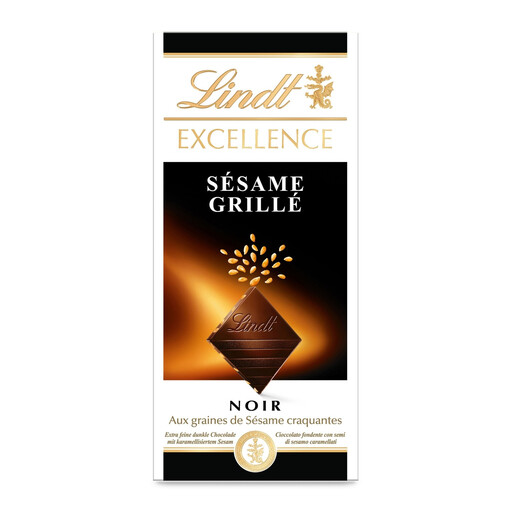 Image unavailable
Lindt Excellence dark chocolate with sesame, 100 g
A recipe to consider if you’d like a change from plain dark chocolate. The name indicates sesame and a 100 g size; check the cocoa percentage and all allergen information for this product before sharing it.
View on Joybuy
Frequently asked questions
Does the soft drinks tax apply to chocolate bars in France?
No, it doesn’t apply to solid chocolate bars. Article 1613 ter of the French General Tax Code, published by Légifrance, covers drinks and liquid preparations for drinks.
Is Nutri-Score compulsory on a chocolate bar?
No. Santé publique France says that displaying it is voluntary. This is separate from the labelling information for prepacked foods outlined by the DGCCRF, including the ingredients list and nutritional declaration.
What should you check before sharing a bar with someone who has an allergy?
Read the ingredients and allergen information on the packaging of the exact bar. For example, the Lindt EXCELLENCE 70% product information mentions possible traces of milk, almonds, hazelnuts, other nuts, soya and sesame; this list doesn’t automatically apply to other recipes.
Does a bar with 70% cocoa always contain less sugar?
The cocoa percentage alone doesn’t tell you how much sugar a bar contains. Compare the ‘of which sugars’ figure per 100 g for each product: the Lindt EXCELLENCE 70% product information lists 30 g per 100 g, but that figure can’t be applied to other 70% bars.


