
Livraison le jour même ou le lendemain

Qualité garantie

Débloquez vos offres de bienvenue: Livraison GRATUITE | Jusqu'à -80 % | 30 jours d'essai gratuits à JoyPlus
Téléchargez l'application
Cutting corrugated cardboard, thick fabric or leather with a pair of ordinary scissors can quickly take its toll on your hands. Cordless electric scissors make light work of these tasks thanks to their motorised blade, rechargeable battery and freedom of movement. The trick is knowing how to tell which models are genuinely up to the job, because product listings don't always make it easy to compare devices on a level playing field.
Before you place your order, take a close look at the real-world battery life, the materials they can handle and the safety features on offer. A high rotation speed doesn't guarantee a clean cut. Similarly, a battery that sounds impressive on paper can become a nuisance if recharging takes forever or requires a proprietary cable.
A figure like 11,000 rpm tells you the motor speed, but on its own it won't tell you how well the tool actually cuts. The result also depends on the blade geometry, how sharp it is, the pressure you apply and the thickness of the material.
For home use, choose a product listing that clearly states which materials are suitable: paper, cardboard, felt, fabric, leather or thin plastic. Claims of "universal" cutting should set alarm bells ringing if no thickness limits are given.
A tool that's too heavy can quickly defeat the purpose of having motorised assistance, especially when you're working on sewing, craft or decorating projects. Make sure you distinguish the tool weight from the package weight, which is often listed separately in the adverts.
A comfortable handle, an easy-to-reach button and a safety lock all help you keep better control of the tool. These details really matter when you're making cut after cut.
A battery life of "up to 2 hours" is based on a specific usage scenario defined by the manufacturer. It can vary depending on the material you're cutting, the pressure you apply to the blade and how often you stop. For occasional use, a built-in rechargeable battery will usually do the job. For repeated cutting, however, pay closer attention to the charging method, how easy it is to access a power source and whether replacement blades are available.
Rechargeable electric scissors most often come with a built-in lithium-ion battery. A voltage of 4V is sufficient for many light to medium cutting tasks. Having a USB-C port makes charging much simpler, especially if you already have a compatible adapter at home or in the workshop.
That said, try not to let the battery run completely flat on a regular basis. Follow the manufacturer's recommendations and use the supplied cable, or a power source that's compatible with the device.
For scissors designed for fabric and leather, the choice of blade deserves your full attention. A blade made from ground carbon steel can hold a suitable edge for regular cutting. A self-sharpening blade mechanism is intended to help maintain that edge over time, but it doesn't replace cleaning or replacing the blade when it becomes worn.
A cordless rotary cutter or a multi-function electric cutter can also work well on paper, corrugated cardboard, carpet, felt and certain plastics. However, you should always confirm the exact compatibility in the instruction manual. Never attempt to cut a material that is thicker or more rigid than the blade can handle.
Choose a model with a safety lock to prevent accidental start-up. While using the tool, keep your fingers, loose clothing and cables away from the blade's path. As with any power tool, keep it out of reach of children.
A noise level rated below 70 dB makes working sessions more pleasant, but it doesn't mean you can let your guard down. After each use, wipe the blade with a dry cloth and store the tool in a clean place. If the blade can be replaced without tools, routine maintenance becomes much simpler.
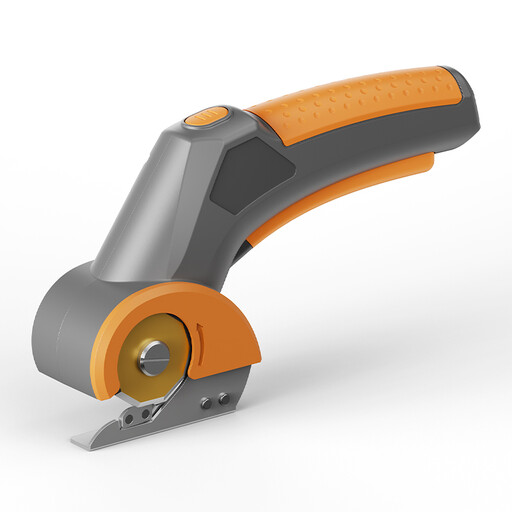
Why this model suits this profile: This model is ready to use straight out of the box and charges via USB-C, with no assembly required. It's ideal for getting started with paper, cardboard, felt or fabric, without needing a whole collection of specialist tools.
The listing specifies the compatible materials, the 4V battery and a stated battery life of up to 2 hours. This gives you a concrete framework for use, rather than a vague promise of versatility.
USB-C charging, stated tool weight of 0.386 kg, safety lock and a spare blade included.
Why this model suits this profile: Demanding users will appreciate the ground carbon steel blade and the advertised self-sharpening mechanism, especially for creative projects that call for repeated, consistent cuts.
The blade can be replaced without tools, so you're not reliant on manual sharpening. It's still essential to stick to the materials and thicknesses specified by the manufacturer.
Ground carbon steel, advertised self-sharpening system, noise level below 70 dB and a lightweight handle.
Why this model suits this profile: For a mobile workshop, decorating jobs or batch cutting of cardboard, leather and plastic, the lack of a cable gives you genuine freedom of movement.
USB-C charging, the dust bag and the extra blade make it easier to move around and to tackle long work sessions. However, you should compare the stated battery life with your actual cutting pace.
Advertised motor speed of 11,000 rpm, battery life of up to 2 hours, safety lock and tool-free blade replacement.
Some models can handle leather, corrugated cardboard, felt, fabric and certain plastics. It all depends on the thickness and stiffness of the material. First, test the tool on a scrap piece without forcing the blade. For very thick cardboard or particularly stiff leather, a professional tool designed for that purpose will usually be a better choice.
The charging time varies depending on the battery capacity and the charger you use. A model with a USB-C port is convenient for everyday use, but the product listing should state which cable is supplied and the recommended charging conditions. Don't use an incompatible power source and don't place the device near a heat source while it's charging.
After each use, wipe away any residue with a dry cloth. Avoid materials that the manufacturer hasn't approved and don't twist the tool while cutting. A self-sharpening blade can reduce the need for manual maintenance, but it's still a consumable part. Replace it as soon as you notice signs of wear or when the cut becomes uneven.