Who are these formats for?

Coffee-break organisers

When you need to serve several people quickly, it’s important to distinguish between a product to put out on the buffet and sealed sachets to hand out individually. The number of units matters more than simply seeing the word ‘multipack’.

Lunchbox organisers

Pre-portioned sachets save you from having to divide up the contents of a large pack while preparing lunchboxes. However, check the weight of each sachet before planning to include one in every box.

Anyone managing dietary requirements

Check the ingredients list for each product to identify peanuts and tree nuts, as well as sweetened or salted ingredients. If the product is served out of its packaging, make sure allergen information remains available to anyone who needs it.

What should you check before choosing?

For individual servings, start by counting the sachets; for a buffet, compare the quantity with the number of attendees. In either case, check the exact product’s ingredients before serving.

What matters What to check Who is this for?
Distribution and portions Number of sachets in the multipack and the weight of each sachet. If I want to hand a sealed product to each attendee or fill a lunchbox quickly, I need to know how many units are actually included. Around 29% of consumers put portion counts first.
Allergens and information Ingredients and allergens in the exact product; information available if it is served out of its packaging. If attendees have dietary requirements, I need to be able to show them the ingredients before they help themselves. Around 29% of consumers say managing allergens is their top priority.
Quantity to serve Total weight and, if stated for this product, the number of people the seller says it serves. For a coffee-break table, I want a quantity that suits the group without confusing total weight with portions ready to hand out. Around 24% of consumers prioritise how much to provide above other criteria.
Mix ingredients Ingredients list, sugars and salt in the nutritional information. When choosing a mix for lunchboxes, ‘no added salt’ doesn’t tell me on its own whether it contains sweetened ingredients. For around 18% of consumers, ingredients are the top priority.

Which common pitfalls should you avoid?

  • Assuming a large bag contains individual portions

    Carrefour Traiteur lists a 400 g bag for eight people, but it is a sharing format. By contrast, a pack of three 120 g sachets, such as the peanuts listed by E.Leclerc, contains only three sealed units.

    Before ordering, compare the number of sachets and their weight with the serving format and the number of attendees.

    Dividing a large bag yourself takes time and requires suitable containers.

  • Confusing ‘no added salt’ with ‘no added sugar’

    The 150 g TOKAPI no-added-salt mix listed by E.Leclerc contains sweetened dried fruit and sugar-coated almonds, among other ingredients. Its product information lists 41 g of sugars per 100 g.

    Check the ingredients list, sugars and salt separately in the nutritional information for the product you choose.

  • Losing track of allergen information when serving

    A mix may contain peanuts and tree nuts. In France, the decree published on Légifrance sets out requirements for providing information about substances that cause allergies or intolerances which are used and remain present when food is offered unpackaged.

    If you pour the product into a shared bowl or repackage it, make sure its ingredient and allergen information is available before anyone eats it.

Retailers and brands to consider

Carrefour Traiteur

A sharing-size option for a coffee-break table: Carrefour Traiteur lists its 400 g dried fruit and nut mix as serving eight people.

  • The stated number of people helps you plan how to serve this particular product.
  • The bag does not contain eight sealed portions to hand out.

E.Leclerc / TOKAPI

Useful product listings for distinguishing a single-bag mix from a genuine multipack of sachets.

  • E.Leclerc lists a 150 g TOKAPI no-added-salt mix with its ingredients, as well as a multipack of salted roasted peanuts in 3 × 120 g sachets.
  • The peanuts are not a dried fruit and nut mix, so check the ingredients of each product rather than treating them as the same thing.

Auchan

A retailer where you can compare different sizes of dried fruit and nut mixes, including a 120 g unsalted mix and a 400 g dried fruit and nut mix.

  • These formats let you compare a small bag with a product intended for sharing.
  • The weight shown on a bag does not confirm that it contains individual portions.

Monoprix

Individual bags of dried fruit to consider if you plan to put together the servings yourself.

  • The Monoprix range includes 250 g bags of raisins and 500 g bags of pitted prunes.
  • These bags are not, by themselves, multipacks of small portions ready to hand out.

Lidl / Alesto

Lidl’s Alesto range includes dried fruit, nuts and snacks: check the category of each item before choosing.

  • The range offers different types of products to look at for a coffee-break table.
  • The range overview does not tell you how many sachets are in a particular product.

Formats available on Joybuy

These two formats suit different serving needs: a multipack of small dried fruit sachets for individual servings, and an assortment of dried fruit and nuts to consider for a coffee-break table. Check the contents of each unit before deciding on portion sizes.
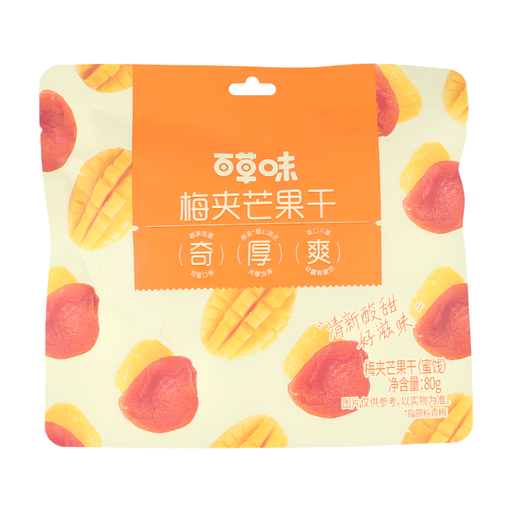
Be&Cheery dried mango with plum, pack of 12 small sachets, 80 g in total

Be&Cheery dried mango with plum, 12 sachets, 80 g

The 12 small sachets are suitable for individual servings or for filling lunchboxes. The pack weighs 80 g in total: check the weight of each sachet before planning to give one to every attendee, and check the ingredients on the packaging.

View on Joybuy
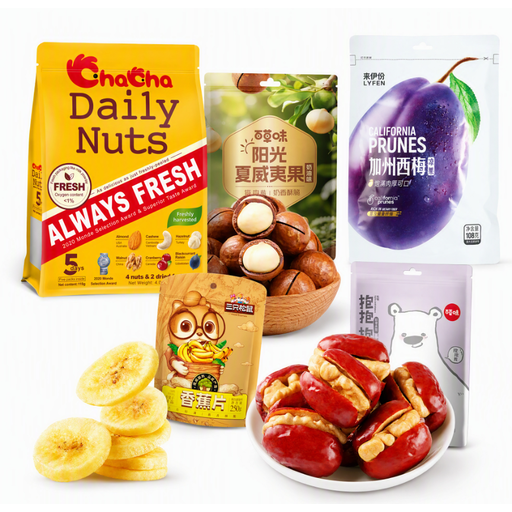
Assortment of dried fruit and nuts, pack of five items, 691 g in total

Assortment of dried fruit and nuts, 5 items, 691 g

This pack of five items could be a good choice if you want to offer a few options on a coffee-break table. It weighs 691 g in total; check the weight, ingredients and allergens for each item before planning how to serve them.

View on Joybuy

Frequently asked questions

Do you need to flag peanuts and tree nuts during a conference break?

If food is offered unpackaged in France, information about substances that cause allergies or intolerances which are used and remain present must be available before consumption, in line with the decree published on Légifrance. For sealed sachets, keep the product labels so attendees can check the ingredients.

Does a 400 g bag always provide eight portions?

No. Carrefour Traiteur says its own 400 g mix serves eight people, but that does not apply to other bags. For a different product, use the portion count stated for that product or decide how much you plan to serve.

Does a ‘no added salt’ mix necessarily contain no sweetened ingredients?

No. E.Leclerc says its 150 g TOKAPI no-added-salt mix contains sweetened dried fruit and sugar-coated almonds, among other ingredients; its product information lists 41 g of sugars per 100 g. Check the ingredients list and the sugars and salt lines separately for the product you choose.

How can you identify a multipack of individual portions?

Check how many units are included, then look at the weight of each one. ‘3 × 120 g’ means three sachets, while a single 400 g bag is still a sharing format, even if you can divide its contents after opening.