
Livraison le jour même ou le lendemain

Qualité garantie

Débloquez vos offres de bienvenue: Livraison GRATUITE | Jusqu'à -80 % | 30 jours d'essai gratuits à JoyPlus
Téléchargez l'application
Replacing windshield wiper blades seems straightforward… until a pair arrives that is too short, uses an incompatible connector, or is designed for a right-hand-drive vehicle. To find compatible car windshield wipers, the make alone is not enough: the model, year, dimensions and connector type must all match.
This 2026 selection is intended for drivers of passenger cars, SUVs and light commercial vehicles in France. It focuses on front wiper blades, the most common sizes and the essential checks to complete before ordering.
Two Renault, Peugeot, Citroën, Volkswagen, Audi, Hyundai, Kia, Toyota or Nissan models may have different dimensions and fittings depending on their generation. A blade compatible with a first-generation Peugeot 208 will not necessarily fit a Peugeot 208 II.
Always check the following:
The 550 mm + 400 mm, 600 mm + 400 mm, 650 mm + 350 mm, 650 mm + 400 mm and 650 mm + 500 mm formats are used on many vehicles. However, the correct length alone does not guarantee compatibility.
A pair of front windshield wiper blades may have the right dimensions and still be unusable if your arm requires a side-lock fitting, push-button connector or specific adapter. The models featured here mainly use a U-hook fitting or an OE Fit design, meaning they are intended to match the dimensions of the original equipment fitment specified on the product page.
Claims such as “all makes,” “silent” or “exceptional service life” need to be considered in context. Wiping performance also depends on the condition of the windshield, dust, frost and arm wear.
LECIBUBI product listings specify natural rubber, an advertised temperature range of −40 °C to +70 °C and, depending on the reference, a theoretical lifespan of up to 1 million wiping cycles. These figures are provided by the manufacturer and do not guarantee the same service life under all conditions.
The pair is generally not symmetrical. The driver-side blade is often longer than the passenger-side blade. Measure your existing blades or consult the vehicle owner’s manual before placing an order.
The sizes included in this selection notably include:
Do not add a few millimetres “for greater coverage”: an oversized blade may hit the seal, the windshield pillar or the other wiper.
U-hook windshield wipers attach to a hook-shaped arm, still found on many vehicles. Replacement usually involves lifting the arm, opening or sliding the lock, then engaging the new blade until it clicks into place.
The OE Fit designation indicates advertised compatibility with certain original-equipment fitments. It does not mean that the reference fits every vehicle from the same make. The listed models and years remain the best indication.
Frameless windshield wiper blades, also known as flat blades, use a profiled rubber strip rather than an exposed metal frame. In the product listings reviewed, their construction is described as “boneless” and designed to reduce the exposure of certain components to frost or snow.
Before confirming your order, also check that:
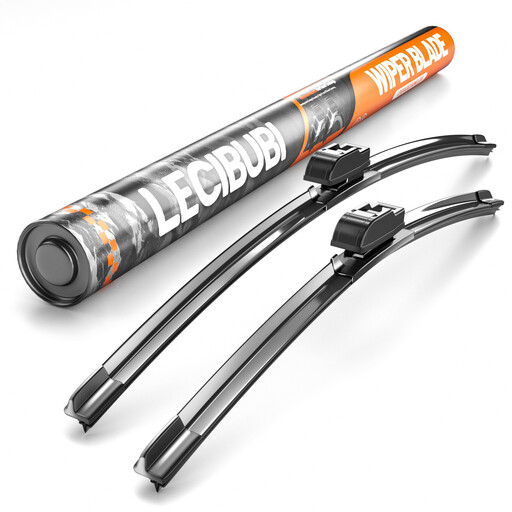
Why it suits this profile: a clearly specified reference designed for a range of small cars, MPVs and compact commercial vehicles.
The product page details the applicable models and years, left-hand drive configuration and U-hook fitting.
A pair of two blades, natural rubber and direct replacement as advertised by the manufacturer.
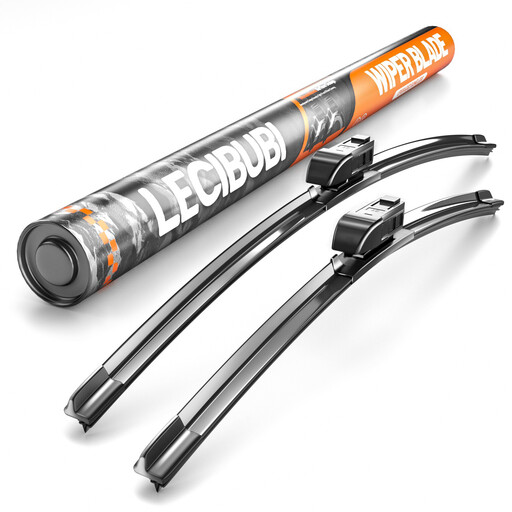
Why it suits this profile: a targeted reference for drivers seeking a fit close to the original equipment specification on Volkswagen Group models.
The list distinguishes between the different Polo generations and specifies the supported Audi, Seat and Skoda references.
Frameless blades in a 600 mm + 400 mm format, with installation advertised without a bulky adapter.
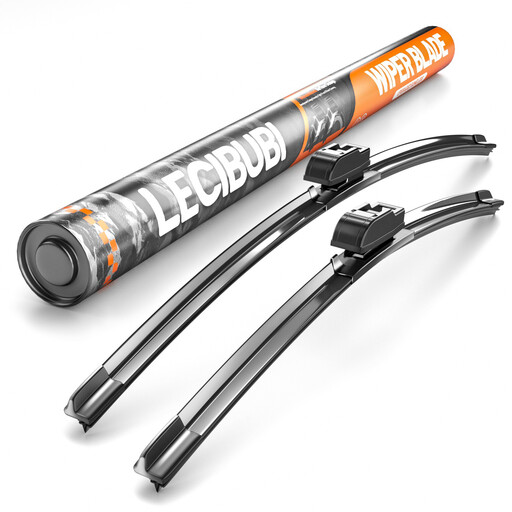
Why it suits this profile: a size suited to several SUVs and family vehicles that regularly travel on roads or motorways.
The applicable models and production periods are clearly detailed, reducing the risk of selecting a similar but incompatible reference.
A U-hook fitting, an aerodynamic profile and a material advertised for temperatures from −40 °C to +70 °C.
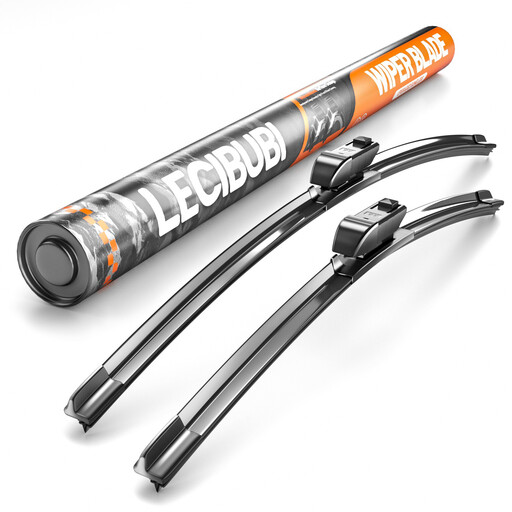
Why it suits this profile: this extra-long format is intended for certain commercial vehicles and models whose windshields require greater coverage.
The 650 mm + 550 mm length is displayed unambiguously, making it impossible to confuse with a city-car format.
A pair of front blades, a frameless design and advertised compatibility with several commercial vehicles from 2006 to 2016.
For an easy replacement, park the vehicle on a level surface and switch off the ignition. Carefully lift the arm, protect the windshield with a thick cloth, then remove the old blade by following the locking mechanism. Engage the new blade until it locks into place, then lower the arm without letting it drop against the glass.
After installation, spray washer fluid and check that both blades move smoothly without juddering. Clean the rubber strip regularly with a damp cloth. Avoid operating the wipers on a dry or iced-over windshield: this accelerates rubber wear.
Persistent streaks, unwiped areas, vibration or squeaking generally indicate that the blades need replacing. Service life depends in particular on the climate, outdoor parking and mileage.
Compare the make, model, year, dimensions and fitting with the information on the product page. Also check for the “left-hand drive” designation. If in doubt, measure both existing blades and inspect the shape of the connector on the arm.
There is no universal service life. Sunlight, frost, dust and use on dry glass accelerate wear. Replace your blades as soon as wiping leaves streaks or reduces visibility.
This is generally preferable when both blades were installed at the same time. A pair ensures the correct dimensions on both the driver’s and passenger’s sides while avoiding differences in wiping performance.