
Livraison le jour même ou le lendemain

Qualité garantie

Débloquez vos offres de bienvenue: Livraison GRATUITE | Jusqu'à -80 % | 30 jours d'essai gratuits à JoyPlus
Téléchargez l'application
Choosing coloured pencils for children isn't just about counting shades or being won over by a pretty box. A poorly suited set can slip through little fingers, snap at the first knock, or end up at the bottom of a drawer because it needs a special sharpener. For parents, teachers and beginners alike, a few simple criteria can help you avoid disappointing purchases.
A set of 36 or 48 pencils obviously offers more shades, but that isn't necessarily the best choice for a nursery-age child. A palette of 6 to 12 colours makes it easier to recognise shades and avoids scattering the materials. On the other hand, a schoolchild creating detailed drawings will benefit from a set of 24 colours or more.
A body that's too thin can be difficult for small hands to hold. Triangular coloured pencils reduce the risk of rolling off the table and provide a natural guide for finger placement. Jumbo models, with their thick leads, are particularly well suited to early colouring and filling in large areas.
However, the term "ergonomic" isn't enough on its own: check the pencil's shape, the lead diameter and whether there are any grooves or a non-slip zone.
A pencil marketed as "unbreakable" can still be damaged after a drop or under excessive pressure. It's better to look for a break-resistant lead, while also considering the child's age and intended use. Similarly, "washable" doesn't mean every trace will disappear from every fabric. Check the manufacturer's cleaning recommendations, especially for clothing and porous surfaces.
For a child aged 3 and over, choose a body that's wide enough and easy to control. Ergonomic coloured pencils with a triangular shape are generally more stable than round ones. A 4.2 mm lead or a jumbo format will withstand the pressure of early exercises better, while a finer lead makes it easier to draw details.
Some ranges, such as the STABILO EASYcolors, come in versions for left-handed or right-handed users and feature specific positioning guides. A detail that can make all the difference in the classroom, provided you choose the version that matches the hand being used.
For children, check the recommended age on the packaging, any warnings about small parts and the compliance information. Most of the products featured here are indicated for children aged 3 and over, with appropriate supervision for younger ones. The term "non-toxic" doesn't make the pencil something to chew on – it's still intended for drawing.
The FSC and PEFC labels are certifications related to the origin of the wood. They can help you choose eco-friendly coloured pencils, without providing a complete assessment of the product's environmental impact.
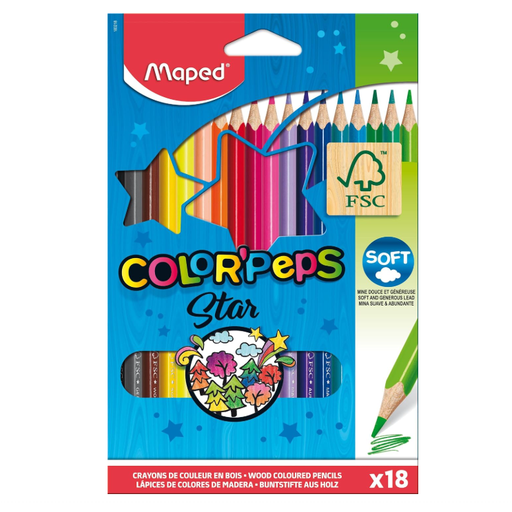
Why this choice suits this profile: With its 18 colours, this set offers a varied palette without multiplying accessories. It works just as well at home as at school or for occasional creative activities.
Its triangular shape limits rolling and its 2.9 mm lead remains compatible with a standard sharpener.
18 shades, triangular body, FSC-certified wood according to the product sheet and lead described as break-resistant.
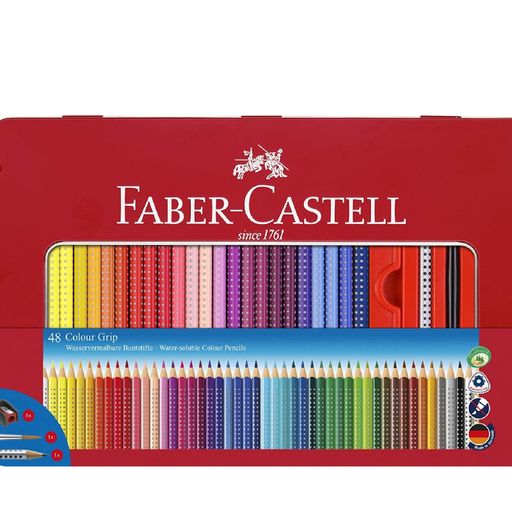
Why this choice suits this profile: Its extensive palette and accessories are aimed at those who switch between colouring, sketching and watercolour effects.
The set doesn't rely solely on the number of colours: it also includes a brush, a graphite pencil and a sharpener.
48 water-soluble pencils, triangular shape with grip zone and a metal tin.
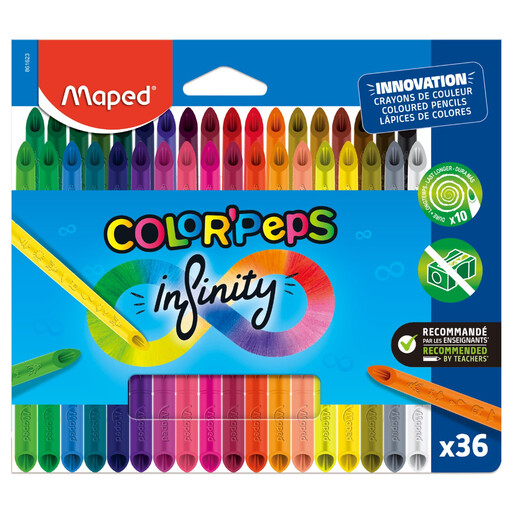
Why this choice suits this profile: This format suits users who colour often, carry their materials around or want to avoid wood shavings.
Without a wooden casing, it avoids the need to buy a sharpener and allows you to use the coloured material along its entire length.
36 colours, triangular body and double-ended design described as suitable for both details and large areas.
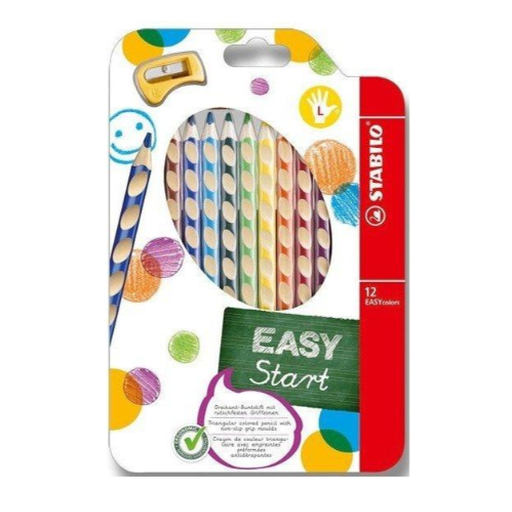
Why this choice suits this profile: This left-handed version features positioning grooves and includes a sharpener, making activities at home and in the classroom simpler.
The explicit choice of hand avoids buying a standard version whose grip guides wouldn't be suitable.
12 colours, 4.2 mm lead, grooved triangular body and a space to write the child's name.
We've put together a comprehensive, real-time updated selection of products that meet these demanding criteria, while complying with European safety regulations.
For early activities, look for nursery pencils with a wide body, a triangular shape and a strong lead. A set of 6, 12 or 18 colours is usually enough for learning to colour without overloading the pencil case. The manufacturer's recommended age and safety warnings remain the priority criteria.
It all depends on how often they're used, the pressure applied and the quality of sharpening. A thick lead or one described as break-resistant can reduce replacements, but no pencil is immune to being dropped. Store them in their box and use a sharpener suited to the diameter stated.
They can be suitable under adult supervision, provided you use the right paper and control the amount of water. To start simply, offer dry colouring, then gradually introduce the watercolour effect with a brush. This feature is particularly interesting for children who want to explore several techniques with a single set.