
Livraison le jour même ou le lendemain

Qualité garantie

Débloquez vos offres de bienvenue: Livraison GRATUITE | Jusqu'à -80 % | 30 jours d'essai gratuits à JoyPlus
Téléchargez l'application
The electric-assist bike (e-bike) has conquered our cities to become an essential mobility solution. Whether for the daily commute or weekend rides, it's a game-changer. But with a vast array of options and sometimes misleading marketing claims, choosing the right model can be a daunting task. My role, as a Product Recommendation Manager at Joybuy, is to help you see things more clearly. Together, let's break down the pitfalls to avoid and the essential criteria for finding the city e-bike that's truly right for you.
The e-bike market is full of tempting promises. But be warned: some can quickly turn into costly disappointments. Here are the three most common mistakes to avoid.
"Up to 100?km of range!"?– the marketing claim is hard to resist. Except the reality is far more nuanced. This performance is almost always measured under laboratory conditions: flat terrain, no wind, a featherweight rider, and the lowest assist level. In the real world, your weight, the terrain's incline, stops at traffic lights, and a punchier assist mode can easily slash this range by 30 to 50?%. Focusing solely on this maximum figure is a recipe for disappointment.
An attractive purchase price can hide significant maintenance costs. A standard chain drivetrain, for example, requires frequent cleaning and lubrication, especially if you ride daily, rain or shine. Entry-level components wear out faster, and trips to the workshop for adjustments can add up. Ultimately, an e-bike that spends more time on a repair stand than on the pavement loses its appeal.
There are two main types of motors: the hub motor (often in the rear wheel) and the mid-drive motor (located at the crankset). The former, generally more affordable, gives a "pushing" sensation that can sometimes feel abrupt. The latter delivers a smoother, more natural-feeling assistance because it adapts to the pressure you apply to the pedals. Choosing the wrong motor for your needs (for example, a hub motor with insufficient torque in a hilly city) can turn every ride into a chore and lead to a disappointing experience.
To avoid these pitfalls, it's essential to understand a few key technical specifications. These are what determine the comfort, performance, and reliability of your future urban e-bike.
EU regulations limit the nominal power of e-bikes to 250?Watts and assistance to 25?km/h. The real difference comes down to torque (measured in Newton-metres, or Nm) and the motor's position.
Instead of the promised kilometres, rely on the battery's capacity, measured in Watt-hours (Wh). This is the true size of your energy "tank." A battery of 500?Wh or more is an excellent foundation for a long-range e-bike and helps you avoid charging it every night. Also, check if the battery is removable: this is a game-changing detail if you live in an apartment and can't bring the bike inside to charge it.
By applying these criteria, we have identified models that cater to different user profiles.
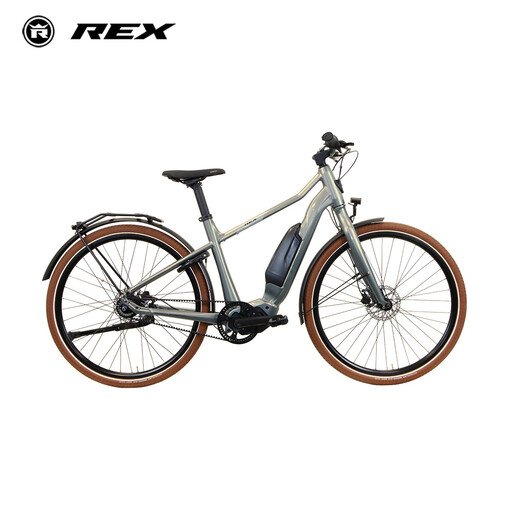
Why we chose it : Perfect for daily riders who demand rock-solid reliability. It's the ideal companion for an intensive, hassle-free commute.
It ticks all the boxes to avoid the maintenance trap: its Gates Carbon Drive belt and Shimano Nexus 7 internal gear hub are a winning combination. No more grease or finicky derailleurs. Its Shimano STEPS mid-drive motor and 504 Wh battery ensure reliable performance and a realistic range.
The belt drive and internal hub combination for virtually zero maintenance, and the mid-drive motor for natural, high-performance assistance.
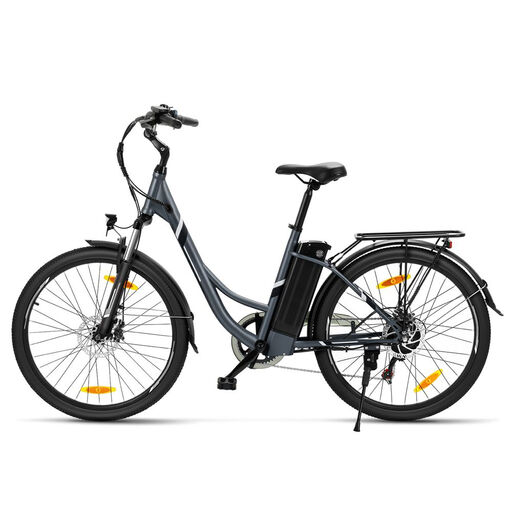
Why we chose it : An accessible and ultra-practical model for daily trips, running errands, or casual rides. Its step-through frame (or "swan neck") allows for effortless mounting and dismounting, even in a skirt or suit.
Its value proposition is crystal clear. The 40 Nm hub motor is perfectly calibrated for the city, while its generous 561.6 Wh (15.6 Ah) battery provides a comfortable range, far from empty promises. The suspension fork and adjustable stem are real bonuses for comfort.
Its ultra-practical step-through frame and high-capacity battery, delivering an unbeatable convenience-to-price ratio.
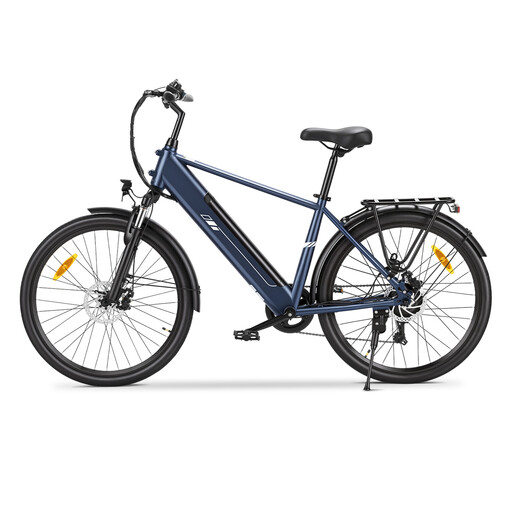
Why we chose it : For those who refuse to choose between weekday asphalt and weekend towpaths or forest trails. A robust and versatile `trekking e-bike` (all-terrain e-bike).
It focuses on extended range with its 561.6 Wh battery, perfect for long excursions. Its suspension fork smooths out imperfections on roads and trails, while its 45 Nm hub motor delivers enough torque to handle most situations, including moderate hills.
Its city/trail versatility, thanks to the suspension fork and a high-capacity battery for venturing further.
We have curated a complete and up-to-date selection of models that meet our demanding selection criteria and EU regulations.
An e-bike battery typically lasts between 500 and 1,000 full charge cycles, which translates to a lifespan of 3 to 6 years depending on your usage. Its replacement is a cost to anticipate, ranging from €400 to over €800 depending on the brand and capacity. It's therefore wiser to invest in a model with a quality battery from the start—the math is simple.
Yes, because 250?W is the maximum nominal power allowed. For climbing, the real deciding factor is the motor's torque (measured in Nm). A torque of 40 to 50?Nm, common on urban e-bikes, is sufficient for most gentle slopes and moderate hills. If you live in a very hilly city, aim for a motor (often a mid-drive) offering 60?Nm or more for maximum comfort and efficiency.
For a standard e-bike (with assistance up to 25?km/h), no specific insurance is mandatory. Your home insurance policy typically covers your civil liability for damages you might cause to others. However, given the price of an e-bike, taking out additional insurance against theft and damage is highly advisable. These are, by far, the most common risks.