
Livraison le jour même ou le lendemain

Qualité garantie

Débloquez vos offres de bienvenue: Livraison GRATUITE | Jusqu'à -80 % | 30 jours d'essai gratuits à JoyPlus
Téléchargez l'application
By the Joybuy Product Recommendations Manager
Choosing children's art supplies isn't just about counting the colours in a box. Between pencils too thin for small hands, inks labelled washable that resist laundry cycles, and kits packed with accessories rarely used, some purchases quickly lose their appeal.
To equip a child aged 1 to 8, it's best to consider the recommended age, the shape of the tools, the materials used, and the conditions of use. Here are the key criteria to examine before buying a children's colouring kit, paint, or drawing supplies.
The term "washable" does not guarantee that all traces will come out of all fabrics. The result depends on the surface, how quickly you act, and the amount of ink or paint applied. A fresh stain is generally much easier to clean than a dried one.
To avoid disappointment, consult the manufacturer's detailed instructions. Some products specify, for example, that they are washable from skin and most fabrics. Also plan for a smock, a washable tablecloth, and a water source nearby.
A standard coloured pencil can be difficult for a toddler to hold. Jumbo formats, thick barrels, and triangular shapes offer a more comfortable grip. Conversely, a tool that is too long or too thin may slip, break more easily, or discourage the child.
Ergonomics must, of course, correspond to age, but also to the child's ability to control their movements. A 2-year-old does not have the same needs as a preschooler who is beginning to colour small areas without going over the lines.
A very extensive assortment is not necessarily more practical. For first creative activities, a few easily identifiable colours can be more than enough. More complete kits become interesting when the child enjoys mixing shades, working on details, or undertaking projects that require more time.
Storage also deserves your attention. A sturdy box, a pencil case, or a case with a handle helps prevent lost markers and forgotten caps.
Start by checking the recommended age on the packaging. Some products are designed for ages 1 and up, while others are not suitable before ages 3, 4, 5, or 7. Small parts, caps, paint pots, and stickers can pose a choking hazard for younger children.
Also look for available compliance information, particularly the CE marking when the product falls under the applicable European toy safety regulations. The term "non-toxic" does not mean the product can be put in the mouth. Adult supervision remains essential, especially with paint, watercolours, and sharp accessories.
For a child aged 1 to 3, prioritise thick washable wax crayons, triangular chalks, and chunky-tipped markers. Between ages 4 and 8, dual-tip markers, triangular pencils, and more precise brushes can support the development of fine motor skills.
A left-handed child may also be more comfortable with a tool adapted to their finger position. However, check this feature in the product description: a standard model does not always offer the same grip.
Water-based inks and paints, as well as crayons labelled washable, are well-suited for home or group activities, provided care instructions are followed. Close markers after each use, rinse brushes promptly, and keep paints away from heat.
For children's watercolours and children's gouache, paper also plays an important role. If it is too thin, it may buckle with the first layer of water. During a guided activity, a pre-drawn surface can also reduce frustration and help the child focus on colours and strokes.
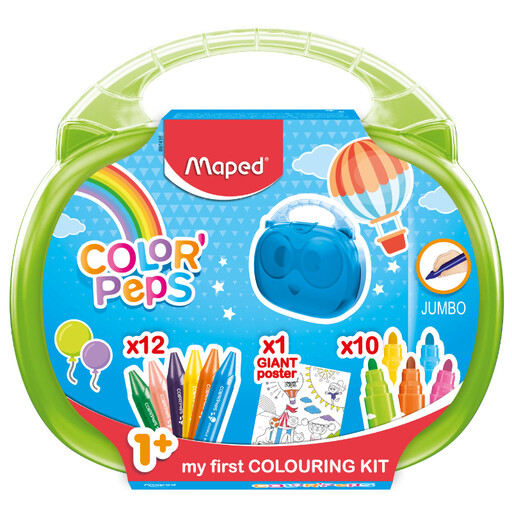
Why this choice suits this profile: This set includes 10 jumbo markers, 12 wax crayons, and a large poster in a case with a handle. It is suitable for first colouring activities from age 1, with tools designed for small hands.
The jumbo format makes gripping easy, and the case avoids buying first tools separately. The markers are advertised as ultra-washable.
Triangular chalks, 5 mm tips, and a 51 × 33 cm poster. Direct supervision recommended.
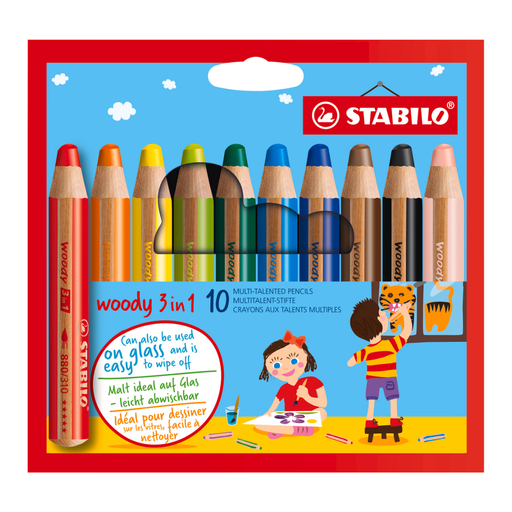
Why this choice suits this profile: A single tool can serve as a pencil, crayon, or watercolour pencil. This versatility will appeal to families who want to vary techniques without accumulating multiple kits.
It avoids buying several types of pencils to test water effects. On smooth surfaces, marks can be wiped away with a damp cloth.
Extra-large 10 mm lead, PEFC-certified wood, and use on paper, cardboard, or smooth surfaces. Not suitable for children under 3 years.
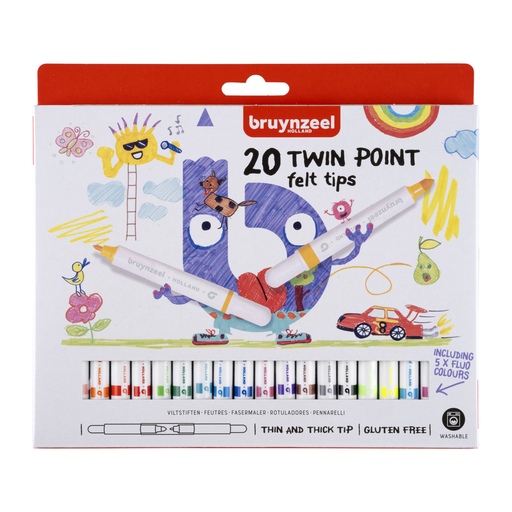
Why this choice suits this profile: The 20 dual-tip markers are suitable for a child who alternates between filling large areas, outlining, and detailing, both at home and in the classroom.
With two tips per marker, there is no need to multiply references. The slow-drying ink, however, requires each marker to be properly closed after use.
One fine tip and one broad tip per marker, with water-based ink advertised as reactivatable after drying.
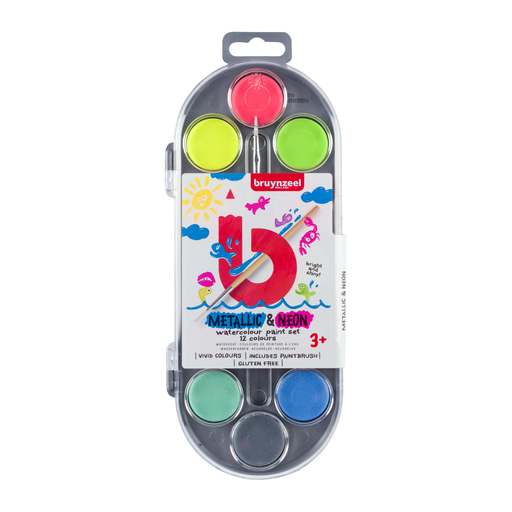
Why this choice suits this profile: The palette brings together 7 metallic and 5 fluorescent colours for exploring mixing and effects on light or dark paper, while benefiting from integrated storage.
The lid also serves as a mixing palette, avoiding the need for extra accessories. Close the box after use and rinse the brush.
12 water-based paint pots, one brush, and an integrated palette. Recommended age: from 3 years.
We have compiled a comprehensive, real-time updated selection of products that meet these strict criteria and European safety requirements.
Start with thick washable wax crayons, triangular chalks, or jumbo markers suitable for their age. Avoid small parts, fine tips, and kits filled with unnecessary accessories. Adult presence is recommended throughout the activity.
Close each marker immediately after use, ensuring the cap is properly secured. For paint, close the pots or tubes, rinse the brush, and store the set in a dry place at a moderate temperature, away from sunlight.
The price varies depending on the format, number of colours, type of surface, and accessories included. A small children's colouring kit is sufficient for first sessions, while a versatile set or a complete palette will support more regular projects. Compare especially the content actually used, the recommended age, and ease of storage, rather than just the number of pieces.