
Livraison le jour même ou le lendemain

Qualité garantie

Débloquez vos offres de bienvenue: Livraison GRATUITE | Jusqu'à -80 % | 30 jours d'essai gratuits à JoyPlus
Téléchargez l'application
By the Joybuy Editorial Team | Published August 27, 2026
Whether it's for a camping weekend, a family picnic, or a day of fishing, one thing is certain: you need to keep your food and drinks cold. Choosing a camping cooler might seem simple, but it's a real headache in a market saturated with often misleading marketing claims. And a poor choice can quickly turn that long-awaited cold drink into a lukewarm disappointment.
To ensure you don't regret your purchase, let's review the most common pitfalls.
To make the right choice, rely on objective technical criteria rather than advertising slogans.
The secret to effective cooling is insulation. The highest-performing models use high-density injected polyurethane (PU) foam between the inner and outer walls. This technology creates a highly effective thermal barrier.
Also, check the shell materials. A hard cooler made from food-grade PP (polypropylene) plastic is a guarantee of safety and hygiene: you can store food in direct contact with the wall without any risk. Finally, an often-overlooked yet crucial detail: the gasket seal, usually made of silicone, which must ensure an airtight lid closure to minimise cold loss.
Expressed in litres, the capacity should primarily match your use case. Here are a few guidelines to help you decide:
For long-term ice retention, the rule of thumb is a 2/3 ice to 1/3 content ratio. Remember to subtract the volume of the ice packs to estimate the actual space available for your provisions.
The vast majority of coolers are passive: they retain cold thanks to their insulation and the addition of ice or gel packs. This is a simple and reliable solution for most outings.
However, for long-haul trips or if you need a constant, refrigerator-like temperature, an electric compressor cooler becomes a very compelling option. Plugged into your vehicle's 12V/24V socket, it actively generates cold and can even freeze, offering unlimited runtime as long as it has power.
Here is a selection of models that meet specific needs, chosen based on the performance and durability criteria we've just discussed.
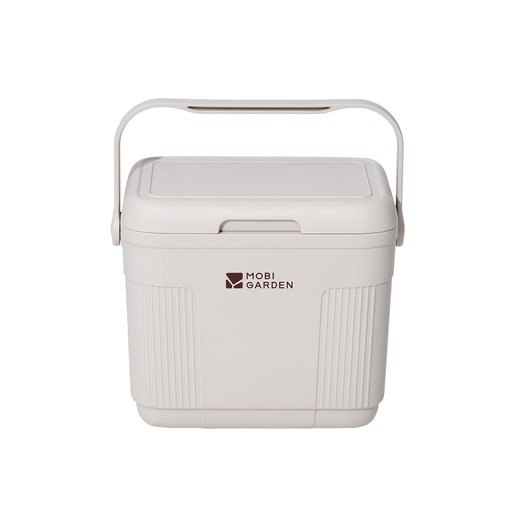
Why this model? Its 22-litre capacity is perfectly sized for a family or small group, whether for a day trip or a weekend getaway. Its robust construction is designed to withstand the rigours of camping.
This model tackles the #1 problem, poor insulation, with its high-density PU foam layer and a thick silicone gasket that ensures a perfectly airtight seal. Say goodbye to unfulfilled performance claims.
Food-grade PP shell for impeccable hygiene. Sturdy rotating handle for easy transport, even when fully loaded. Comes with two included ice packs.
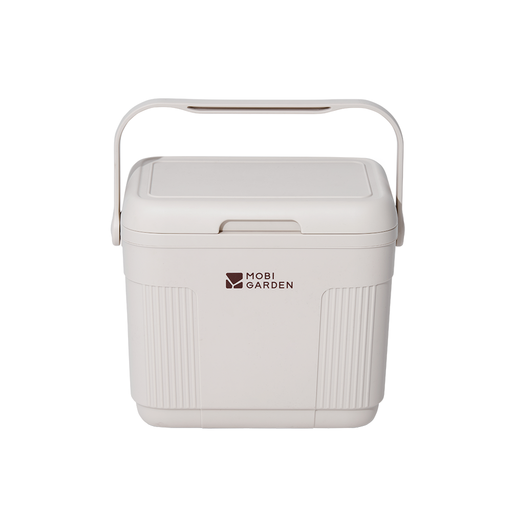
Why this model? Its compact size and feather-light weight (1.35 kg) make it the perfect companion for spontaneous picnics, day trips, or keeping your lunch cool on a job site.
It sidesteps the "wrong size" trap by offering a high-performance solution for smaller volumes. No more wasted energy from a large, half-empty cooler: this 10L model is optimised for small quantities.
It inherits the strengths of larger models: PU foam insulation and a silicone gasket. Its single-piece handle makes it particularly easy to manage and carry with one hand.

Why this model? For road trip and van life enthusiasts, or anyone who demands reliable and consistent refrigeration, this compressor model is the ultimate solution. It's a true portable mini-fridge.
It shatters the limitations of ice and the "limited retention" problem. Thanks to its active compressor, it maintains a precise temperature (down to -18°C) as long as it's plugged in—a level of performance unattainable for a passive cooler.
Dual power options (12V/24V DC for vehicle, 100-240V AC for mains). Precise temperature control down to the degree. No more hassle of buying, carrying, and draining ice.
Explore our full selection of products that meet these quality criteria and current standards.
It depends on many factors: the quality of the insulation, the outside temperature, the ice-to-content ratio (the famous 2/3 ice to 1/3 content is ideal), and, of course, how often you open it. For a high-quality insulated cooler that is well-packed and opened infrequently, you can expect it to last 24 to 48 hours. Beyond that, an electric compressor model is necessary.
A few simple tricks can significantly improve the efficiency of your travel cooler:
When it comes to insulation performance and durability, a hard cooler almost always wins. Its solid structure protects its contents better, and the injected foam insulation is more effective. On the other hand, soft coolers are lighter, easier to store when empty, and often less expensive. It all depends on your priority: if long-term ice retention is your number one criterion for a piece of camping gear, a hard model is a must-have. For a simple picnic lasting a few hours, a soft cooler will do the job perfectly.