
Livraison le jour même ou le lendemain

Qualité garantie

Débloquez vos offres de bienvenue: Livraison GRATUITE | Jusqu'à -80 % | 30 jours d'essai gratuits à JoyPlus
Téléchargez l'application
Choosing board games for children and families is about more than simply spotting a popular character or an educational promise on the box. From children’s card games and logic games to bilingual educational toys, playtime, difficulty level and safety can significantly shape the experience at home.
Before placing an order, three common pitfalls are worth avoiding:
The recommended age provides an initial indication of the game’s safety and accessibility, but it does not replace observing the child’s habits. For board games for ages 3 and up, choose short rules, easy-to-handle pieces and games that do not require children to read independently.
Between the ages of 6 and 8, observation and memory games, such as card games with straightforward rules, make it easy to get started. From age 8 onwards, family strategy games, deduction games and vocabulary-based games can offer more tactical choices.
Also consider the number of players. A game designed for 2 to 4 players does not meet the same needs as one playable by 2 to 8 people. A 10- to 15-minute game fits easily into everyday routines: after school, before dinner or while travelling.
Educational games for children can help them recognise letters, practise arithmetic, develop logical thinking or expand their vocabulary. However, it is better to describe precisely what they offer than to attribute academic results they cannot guarantee.
For example, a bilingual educational computer may bring together activities covering French, English, mathematics, logic and music. In particular, check:
For use on the go, travel games for children should also fit easily into a bag, withstand repeated handling and keep all their pieces together in a practical box or pouch.
Small parts require particular attention. Always follow the age recommendation provided by the manufacturer, along with warnings concerning choking hazards. The statement “not suitable for children under 36 months” does not automatically mean that a game is suitable for every older child without adult supervision.
For toys sold in the European Union, check the available regulatory information: recommended age, the identity of the manufacturer or the responsible person in the European Union, and any applicable marking. Some products in this selection specifically mention compliance with EN71 and REACH requirements. These details should be confirmed on the product page for the item concerned.
Cards and plastic pieces can generally be cleaned with a soft, slightly damp cloth. Do not submerge them, and avoid solvents and abrasive products. Store the game in a dry place away from direct sunlight.
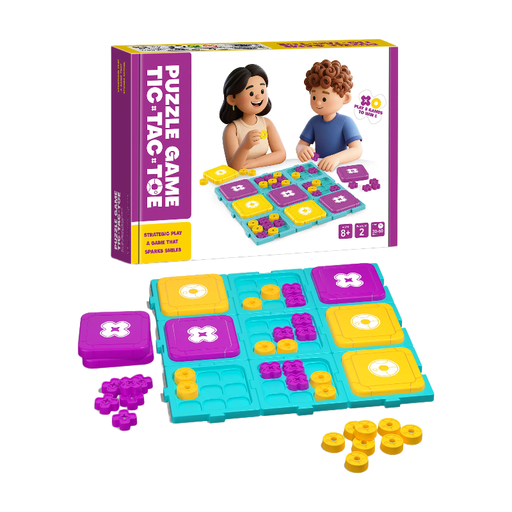
Why it suits this profile : The rules of tic-tac-toe can be explained in seconds. It is therefore ideal for quick two-player games, at home or on the go.
Its deliberately simple mechanics avoid endless rules and educational claims that are difficult to verify.
A two-player game with easy-to-remember rules and a format perfectly suited to short sessions.
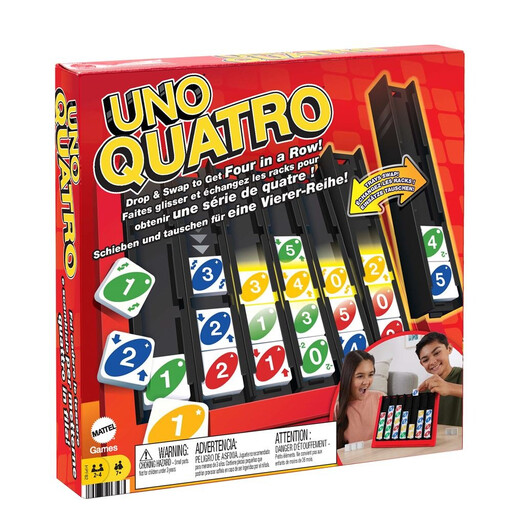
Why it suits this profile : This game combines placement, colours and numbers on a plastic base. Games last around 10 minutes and can be played by 2 to 4 people.
The product page specifies the number of players, approximate playing time, dimensions and warnings concerning small parts.
44 tiles, three types of Action tiles, a reusable base and no batteries required.
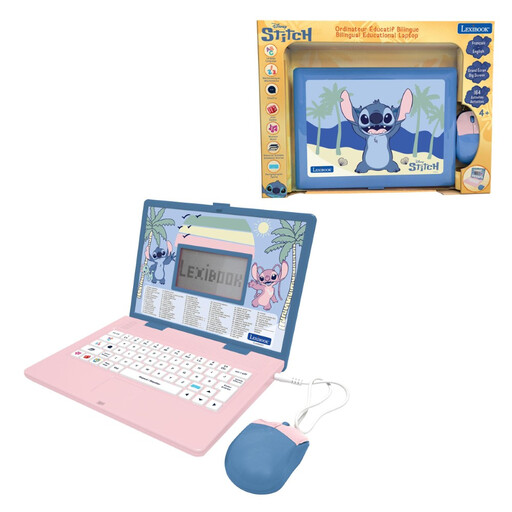
Why it suits this profile : From age 4, children can use it independently at home or while travelling. The device offers 164 activities, divided equally between French and English.
The product page details the subjects, the number of activities in each language, the 5.1 × 9.7 cm screen and the included accessories.
A realistic keyboard, a wired mouse, logic activities and power supplied by two included AA/LR6 batteries.
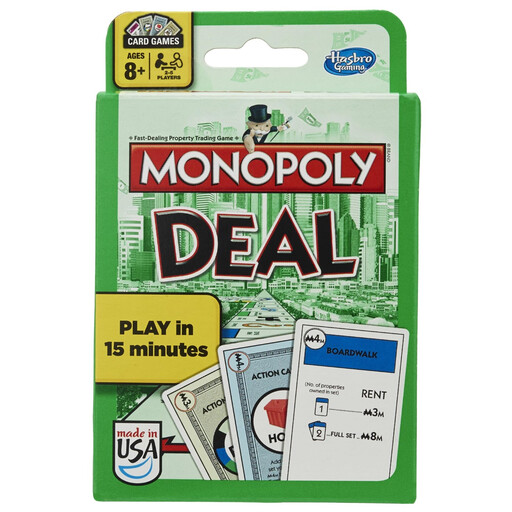
Why it suits this profile : This card game for 2 to 5 players is easy to carry and offers games lasting around 15 minutes, for ages 8 and up.
With 110 cards and reference cards, it is easier to explain than a lengthy board game.
No batteries required, a compact box and rules based on collecting three property sets.
We have put together a comprehensive, real-time updated list of products that meet these demanding selection criteria and European safety regulations.
Choose a compact format with no components that are difficult to replace and with short playing times. Card games, Dobble or a small logic game are easier to bring out on a train, in the car or on holiday than a large board game. However, always check for any small parts and the recommended age.
They can be suitable when the level, themes and interface match the child. A device such as the Lexibook Stitch offers activities in French and English, but adult support may still be helpful for explaining instructions and selecting suitable exercises. It is a playful learning aid, not a guarantee of academic progress.
Keep the cards and pieces in their original box, avoid exposure to moisture and regularly check the condition of all components. For electronic games, remove the batteries during extended storage if recommended in the instructions. Short games, adjustable rules and a suitable number of players also make it more appealing to bring the game out regularly.