
Livraison le jour même ou le lendemain

Qualité garantie

Débloquez vos offres de bienvenue: Livraison GRATUITE | Jusqu'à -80 % | 30 jours d'essai gratuits à JoyPlus
Téléchargez l'application
Finding the perfect healthy and convenient snack for kids, or an on-the-go bite for yourself, can be a challenge. The fruit pouch aisle is vast, and the packaging is plastered with health claims. However, not all products are created equal—far from it. Some well-worn marketing traps can lead to disappointing choices, both nutritionally and in terms of taste.
Before you fill your basket, here are the two most common pitfalls to avoid?:
To choose a fruit pouch that truly delivers on its promises, you just need to focus on a few key pieces of information on the packaging.
In this case, simplicity is often a sign of quality. A good 100% fruit purée should have the shortest possible ingredient list. Ideally, it contains only fruit (like apple purée) and, at most, a little lemon juice or ascorbic acid (vitamin C), which acts as a natural preservative.
The nutrition facts panel is your best ally. Pay close attention to the "Carbohydrates" line and, just below it, the "of which sugars" line. For a healthy kids' snack or a grab-and-go fruit snack, a value between 10g and 13g of sugar per 100g is a good benchmark for a classic fruit purée. A much higher value often indicates the use of very sweet fruits or, worse, concentrated juices.
The pouch is the go-to format for a portable fruit dessert. Check that the cap is resealable to prevent leaks in your bag. For younger children, some caps are specially designed to reduce choking hazards. The jar format remains an excellent alternative for at-home consumption, especially for toddlers.
To help you make an informed decision, here is our selection of products that meet specific needs, all evaluated according to our quality and transparency criteria.
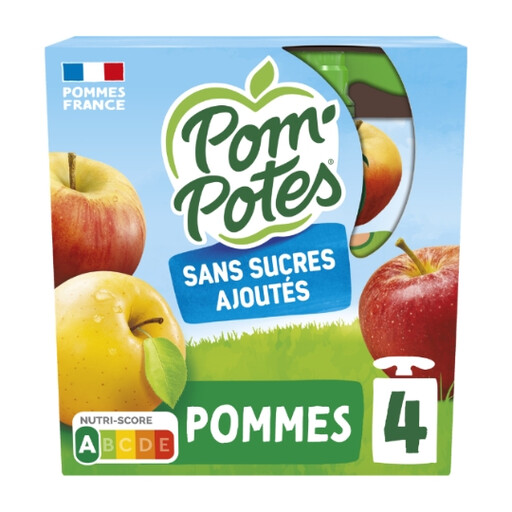
Why we chose it: The reliable and convenient choice to slip into a school bag. The classic apple taste appeals to most, and the ingredient list is as simple as it is transparent.
The ingredient list is ultra-short (99.7% apple) and the sugar content (10g/100g) is reasonable, as it comes only from the fruit. No concentrated juice or unnecessary flavours.
French-grown apples from eco-friendly orchards. The pouch format is convenient and a favourite among children.
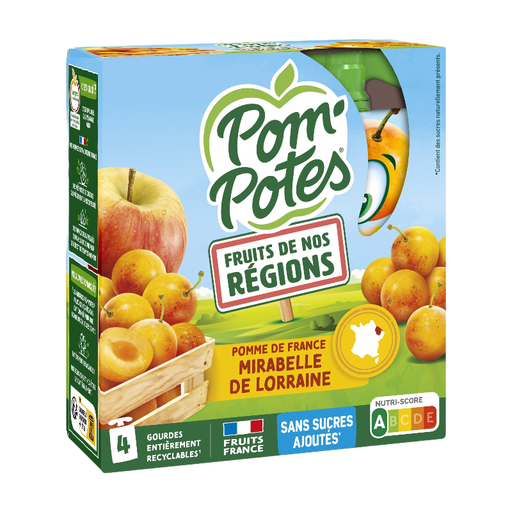
Why we chose it: Perfect for adults (athletes, office workers) looking for a fruit snack that's a bit more special. The pouch format is ideal for a quick break between meetings or after a workout.
The recipe consists of 99.85% fruit (apple and mirabelle plum). The natural flavours complement an already solid fruit base without masking it. The sugar content remains controlled (11g/100g).
A more sophisticated flavour combination, featuring PGI Mirabelle plums from Lorraine. The recipe is free from colourings and preservatives, and is suitable for a vegan diet.
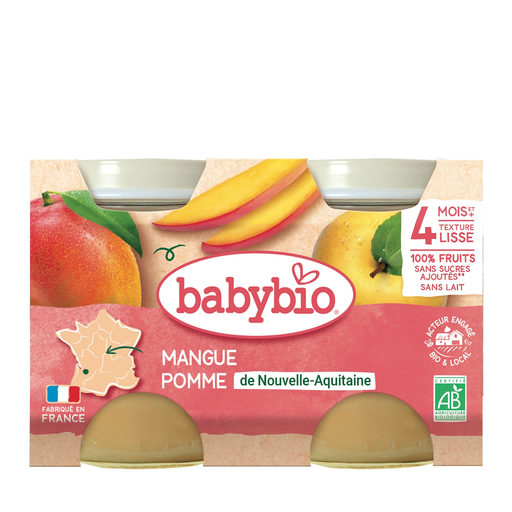
Why we chose it: Specially designed for parents starting to introduce solid foods who demand simple, organic products tailored for little ones. The jar format is ideal for spoon-feeding.
The ingredient list is exemplary: 50% organic mangoes from India and 50% organic apples from Nouvelle-Aquitaine. That's it. No added sugar, no flavours, no concentrates. A 100% fruit product, period.
Certified Organic. Guaranteed dairy-free and gluten-free. The brand stands out for its commitment to local and responsible farming supply chains.
Discover our full selection of products that meet our strict selection criteria and current regulations.
No, it contains the sugars naturally present in the fruit. The "no added sugar" claim simply guarantees that the manufacturer has not added any extra sugar (like sucrose, glucose syrup, etc.) during preparation. The final sugar content therefore depends solely on the fruits used. An apple-banana purée, for example, will naturally be sweeter than a 100% apple purée.
Once opened, a fruit pouch should be stored in the refrigerator. Most manufacturers recommend consuming it within 24 hours. Beyond that, taste quality and food safety are no longer guaranteed. Always refer to the specific instructions on the packaging.
The highly convenient pouch format is recommended for children who can already feed themselves. For babies who are just starting on solid foods (from 4-6 months), the jar format and spoon-feeding are more suitable for controlling portions and supporting the development of oral motor skills. Brands like HiPP or Babybio offer specific ranges with textures and recipes designed for each age.