
Livraison le jour même ou le lendemain

Qualité garantie

Débloquez vos offres de bienvenue: Livraison GRATUITE | Jusqu'à -80 % | 30 jours d'essai gratuits à JoyPlus
Téléchargez l'application
Who hasn't turned their entire flat upside down looking for their keys just before leaving? A good storage system can transform a cluttered entryway into an organised and welcoming space. The problem is, the market is flooded with solutions that, behind an attractive design, often hide design flaws or poor quality.
To avoid buyer's remorse, let's review the most common pitfalls.
To be sure you're making the right choice, here are the essential points to check.
The material has a direct impact on the lifespan and aesthetic of your key holder or box.
Your intended use will determine the level of security needed.
Don't be fooled by the external dimensions, which are often misleading. Remember to check the actual storage space inside. Measure your largest keyrings (including car keys with their remotes) and compare them with the product's internal measurements. For a key cabinet, the spacing between hooks is also a crucial factor to prevent everything from getting tangled.
We have selected a few products that meet specific needs while respecting our criteria for durability and practicality.
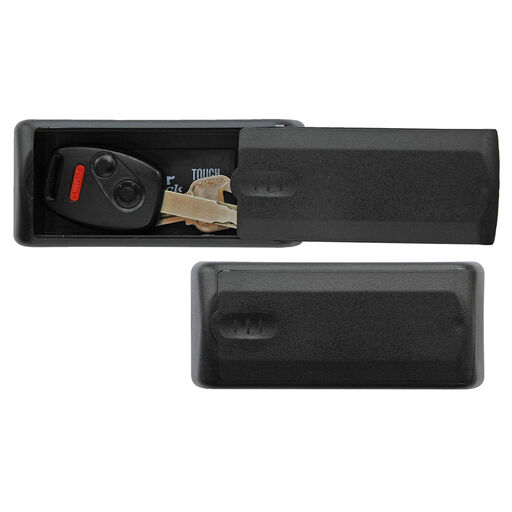
Why we recommend it: Perfect for hiding a spare key directly on the vehicle's chassis. A handy backup solution if you forget your keys or need to lend your car without handing over the main key.
This model avoids the weak magnet trap. It features a powerful magnet that ensures a rock-solid hold on steel surfaces, even on bumpy roads. Its sturdy, rust-proof plastic case protects the key from the elements.
Its compact and discreet design, with a sliding cover that stays attached so you won't lose it.
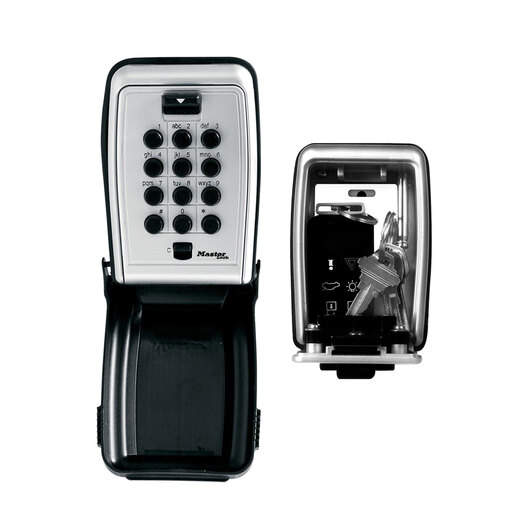
Why we recommend it: A must-have for owners of holiday rentals (like Airbnb), building managers, or for providing secure access to home care staff. It allows you to share keys without needing to be there in person.
It sidesteps the "false security" trap with its solid metal body and a protective cover that shields the keypad from the elements and prying eyes. The push-button mechanism allows for thousands of possible combinations.
The combination is customisable and can be changed as often as you like, allowing for flexible yet secure access management.
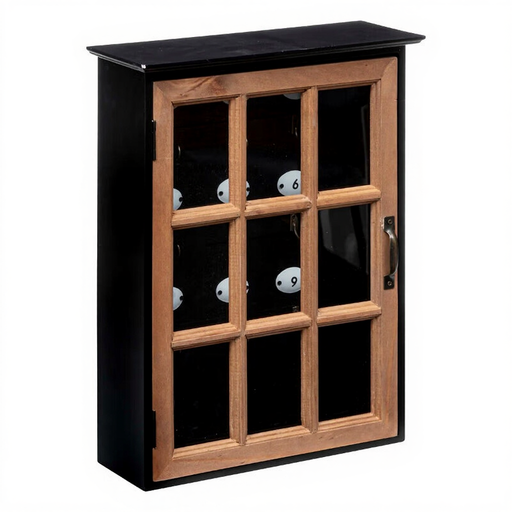
Why we recommend it: For those who want to combine style with function in their entryway. This key box isn't just for storage; it's a genuine decorative piece with a vintage flair.
This model stands out from low-end organisers with its materials: a mix of pine, wood fibre, glass, and iron. Weighing in at 1.8 kg, it gives a much greater impression of solidity and durability than feather-light plastic models.
Its 9 numbered hooks with enamel plates for easy identification, all shielded from dust by a glass door.
Discover our complete, up-to-date selection of products that meet our quality criteria and current standards.
Installation typically involves drilling into the wall. Most products include mounting hardware (screws and wall plugs). The crucial step is to use plugs appropriate for your wall type (plasterboard, brick, concrete) to ensure a secure hold. For a secure key box, choose a discreet but accessible location and fasten it securely to deter any attempt to pry it off.
A push-button combination box allows you to create a combination where the order of the numbers doesn't matter (1-2-3-4 is the same as 4-3-2-1). This increases the number of possible combinations and makes them less predictable. Conversely, a dial box requires you to enter the numbers in the correct order. The choice is personal, but push-button models are often considered faster and more secure.
Its reliability depends on two things: the strength of the magnet and the discretion of its placement. A good model with a powerful magnet, placed on a clean, flat, and sheltered metal surface (like the inside of a chassis frame rail), is not likely to fall off. It's a backup solution, not a high-security safe. Therefore, it's not recommended to leave the key in it permanently.