Travellers eating after security
For a snack while you wait, a portion with something to dip saves you having to find bread or a knife. According to Nutella, its ready-to-eat Nutella & Go combines spread with breadsticks.


For a snack after security, an individual portion with breadsticks means you don’t need to bring bread and a knife. A jar is better for sharing before security or at your destination. A large jar isn’t a multipack of individually wrapped portions. If you plan to take spread through airport security in your cabin baggage, check how it will be treated at your departure airport and by your airline. Paris Aéroport limits liquids, gels and aerosols to 100 ml per container, but doesn’t specify on this page how spread is classified.
For a snack while you wait, a portion with something to dip saves you having to find bread or a knife. According to Nutella, its ready-to-eat Nutella & Go combines spread with breadsticks.
If you’re eating together before security or at your destination, choose an amount that suits the number of people and meals planned, rather than relying on the words ‘family size’ alone.
When comparing spreads, check the sugars and fats per 100 g, then read the ingredients and allergen information for each product. The DGCCRF states that nutritional information is given per 100 g or 100 ml.
First decide where you’ll eat the spread, then whether you need a ready-to-eat portion, a multipack of individual portions or a jar to share.
| What to consider | What to check | Who it matters to |
|---|---|---|
| Taking it in cabin baggage | Before you travel, ask the airport and airline how spread is treated at security. The 100 ml limit published by Paris Aéroport applies to liquids, gels and aerosols; it can’t be converted into grams of spread. | If I plan to take a jar in my cabin baggage, I want to know the rules before buying it; around 36% of shoppers would make this their top priority. |
| A snack without cutlery | Check whether something to dip is included and how much each unit contains; a jar of spread on its own needs something to go with it. | While I’m waiting, I want to eat without bringing bread or a knife; about 29% of shoppers would prioritise this convenience. |
| Amount to share | Compare the number of people and meals planned. If you want a multipack, look for an explicit number of individually wrapped portions: a 750 g jar isn’t one. | If we’re sharing before departure, I want an amount that suits us without leaving lots over to store; around 21% of shoppers would prioritise a format for sharing. |
| Ingredients | Compare sugars and fats per 100 g across products in the same category, then check the allergens for the product you choose. | When I’m buying for several people, I want to know the ingredients and allergens in each product; nearly 14% of shoppers would put this check first. |
The 750 g jars sold as family-size formats by Auchan and ALDI contain an amount to share, not several individually wrapped portions.
If everyone needs their own portion, check how many individual units are listed on the packaging. Otherwise, choose a jar based on the number of people and meals planned.
Once opened, a jar may leave some spread to store. You’ll also need something to spread it on and a utensil.
Paris Aéroport sets a limit of 100 ml per container for liquids, gels and aerosols, but doesn’t specify on this page how spread is classified. So the weight in grams isn’t enough to tell you whether a jar will be allowed.
Before relying on being able to take a jar in your cabin baggage, check how it will be treated with your departure airport and airline. You could also plan to eat it before security or pack it in your hold baggage if your journey allows.
According to information published by the DGCCRF and the French Ministry of the Economy, nutritional information is generally required on prepacked foods, while displaying Nutri-Score is optional.
To compare recipes, read their nutritional values per 100 g and consider the portion you plan to eat. Use Nutri-Score as additional information when it’s displayed.
Allergens depend on the exact recipe. The Nutella & Go product information lists wheat containing gluten, hazelnuts, milk, eggs and soya, and also notes that it may contain peanuts.
If you’re buying something to share, check the label on the product you’ve chosen and everyone’s dietary needs. Don’t assume you know the allergens from the brand name alone.
Nutella offers spread in jars as well as Nutella & Go, a snack that combines spread with breadsticks, according to the brand.
Auchan offers a 200 g cocoa and hazelnut spread and a 750 g Pasta Cao, two amounts to consider depending on how much you plan to share.
ALDI offers TARTICHOC hazelnut spread in a 750 g jar, an amount to consider if you’re planning to share.
These two products are for individual snacks: Nutella & Go comes with breadsticks, while the other product is a 25 g portion of spread. If you’re looking for several portions in one purchase, check the number of units listed for each product.
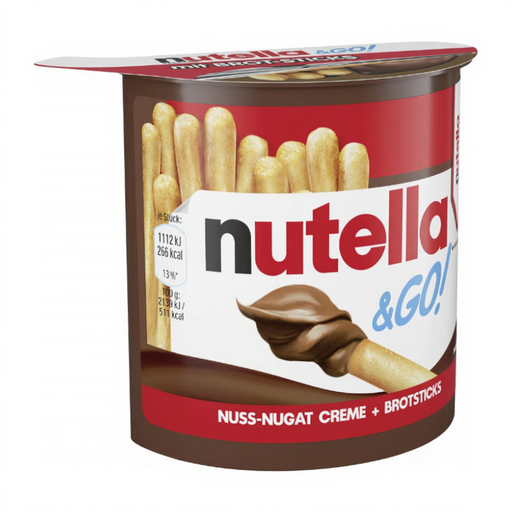 Image unavailable
For an individual snack after security, this product combines spread with breadsticks, so there’s no need to bring separate bread.
If you’re looking for a multipack, check how many units are included in the purchase. The product information lists wheat containing gluten, hazelnuts, milk, eggs and soya, and also notes that it may contain peanuts. Check the label before sharing.
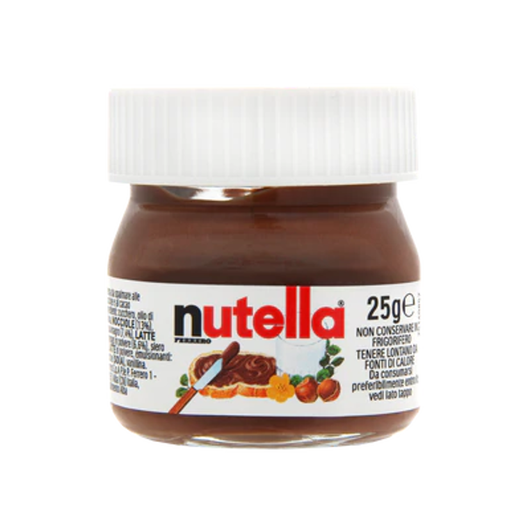 Image unavailable
This 25 g portion may suit you if you already have bread or something else to go with your snack.
Check how many portions are included in the purchase, as well as the nutritional information and allergens on the label for this product. If you plan to take it in your cabin baggage before security, check the rules with the airport and airline.
Before relying on being able to take a jar in your cabin baggage, check how it will be treated with your departure airport and airline. Paris Aéroport limits liquids, gels and aerosols to 100 ml per container, carried in a sealed one-litre transparent bag, but doesn’t explicitly classify spread on its security page.
No. Its weight of 200 g alone doesn’t tell you whether it will be allowed. The limit published by Paris Aéroport is given in millilitres for liquids, gels and aerosols. Check how spread will be treated before taking it in your cabin baggage.
No. The French Ministry of the Economy says that displaying Nutri-Score is optional in France. Nutritional information is generally required on prepacked foods, so compare the sugars and fats per 100 g on the labels of the products you’re considering.
The Nutella & Go product information lists wheat containing gluten, hazelnuts, milk, eggs and soya, and also notes that it may contain peanuts. Before sharing this snack, read the label on the product you’ve actually bought.