If you need to take your spread through security, first check the rules for the container: a large jar may not be allowed in the cabin. When choosing a size to enjoy after security or at your destination, think about how much you’ll need, then check the ingredients, allergens and nutritional information. The DGCCRF notes that Nutri-Score is voluntary in France.
Who is this advice for?
Travellers with hand luggage
You want to bring a snack you bought before security. French security guidance includes spreads among the regulated products, so check the container and the rules at your airport, with your airline and for any connecting flights.
Shoppers comparing sizes
You’re planning to enjoy it at your destination or share it with others. The net weight helps you tell the difference between a jar for several servings and a ready-to-eat portion, without assuming that the largest size is suitable for taking into the cabin.
Label-conscious shoppers
You need to check the ingredients or avoid certain allergens. The DGCCRF notes that Nutri-Score is voluntary, so also check the ingredients list and nutritional information for the product you choose.
What should you check before choosing?
First, decide whether you’ll need to take the jar through security. The size and label can then help you choose a spread that suits how you plan to enjoy it.
| What to consider |
What to check |
Who it matters to |
| Getting through security |
Check the container’s volume and the rules at your airport, with your airline and for any connecting flights. Paris Aéroport sets a limit of 100 ml per container for liquids, gels and aerosols in the cabin; French guidance also includes spreads among the regulated categories. |
If you want to keep your snack in your hand luggage, whether it will be allowed through security matters more than the jar size. Around 42% of consumers prioritise this. |
| How much you’ll need |
Compare the net weight with the amount you expect to eat during your trip. A jar for several servings and a portion with breadsticks serve different purposes. |
If you’re planning to enjoy it at your destination or share it, you’ll want a suitable amount without taking an unnecessarily large jar. This is the priority for around 33% of consumers. |
| Ingredients and allergens |
Check the ingredients, allergens and nutritional values per 100 g, particularly sugars and fat. The DGCCRF notes that Nutri-Score is voluntary in France. |
If you need to avoid certain ingredients or compare recipes, the label on the product you buy is key. Around 25% of consumers put this check first. |
Mistakes to avoid
-
Assuming a large jar will be allowed in the cabin
French security guidance includes spreads among the regulated products. Paris Aéroport sets a limit of 100 ml per container for liquids, gels and aerosols; your airline may have stricter rules.
Before you buy, check the rules for every stage of your journey. If the container isn’t suitable, consider buying your spread after security or at your destination.
A product that doesn’t meet security requirements may be refused at the checkpoint.
-
Assuming Nutri-Score is compulsory
According to the DGCCRF, displaying Nutri-Score is voluntary in France. Its absence doesn’t mean that a spread fails to meet labelling requirements.
To compare products, check the nutrition declaration per 100 g and the ingredients list, whether or not there’s a logo on the packaging.
-
Relying on a recipe without checking the allergens
Ingredients vary from one product to another. For example, the information for Nutella & GO! lists hazelnuts, milk, soya, wheat and barley among its ingredients.
Check the ingredients and any ‘may contain’ warnings on the packaging of the product you’re buying, especially if you’ll be sharing your snack.
Brands to know
Nutella
Nutella & GO! pairs a portion of spread with breadsticks in one handy pack.
- The breadsticks mean you can enjoy it without a knife, according to Nutella.
- Check the allergens shown on the packaging and the rules for the container before taking it through security.
Carrefour
SIMPL and Carrefour Classic' products are available in 750 g jars.
- The same net weight makes it easier to compare the sizes and labels of these two products.
- Check the ingredients and allergen information for the jar you choose.
E.Leclerc
Marque Repère’s Nustikao range is available in 400 g, 600 g and 1 kg sizes.
- These sizes let you choose according to how much you’ll need at your destination.
- Don’t assume that a large jar will be allowed through security in the cabin.
Auchan
POUCE cocoa and hazelnut spread comes in a 750 g jar.
- Auchan’s product information advises storing it away from heat and humidity.
- Check the ingredients list on the jar, particularly for milk and hazelnuts.
Lidl
Favorina offers a 400 g jar of speculoos spread.
- This is a speculoos recipe for shoppers specifically looking for this type of spread.
- It shouldn’t be confused with hazelnut and cocoa spread.
Aldi
The CUCINA milk and hazelnut product comes in a 400 g size.
- The product name and weight make it easy to identify the size you’re looking for.
- Check the label on the product you choose before comparing its ingredients with those of another recipe.
Spreads to consider on Joybuy
These two jars are worth considering if you plan to enjoy your spread after security or at your destination. If you need to take them through security in your hand luggage, check the rules for each container separately.
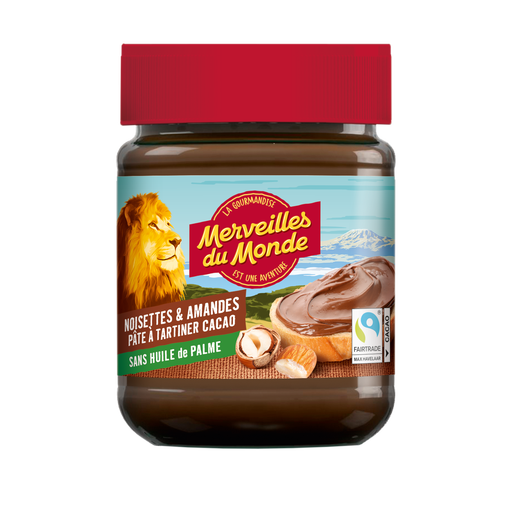 Image unavailable
MERVEILLES DU MONDE Family, 340 g
This 340 g jar of spread is an option for enjoying after security or at your destination. Before taking it through security in the cabin, check the container’s volume and the rules for your journey.
View on Joybuy
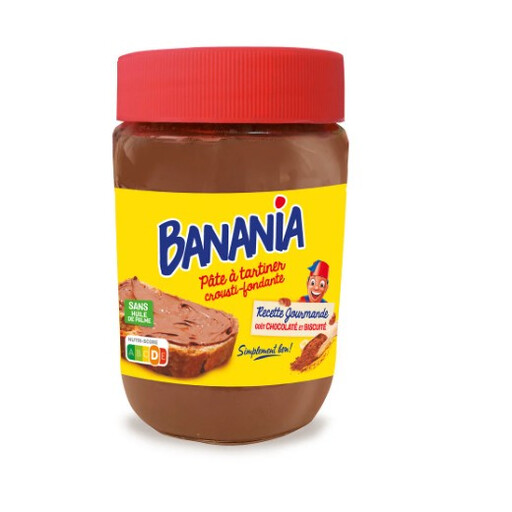 Image unavailable
Banania palm oil-free spread, 400 g
This 400 g jar is worth considering if you plan to enjoy the spread at your destination. Its name indicates that the recipe is palm oil-free. Check the label for ingredients and allergens, and make sure the container meets the rules before taking it through security.
View on Joybuy
Frequently asked questions
Can I take a jar of spread in my hand luggage from a French airport?
It depends on the container and the rules for your journey. French security guidance includes spreads among the regulated products; Paris Aéroport sets a limit of 100 ml per container for liquids, gels and aerosols. Before bringing the jar, check the rules at your departure airport, with your airline and for any connecting flights.
Is Nutri-Score compulsory on spread sold in France?
No. The DGCCRF describes Nutri-Score as a voluntary label in France. For the prepacked foods covered by the rules, a nutrition declaration is still compulsory. It lets you check values per 100 g without relying on the logo.
Where can I check the allergens in a spread before travelling?
Read the ingredients list and any ‘may contain’ warnings on the packaging of the jar you’re actually buying. Depending on the recipe, product information may list hazelnuts, milk, soya, wheat or barley. Don’t assume that one product has the same ingredients as another.


