For a simple, milky snack, start by comparing plain yoghurt with plain stirred yoghurt, then check the ingredients of the product you choose. Fromage frais may suit a preference for a smooth texture, while drinkable yoghurt is convenient when you’re out and about. Always check the age guidance, added sugars and storage instructions for the specific product.
Who are these options for?
Parents who want to put together a snack
With plain or plain stirred yoghurt, you can decide whether to add fruit or compote yourself. The ingredients list for each product is key: the category name alone doesn’t tell you everything about the recipe.
Families who care about texture
If your child prefers a smooth texture to set yoghurt, it’s worth comparing plain fromage frais with stirred yoghurt. Yoplait says its Petit Yoplait Nature range is designed for children over 3.
Families planning snacks on the go
A bottle you can drink means you don’t need to bring a spoon. Before choosing this format for an outing, compare the recipe and make sure you can follow the storage temperature shown on the packaging.
What should you look for?
For a child’s snack, first choose the type of product based on the recipe and texture you’re looking for. Then check that the format is suitable for where it will be eaten.
Plain or plain stirred yoghurt
Consider this: if you want to decide for yourself whether to add fruit at snack time.
Bear in mind: your child may not enjoy the milky taste if they’re used to fruit-flavoured recipes.
Plain fromage frais
Consider this: if your child prefers a smooth texture and a small portion to eat with a spoon.
Check this: fromage frais isn’t yoghurt, and age guidance varies by product.
Drinkable yoghurt
Consider this: when your child needs a snack they can enjoy away from home without a spoon.
Check this: the Danonino fruit recipe listed by Carrefour contains added sugar. This format also needs to be stored according to the instructions on the packaging.
| What to consider |
What to check |
Who it matters to |
| Recipe and added sugars |
Read the ingredients for the specific product. For fruit recipes, look out in particular for sugar or liquid sugar. As Anses points out, ‘no added sugars’ does not mean ‘sugar-free’. |
I want to decide what gets added to the yoghurt rather than choose a fruit recipe with added sugar straight away. This would be the main priority for around 36% of consumers. |
| Texture and age |
Know the difference between stirred yoghurt, set yoghurt and fromage frais, then check the age guidance and fat content. According to Manger Bouger, 0%, skimmed and semi-skimmed products aren’t suitable for children under 3. |
If my child prefers a smooth texture, I want a product that’s also suitable for their age. Around 29% of consumers would put this need first. |
| Snacks on the go |
Compare the portion size and format, then check the ingredients and the recommended storage temperature. |
For an outing, I prefer a format that can be used without a spoon, as long as I can store it as directed. This would be the main consideration for around 21% of consumers. |
| Family-size pack |
Check how many pots are included, their use-by date and how much space you have in the fridge. |
If my household eats plain yoghurt regularly, I want a pack we can finish in time. This would be the main priority for around 14% of consumers. |
Mistakes to avoid
-
Assuming a mild taste means no added sugar
A fruit product may contain added sugar even if it tastes mild. Carrefour’s product pages for the two Danonino recipes mentioned list an average of 6.2% sugar in the fruit fromage blanc and 6.8% liquid sugar in the drinkable yoghurt.
Think of ‘mild’ as a matter of taste. Read the ingredients and nutritional information for the exact recipe before comparing it with a plain product.
-
Choosing a 0% product for a child under 3
Manger Bouger’s guidance on introducing foods says that 0%, skimmed and semi-skimmed products aren’t suitable for children under 3.
Check your child’s age and the type of milk or fat content before choosing a product.
-
Buying a large pack without planning how to store it
A multipack of chilled yoghurts takes up space in the fridge, and the pots need to be used according to the instructions on the packaging. The Ministry of Economy points out that breaking the cold chain can make a product unsafe to eat.
Choose the number of pots to suit your family’s snack routine, check the use-by date and keep them at the temperature shown on the packaging.
Brands to consider for these types of products
Danone
The Danonino range includes fruit fromage blanc in small pots and fruit drinkable yoghurt. Both are different recipes from plain yoghurt.
- The fruit fromage blanc listed by Carrefour comes in 50 g pots, an individual portion size to compare with your child’s snack needs.
- Carrefour’s product pages list added sugar in both recipes: an average of 6.2% in the fruit fromage blanc and 6.8% liquid sugar in the drinkable yoghurt.
Yoplait
Petit Yoplait Nature is a smooth, plain fromage frais, not a yoghurt.
- For this recipe, Yoplait lists 9 g of protein and 4 g of sugars per 100 g.
- Yoplait says the Petit Yoplait range is for children over 3. These nutritional values don’t apply to its other recipes.
Carrefour
Carrefour Classic’ plain stirred yoghurt and Carrefour Bio plain yoghurt give you two types of plain yoghurt to compare.
- The Carrefour Classic’ stirred yoghurt product page lists whole milk, lactose, milk proteins and cultures. The Carrefour Bio product page lists organic whole milk, organic skimmed milk powder and cultures.
- The ingredients for these two products shouldn’t be assumed to apply to all Carrefour yoghurts. Check the label on the product you choose.
E.Leclerc / Délisse
Délisse offers a plain yoghurt in a pack of 16 × 125 g pots, which may suit your household’s consumption.
- E.Leclerc’s product page for this yoghurt lists a recipe made with partially skimmed milk, skimmed milk and cultures.
- For this pack, check that the number of pots and their use-by date suit your family’s snack routine.
Auchan
The Auchan plain yoghurt mentioned here comes in a pack of 16 × 125 g pots.
- Its product page lists 4.3 g of sugars per 100 g and a recipe made with partially skimmed milk and cultures.
- Auchan says this product should be stored between 0 °C and +6 °C. These details don’t apply to all its yoghurts.
Products available on Joybuy
This is a plain fromage blanc in individual portions for children. Consider it if you’re looking for this category rather than a classic yoghurt.
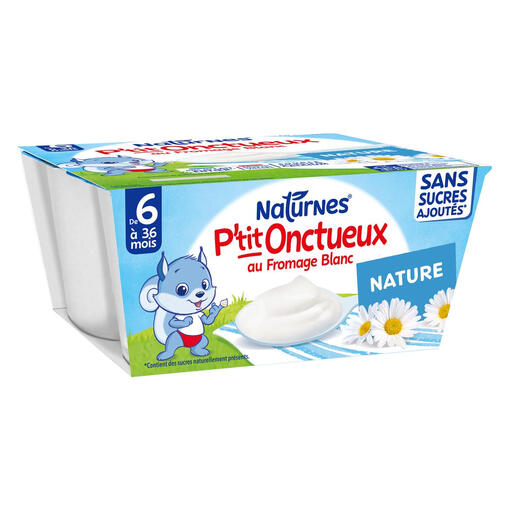 Image unavailable
Nestlé P'Tit Smooth, plain fromage blanc, 4 × 90 g
An individual portion for snack time if you’re looking for plain fromage blanc rather than yoghurt.
The product name specifies four 90 g pots and says it’s suitable from 6 months.
View on Joybuy
Frequently asked questions
Does ‘no added sugars’ mean ‘sugar-free’?
No. According to Anses, a product labelled ‘no added sugars’ may still contain sugars that occur naturally in its ingredients. To find out what’s in the recipe you’ve chosen, check the ingredients list and nutritional information too.
Is 0% yoghurt suitable for a child under 3?
No, not for this age group. Manger Bouger’s guidance on introducing foods says that 0%, skimmed and semi-skimmed products aren’t suitable for children under 3. Check the details of the specific product rather than applying a guideline intended for adults.
How should you store yoghurt for snack time?
Follow the storage temperature and use-by date shown for the yoghurt you choose, even when you’re taking it out with you. The Ministry of Economy points out that breaking the cold chain can make a product unsafe to eat.


