
Livraison le jour même ou le lendemain

Qualité garantie

Débloquez vos offres de bienvenue: Livraison GRATUITE | Jusqu'à -80 % | 30 jours d'essai gratuits à JoyPlus
Téléchargez l'application
Whether you're a yoga or Pilates enthusiast, or simply looking for a good surface for your floor exercises, choosing a yoga mat might seem straightforward. Yet, the market is so vast that it's easy to get lost, especially when faced with sometimes misleading marketing claims. As a product recommendation expert at Joybuy, my mission is to help you see things more clearly. Together, let's break down the pitfalls to avoid so you can make an informed decision that suits both your practice and your budget.
Before you jump on the first model you see, it's crucial to debunk the common myths and marketing arguments that too often lead to a purchase you'll regret.
To hit the mark, three technical criteria make all the difference. Let's examine them closely.
The material directly influences your mat's grip, durability, comfort, and environmental impact.
The thickness, in millimetres, should be chosen primarily based on your main practice.
Don't overlook the size of your future mat. To be truly comfortable, you should be able to lie down fully without your head or feet hanging off. If you are taller than 1.80 m (5'11") or if your practice includes wide-ranging movements, a large yoga mat (over 190 cm long and 80 cm wide) will make all the difference.
Here are a few models that cater to specific user profiles, based on the criteria we've just discussed.
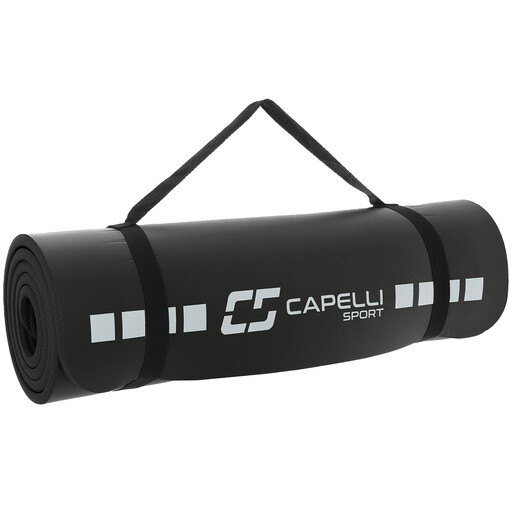
Why we chose it: This mat is for those who prioritise comfort for floor exercises (abs, planks, Pilates) where pressure points (knees, elbows, back) are heavily engaged. Here, stability for balance poses takes a backseat.
It fully embraces its role as a comfort-focused mat. By choosing this 1.2 cm NBR model, you don't fall into the "one-size-fits-all" trap: you're deliberately opting for maximum cushioning, perfectly suited for fitness but not for balance-focused yoga.
Its generous NBR foam thickness absorbs shock and effectively protects joints on hard floors. An added perk: it comes with a handy carrying strap.

Why we chose it: For yogis who prioritise natural, high-performance materials. Ideal for a regular practice, including intense forms of yoga (like Hot Yoga), that demands an unbeatable grip, even when sweating.
It sidesteps the vague "eco-friendly" claim by focusing on a tangible material: cork, a renewable resource. Its dual cork/TPE layer is a smart combination of materials with proven properties, with no false promises.
The grip of its cork surface improves with heat and moisture, providing optimal safety during intense sessions. Underneath, the TPE base ensures the mat stays stable on the floor.
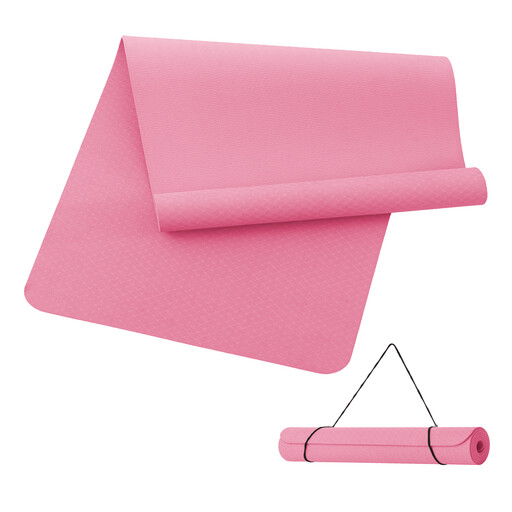
Why we chose it: For taller individuals or those whose practice (yoga, fitness, dance) demands a great deal of freedom of movement, space is non-negotiable. This mat offers a generous surface so you never feel confined.
It directly addresses the problem of the often inadequate standard size. With its generous dimensions of 190 x 100 cm, it provides a much larger surface area than average and puts an end to the frustration of constantly having to reposition yourself.
Its XXL size offers a comfortable and secure practice space. Its dual-sided non-slip texture and 6 mm TPE thickness make it an excellent all-purpose mat.
Does your practice require more specialised equipment, like for acrobatic gymnastics? We have other solutions to offer.
Most TPE, NBR, or PVC mats can be cleaned simply with a damp cloth and a little mild soap (or diluted white vinegar). Avoid harsh chemical products. Rinse with clean water and let it dry completely in the open air, away from direct sunlight, before rolling it up. For a cork mat, a simple wipe with a damp cloth is sufficient. Most importantly, never put it in the washing machine!
If your mat is new, it might be coated with a light protective film from the manufacturing process. An initial cleaning often helps improve the grip. If the problem persists, make sure your hands and feet are completely dry. For PVC or TPE mats, a microfibre yoga towel can be an excellent solution, especially if you sweat a lot. And if you practice Hot Yoga, a cork mat remains the preferred option.
The main difference comes down to thickness and density. A yoga mat is generally thinner (3 to 6 mm) and denser to ensure stability in balance poses. Conversely, a fitness mat or gym mat is often thicker (10 mm or more) and softer to cushion impacts and provide comfort during floor exercises (crunches, planks, etc.). Using the wrong mat can compromise both your comfort and the quality of your practice.