
Livraison le jour même ou le lendemain

Qualité garantie

Débloquez vos offres de bienvenue: Livraison GRATUITE | Jusqu'à -80 % | 30 jours d'essai gratuits à JoyPlus
Téléchargez l'application
Choosing a new yoga mat can be overwhelming. With so many materials, thicknesses, and sizes available, it's hard to know where to start. Yet, whether you're a beginner or a seasoned yogi, the right mat is the key to a comfortable, safe, and effective practice.
Our mission? To guide you with clear, objective information to help you make the right choice, cutting through the marketing jargon. This guide breaks down the essential criteria and presents our selection of the best models for 2026.
Before you dive in, let's review the three fundamental criteria that separate a quality exercise mat from an entry-level model.
The material of your yoga mat is crucial. It determines not only its grip and lifespan but also its comfort and environmental impact.
The thickness of your mat is a constant trade-off between comfort and stability.
A non-slip fitness mat is a non-negotiable safety feature. Most modern mats have a textured surface (waves, dots, etc.) that provides a dual grip: the mat stays put on the floor, and your hands and feet won't slip, even when you're sweating.
Also, consider the practical details: a carrying strap included with the mat is a real bonus, making it easy to take to the studio or gym.
Here are the models that caught our eye, each designed for a specific need.

Why it stands out: Its hybrid design combines the best of both worlds: a natural cork surface for a grip that improves with moisture, and a TPE base for lightweight cushioning.
Benefits:
Who is it for? For yogis who practice dynamic styles (Vinyasa, Ashtanga) and want high performance without compromising on natural materials.
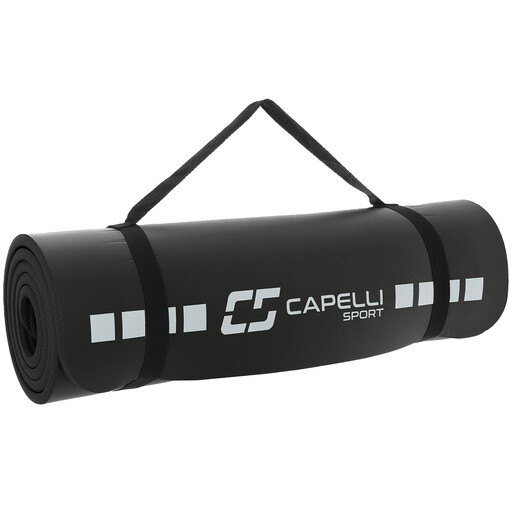
Why it stands out: With its 1.2?cm thickness, this mat is all about comfort and cushioning. Its NBR foam is specially designed to absorb impact and pamper your joints.
Benefits:
Who is it for? Ideal for those who prioritise comfort above all, Pilates and floor fitness enthusiasts, or beginners looking for a thick and secure yoga mat.
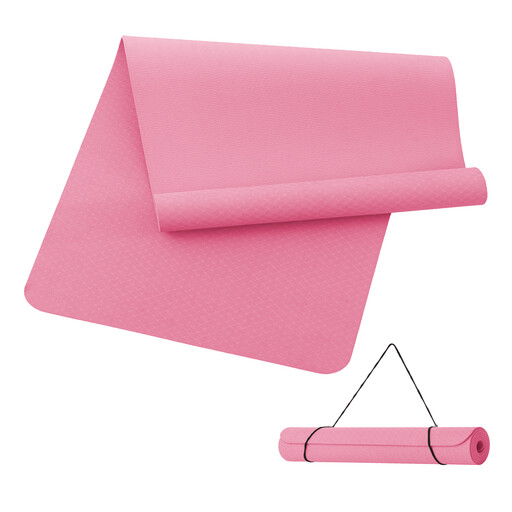
Why it stands out: Its XXL dimensions of 190?x?100?cm offer a generous practice space, far beyond the standard size. No more feeling cramped or placing your hands and feet off the mat!
Benefits:
Who is it for? For anyone who feels confined on a standard mat, whether due to their height, their practice (wide movements, fitness), or even for partner yoga.

Why it stands out: This TPE yoga mat features integrated alignment lines. These visual cues are an invaluable aid for positioning your hands and feet correctly, helping you perfect your posture.
Benefits:
Who is it for? Especially recommended for yoga or Pilates beginners who are looking for a visual guide to learn and perfect their poses.
Does your practice have specific needs? Or do you simply want to see more options? Our full catalogue is filled with mats suited for every discipline and budget.
Discover Our Complete Range of Exercise Mats
It all depends on your priority. A thickness of 4 to 6?mm is the most versatile, offering an excellent balance. A thick yoga mat (over 8?mm) focuses entirely on comfort and cushioning, making it recommended for gentle practices, Pilates, or if you have sensitive joints.
Most mats (TPE, cork, NBR) are very easy to clean. After each session, simply wipe it down with a damp cloth and a little mild soap. Let it air-dry completely before rolling it up. To preserve the material, avoid prolonged exposure to direct sunlight and never put it in a washing machine.
While they are often used interchangeably, there are some nuances. A yoga mat prioritises grip for stability in poses. A Pilates or gym mat is generally thicker for better cushioning during floor exercises. That said, a good all-purpose mat, like a 6?mm TPE model, will adapt perfectly to all these activities.