
Livraison le jour même ou le lendemain

Qualité garantie

Débloquez vos offres de bienvenue: Livraison GRATUITE | Jusqu'à -80 % | 30 jours d'essai gratuits à JoyPlus
Téléchargez l'application
A mat that slips during Downward-Facing Dog, knees screaming for help during lunges, a size so restrictive it hinders your movements… Choosing the right yoga mat can sometimes turn into a real headache given the overwhelming number of options.
Our mission at Joybuy? To help you see things more clearly. This guide was designed to demystify the market, cutting through the marketing jargon. The goal: to give you objective selection criteria to find THE mat that truly suits your practice and your expectations.
Before diving into our selection, let's review the key points that will guide your choice.
The choice of material is crucial: it determines the mat's grip, weight, and even its environmental impact.
Thickness, which generally ranges from 3 to 15 mm, is a constant trade-off between comfort and stability.
A standard mat measures about 183 x 61 cm. However, opting for a large yoga mat can make all the difference, especially if you are tall or if your practice requires a wide range of motion. Don't overlook convenience either: a mat with a carrying strap will make your life easier when taking it from the living room to the studio.
We have selected three models that each meet a specific need: whether you are a beginner, a hot yoga enthusiast, or in search of absolute comfort.
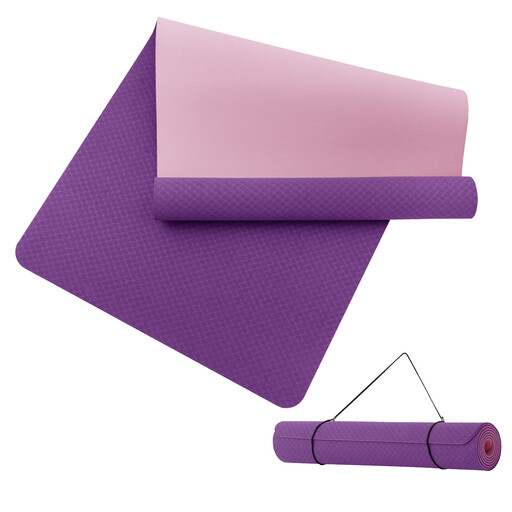
Its key feature: Its XXL dimensions, which offer a freedom of movement far beyond market standards.
Key features:
Who is it for? For tall yogis, fans of dynamic practices (like Vinyasa), or simply for those who want their own bubble of comfort for yoga, Pilates, or fitness at home.

The promise: A natural cork surface whose grip intensifies with heat and sweat.
Key features:
Who is it for? The ideal choice for hot yoga enthusiasts (Bikram, Hot Vinyasa) and anyone who sweats profusely. It's also a clear choice for anyone looking for a high-performance, eco-friendly yoga mat.
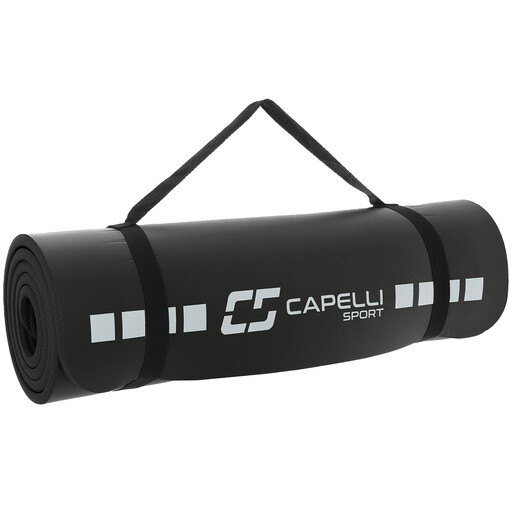
The comfort advantage: Its record-breaking 1.2 cm thickness, designed for uncompromising cushioning and joint protection.
Key features:
Who is it for? For beginners, people with sensitive joints, and for all gentle practices (stretching, restorative yoga) where comfort is more important than dynamic stability.
Our selection highlights specific needs, but the world of yoga mats is much broader. To explore other materials, thicknesses, or designs and find the perfect mat that will accompany you daily, feel free to browse our complete collection.
Discover All Our Exercise Mats
1. What is the ideal thickness for a yoga mat? It all depends on your practice and your sensitivity. For dynamic yoga (Vinyasa, Ashtanga), a thickness of 4 to 6 mm is ideal to ensure good stability in balancing postures. For Pilates, gentle yoga, or if you have sensitive joints, a thicker mat (8 mm and up) will provide much more comfortable cushioning.
2. How do I clean and maintain my yoga mat? Most mats (TPE, NBR, cork) can be cleaned with a simple damp cloth and a little mild soap if needed. Avoid harsh detergents! Always let it air dry completely before rolling it up. Most importantly, do not put it in the washing machine or leave it in direct sunlight for extended periods, as this could damage the material.
3. TPE, NBR, cork: which material is right for me?