
Livraison le jour même ou le lendemain

Qualité garantie

Débloquez vos offres de bienvenue: Livraison GRATUITE | Jusqu'à -80 % | 30 jours d'essai gratuits à JoyPlus
Téléchargez l'application
Choosing a 3D printing filament can quickly become complex. Between manufacturer promises and workshop reality, it's essential to rely on concrete criteria to find the right material for your projects. For many users, value and reliability are top priorities. Yellow PETG filament stands out as a particularly versatile option, combining the ease of use of PLA with the robustness of ABS.
As a Product Recommendation Manager at Joybuy, my role is to provide you with clear, practical information to help you navigate the market. This article aims to guide you in selecting a yellow 1.75mm PETG spool, focusing on the features that truly matter for your prints.
Before we present our top picks, here are a few tips to guide your purchasing decision, in line with expectations for transparency and quality.
Every yellow 3D printer filament has its own unique characteristics. The first step is to ensure the filament diameter (usually 1.75 mm) is compatible with your machine. Next, check the recommended printing temperatures for the nozzle and heated bed. A good PETG filament offers a fairly wide operating range, but following the manufacturer's recommendations is key to success, especially for minimizing extrusion issues.
PETG is a hygroscopic material, meaning it tends to absorb moisture from the air. A wet filament can cause bubbles, crackling during extrusion, and a poor-quality surface finish. Reputable manufacturers always provide drying recommendations (temperature and duration). To ensure the longevity of your 1kg PETG spool, store it in an airtight container with desiccant packets after each use. This is a crucial step for maintaining a durable 3D printing material.
One of the main advantages of PETG for 3D printing is its versatility.
Taking the above criteria into account, we have identified two options that meet different but complementary needs for makers and professionals.
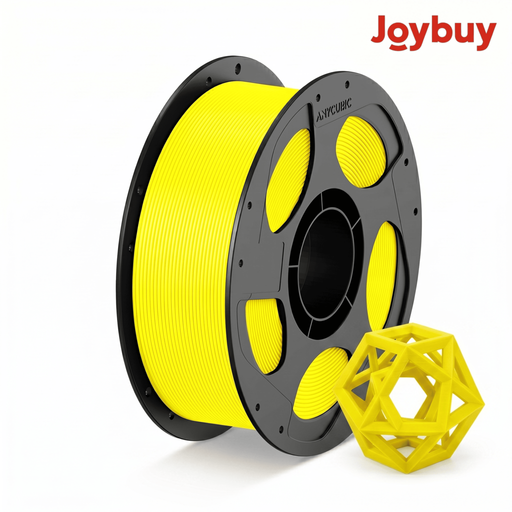
Why We Recommend It
This yellow PETG 3D filament is a solid choice for those seeking performance and reliability. It stands out for its well-documented mechanical properties and its compatibility with smart identification systems, which can simplify setup on compatible printers. Its formulation is designed for functional applications where durability is paramount.
Pros
Who Is This Product For? For makers, engineers, and professionals who need a reliable filament to produce robust and durable parts capable of withstanding mechanical and environmental stress.

Why We Recommend It
CAILAB's filament is an excellent balance between performance and ease of use. It is designed to minimise common 3D printing issues like warping, while delivering a glossy, aesthetic finish. Its versatility makes it a smart choice for a wide range of projects, from everyday objects to artistic creations.
Pros
Who Is This Product For? For hobbyists and creators looking for an easy-to-print filament that offers an excellent visual finish without sacrificing strength. It's an ideal option for those new to PETG or who want a reliable material for various projects.
While your printer brings your creations to life with this vibrant yellow, why not add a touch of the same bright colour to your own style? If you're feeling inspired, take a look at our selection of yellow tops to add a pop of colour to your wardrobe.
PETG is often considered a happy medium between PLA and ABS. It is more demanding than PLA and requires a heated bed (usually between 60°C and 80°C) to ensure good adhesion. However, it exhibits low warping compared to ABS, making it easier to master. With well-tuned settings, it delivers very reliable results.
PETG is a hygroscopic material: it absorbs moisture from the ambient air. When this moisture is heated in the printer's nozzle, it turns into steam and creates imperfections (bubbles, excessive stringing, rough surface) and weakens the final part. Drying your spool before use, as recommended by manufacturers, is the best practice to ensure optimal print quality.
This is a tricky question. Raw PETG is often considered food-safe. However, the 3D printing process can introduce contaminants (e.g., from a brass nozzle). Furthermore, the micro-gaps between layers can harbour bacteria. For food-contact use, it is imperative to check if the filament has a specific "food-safe" certification and to consider applying a food-grade coating to the finished part to seal the surface.