
Livraison le jour même ou le lendemain

Qualité garantie

Débloquez vos offres de bienvenue: Livraison GRATUITE | Jusqu'à -80 % | 30 jours d'essai gratuits à JoyPlus
Téléchargez l'application
An XXL cat tree can transform your home into a genuine climbing, play and resting area. But greater height alone does not guarantee a successful purchase. Some models offer multiple levels with platforms that are too narrow, while others require wall fixing that is not always clearly stated before purchase.
To avoid unpleasant surprises, focus on three criteria: stability, genuinely usable dimensions and the quality of the scratching areas. Here are the key points to consider before choosing a large cat tree.
A 170 or 190 cm cat tree may look particularly spacious on a product page. However, its floor space can sometimes be limited. For a large cat, a platform that is too short or a cubby that is too narrow can affect comfort and make some levels unusable.
So check the full dimensions, especially the length and width of the base. A tall, narrow model can also be more easily destabilised when a cat leaps from one level to another.
A multi-level structure must remain stable when several cats climb on it at the same time. The total weight of the cat tree is not enough to assess its stability: the shape of the base, the diameter of the posts, the quality of the joints and the wall fixing also matter.
When the product information states that an anti-tip device is mandatory, install it before first use. Place the cat tree on a flat, dry floor, ideally against a wall.
A cat tree covered in sisal should provide scratching areas that are accessible from several levels. Posts positioned only at the base will be less practical for a cat that likes to stretch upwards.
Check their number, diameter and arrangement. The sisal should be properly tightened and inspected regularly: frayed or loose rope may need replacing.
A 170 cm cat tree is often suitable for homes looking for several levels without taking up too much floor space. A 190 cm cat tree offers a higher vantage point, but requires particular attention to fixing and ceiling height.
Measure the available space before ordering, taking into account:
For a cat tree designed for several cats, choose models offering several separate resting areas: hammocks, cubbies, baskets or platforms. This helps limit conflicts caused by having only one sleeping area.
Read the weight guidance carefully. A stated capacity of “up to 10 kg per cat” does not necessarily mean that the structure can accommodate several cats of this weight on the same platform. Load distribution remains crucial.
A multi-level cat tree should offer several uses:
Thick plush coverings provide a comfortable surface, but require regular cleaning with a vacuum cleaner or cloth. In a home with several pets, removable, washable elements make maintenance considerably easier.
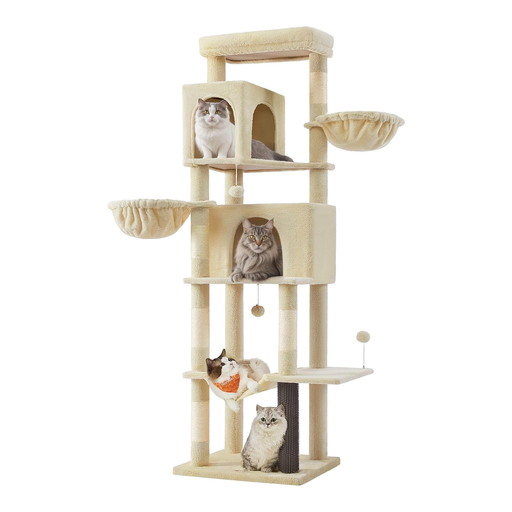
Why this choice suits this profile : Standing 190.7 cm tall and weighing 19.5 kg, this model combines several features : two cubbies, two beds, a hammock and a large platform.
The product information clearly states the height, weight, materials and the fact that anti-tip fixing is required. This allows you to plan the installation instead of relying solely on the XXL claim.
190.7 cm tall, five jute-rope posts, two cubbies, a hammock and an integrated brush.
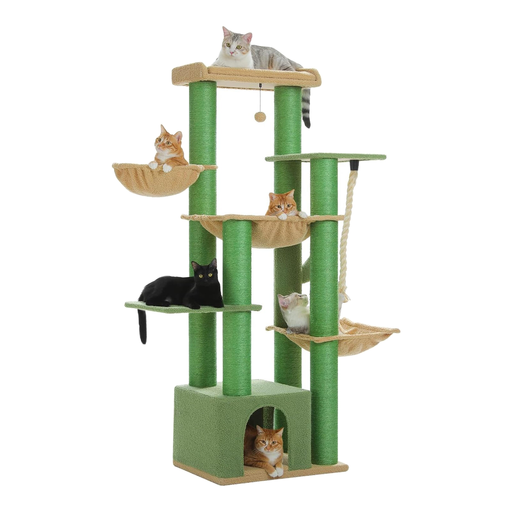
Why this choice suits this profile : Its seven-level design is ideal for active cats and homes looking to provide more routes, resting areas and scratching surfaces.
Its 13 sisal posts, each 11 cm in diameter, prevent scratching from being concentrated in one area. The hammocks and cubby are removable, making cleaning easier.
13 posts measuring 11 cm, three hammocks, three upper platforms and a stated capacity of up to 10 kg per cat.
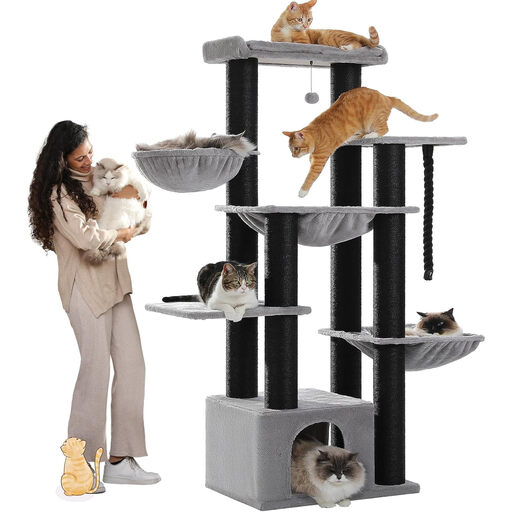
Why this choice suits this profile : This version is suitable for multi-cat homes and active pets that regularly use the routes, sleeping areas and posts.
The product information specifies a limit of 10 kg per cat, a weight of 24 kg and recommends checking the screws and ropes each month. This information makes it easier to plan use and maintenance.
Seven levels, 13 sisal posts measuring 11 cm, three hammocks, three platforms and a spacious cubby.
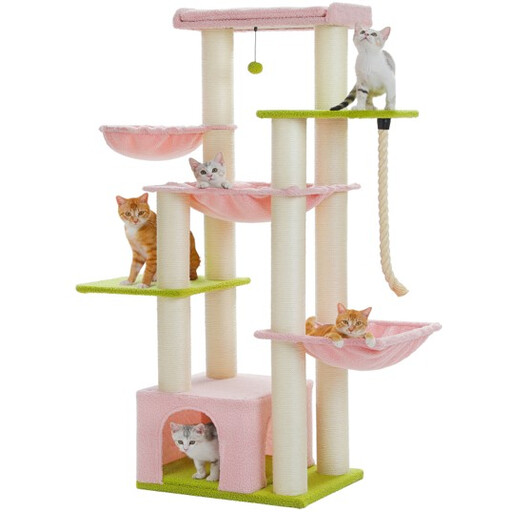
Why this choice suits this profile : With several hammocks, platforms and a hideaway, this model is suitable for homes where each cat should have its own resting space.
The covers on the sleeping areas and hammocks can be removed for washing. This is a real advantage for regular maintenance, which is often overlooked when choosing a cat tree.
13 sisal posts, three hammocks, three upper platforms and a hideaway, measuring 58 × 45 × 170 cm.
We have put together a complete, real-time updated list of products that meet these strict selection criteria, as well as European safety regulations.
Assemble the structure in the order specified in the instructions, generally starting with the base and working upwards. For the tallest models, it is best to have two people so that the components can be held in place during assembly. Tighten the screws without forcing them, then check that each platform remains level.
Before allowing your cat to use the cat tree, check:
A vacuum cleaner or lint roller can be used to remove fur from plush surfaces. Removable covers should be washed in accordance with the manufacturer’s instructions. Inspect the joints regularly and replace any loose, damaged or heavily worn part.
A 170 cm cat tree offers several levels and a useful vantage point. A model close to 190 cm provides more vertical space, but requires suitable fixing and placement. In both cases, pay particular attention to the width of the platforms and the stated weight capacity.
Yes, provided it has several resting and scratching areas. A sufficient number of hammocks, cubbies and platforms helps distribute use. However, the weight limit must be understood in relation to each cat’s weight and the simultaneous load supported by each level.
Its lifespan depends on how often it is used, the cats’ weight and the tension of the sisal. Check regularly for frayed areas. If the rope comes loose or the post becomes unstable, stop using it and replace the affected part where possible.