
Livraison le jour même ou le lendemain

Qualité garantie

Débloquez vos offres de bienvenue: Livraison GRATUITE | Jusqu'à -80 % | 30 jours d'essai gratuits à JoyPlus
Téléchargez l'application
Whether you are a student, teacher, employee, parent or keen artist, choosing the right writing pens and felt-tip pens can quickly become a headache. Between promises of ‘ultra-smooth’ ink, multicoloured sets and tips described as suitable for every task, it is easy to end up with a model that is not right for how you intend to use it.
Before filling your basket, take the time to check three criteria that are often overlooked: line width, how the ink behaves on your paper and how practical the packaging is. A tip that is too fine may catch on certain sheets, while very runny ink can bleed through the pages. Conversely, a cheap multipack may simply leave you with colours you will never use.
Pens with free-flowing ink are pleasant to use, but very runny ink increases the risk of smudging or transferring onto the next page. For taking notes, ballpoint pens with oil-based ink are generally easy to control. Gel pens offer smoother writing and often more vivid colours, provided you allow for their drying time.
A 0.3 or 0.4 mm tip is suitable for precise annotations, diagrams and detail work. A 0.7 to 1.0 mm tip produces a more pronounced line, making it useful for everyday notes and forms. On thin paper, however, a broad tip combined with a generous ink flow can increase the risk of show-through.
A pen set can be very useful for bullet journalling, colouring or revision notes. In the office, a few carefully chosen colours are usually enough: black for text, blue for notes, red for corrections and, optionally, green to make visual filing easier. The number of pieces should not make you overlook the essentials: the tip, comfort in the hand and type of ink.
Line width is more informative than vague descriptions such as ‘fine’ or ‘precise’. Fine-tip pens measuring 0.5 mm are suitable for notebooks, diaries and documents where space is limited. 0.4 mm fineliners are ideal for diagrams, drawing and bullet journalling. For technical sketches, a tip measuring 0.3 mm or less allows you to work on details accurately, provided you do not press too hard.
The shape of the tip also plays a part: a ballpoint tip is versatile, a needle tip supports neat writing and a fibre tip produces consistent lines. Fine felt-tip pens and washable markers for children meet different needs, so colour should not be the only factor when choosing.
For long writing or drawing sessions, choose a non-slip grip and a shape that does not put pressure on your fingers. A retractable model means there is no cap to lose and protects the tip in your pencil case. Felt-tip pens and fineliners should be capped after every use and stored according to the manufacturer’s recommendations, often horizontally.
A set with a rigid box or transparent case makes it easier to store and identify the colours. For multipacks intended for school or the office, also consider how many you actually need, whether refills are available and how much space they will take up in your drawers.
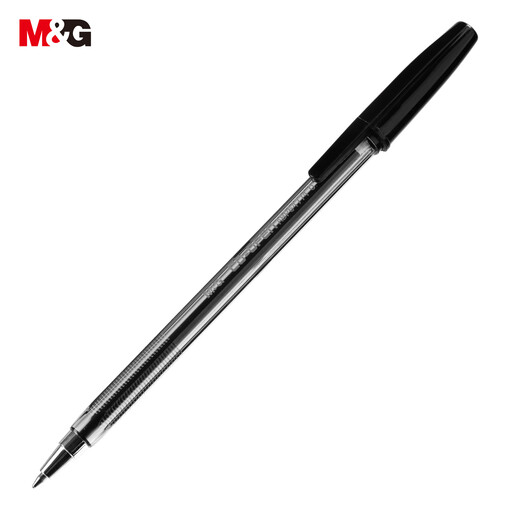
Why this choice suits this user: This pack of 40 black 0.7 mm ballpoint pens is suitable for students, classrooms, meetings and all everyday situations where it is useful to have a good supply to hand.
The large pack reduces the need for repeat purchases and focuses on one genuinely useful colour for everyday documents.
0.7 mm ceramic ballpoint tip, black oil-based ink and non-slip grip.
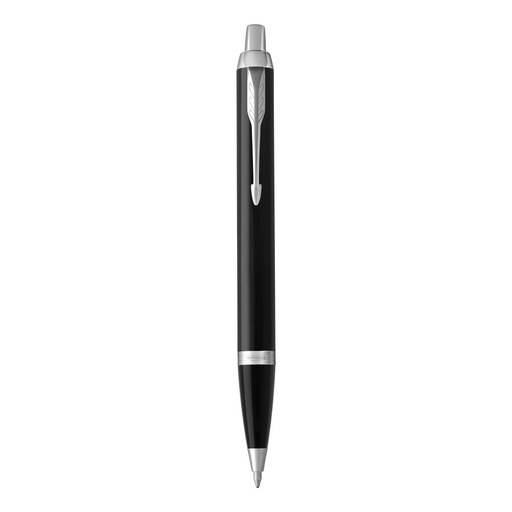
Why this choice suits this user: With its black lacquered body, chrome details and presentation box, this pen is designed for anyone looking for a stylish accessory for the office, meetings or a gift.
The product details specify the retractable mechanism, blue ink and presentation box, so the choice is not based on appearance alone.
Medium ballpoint tip, black lacquered body, push-button mechanism and blue refill included.
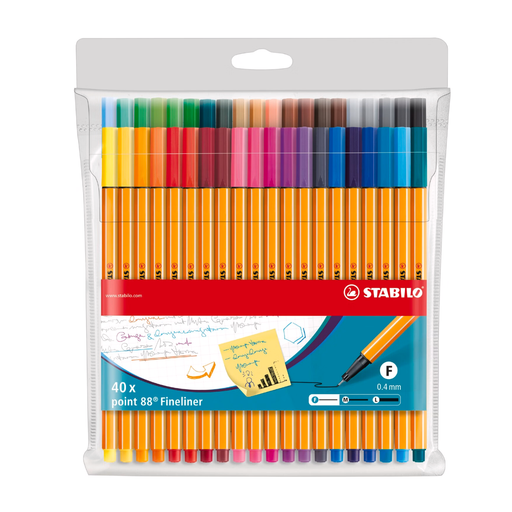
Why this choice suits this user: Teachers, illustrators, journalling enthusiasts and regular users can enjoy a wide colour palette for colour-coding notes and creating detailed lines.
The 0.4 mm line width is clearly stated, while the transparent case makes it easy to spot the colours at a glance.
40 fineliners, metal-encased fibre tips, made in Germany and certified ISCC Plus bio-based plastic, according to the product details.
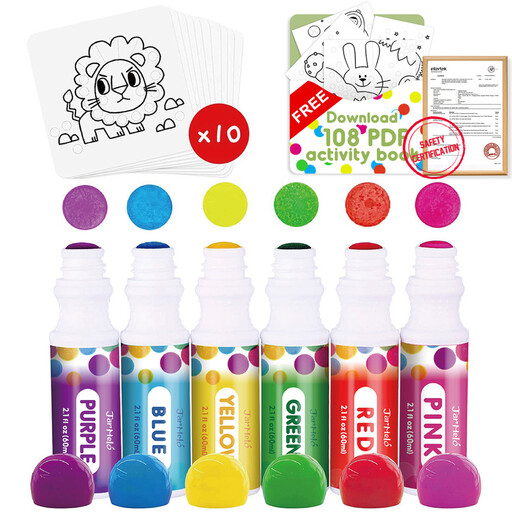
Why this choice suits this user: Parents looking for washable markers for their children will appreciate this easy-to-hold format, suitable for dots, lines and colouring large areas.
The product details state that it uses water-based ink and that washing removes 90 % of marks from skin and most fabrics. Stains should still be treated promptly.
Six markers with broad round tips, alcohol-free ink and activity sheets included. Not suitable for children under 3 years.
We have brought together a comprehensive, real-time updated selection of products that meet these selection criteria and European safety requirements.
A 0.5 to 0.7 mm tip generally offers the best balance between precision and readability. For squared notebooks, diaries and compact annotations, a fine tip will often be more comfortable. A 1.0 mm tip produces a more visible line but requires more space.
No. Their thermosensitive ink is useful for drafts, exercises and schedules that may need changing. For a contract, invoice or document intended for archiving, choose a permanent ink suitable for the material.
Always test the pen on a sheet similar to the one used in your notebook. If necessary, choose a finer tip, allow gel pens to dry and opt for thicker paper when using felt-tip pens, drawing pens and highly pigmented inks.