
Livraison le jour même ou le lendemain

Qualité garantie

Débloquez vos offres de bienvenue: Livraison GRATUITE | Jusqu'à -80 % | 30 jours d'essai gratuits à JoyPlus
Téléchargez l'application
A wrench slipping on a nut, a socket that cannot be found halfway through a repair or a case that is impossible to organise: it does not take much to turn a small DIY job into an unexpected expense. Whether you are working on a car, plumbing, renovation or routine maintenance, a wrench and DIY tool set should first and foremost cover the sizes you actually use and suit the demands of the job.
Before placing your order, three common mistakes are worth avoiding:
Here are the criteria to review when comparing different models, without getting lost in the marketing claims.
In France, metric combination spanners are the most common choice for mechanical assembly, maintaining household equipment and many automotive jobs. Sizes from 8 to 19 mm are sufficient for many everyday tasks, but plumbing and certain maintenance operations may require wider openings.
A case such as the 51-piece wrench set may appeal to a workshop looking to bring together several sizes and different types of wrench. However, check the detailed contents rather than relying solely on the number shown on the box. With some imported equipment, having SAE sizes available can also prove useful.
A ratchet wrench set allows you to work without removing the wrench completely after every movement. In difficult-to-reach areas, the number of teeth and the return angle provide a good indication of manoeuvrability. A 72-tooth mechanism with an advertised 5° return angle allows very short movements. Even so, this does not remove the need to use a socket or wrench that fits the fastener head perfectly.
A 12 V electric ratchet wrench can considerably speed up repetitive dismantling and reassembly work. However, it cannot replace a torque wrench when tightening must comply with the torque specified by the vehicle or machine manufacturer.
Chrome vanadium steel, often abbreviated to Cr-V, is widely used to manufacture wrenches and sockets. Also check the surface finish, how clearly the markings can be read and how comfortable the tool is to hold. A wide-jaw adjustable wrench should have a stable jaw, a smooth adjustment screw and easy-to-read graduations.
For regular use, storage is far from a minor detail. A case or holder that keeps each tool in its place prevents items from going missing and makes it quick to find the right size. Also check that instructions, usage warnings and the contact details of the manufacturer or the responsible person established in the European Union are provided when required.
The needs of an occasional DIYer are very different from those of an automotive workshop or maintenance professional. The selection below is based on the features stated by the manufacturers and the uses claimed for each product.
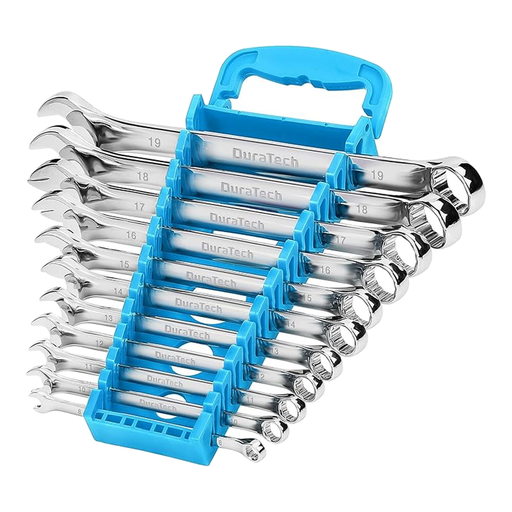
Why this choice suits this profile : This case brings together 11 commonly used metric sizes in a compact format. It is well suited to first-time DIY jobs and minor repairs on a bicycle or car.
The sizes, from 8 to 19 mm, are clearly indicated. This reduces the risk of buying a case full of sizes you will never use.
Chrome vanadium steel, sizes engraved on the handles and a storage holder that keeps each spanner securely in place.
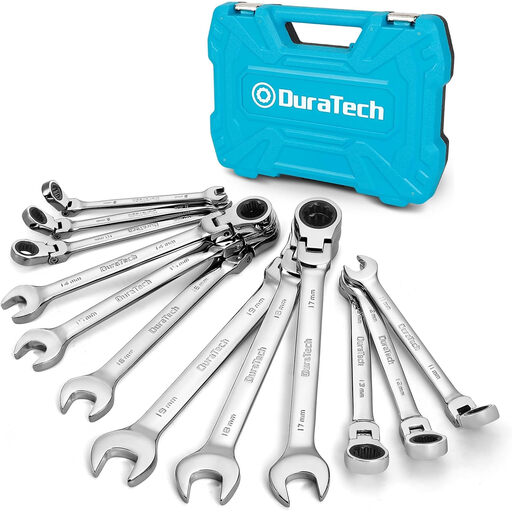
Why this choice suits this profile : Regular DIYers will appreciate the hinged heads and the advertised 72-tooth mechanism when working in areas with limited clearance.
The 8 to 19 mm range and the advertised 180° flex angle are clearly specified. This is a far cry from product descriptions that simply promise vague versatility.
12 ratchet combination spanners, chrome vanadium steel and a storage case included.
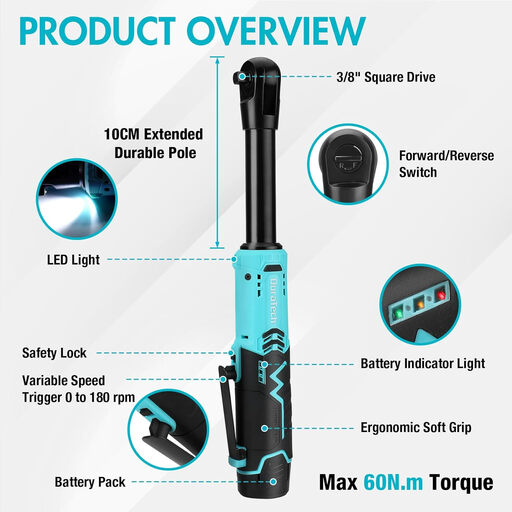
Why this choice suits this profile : This tool is designed for repetitive automotive mechanical work, equipment assembly and workshops where every saved second matters.
The product details specify the 3/8 in. square drive, advertised maximum torque of 65 N·m and variable speed from 0 to 180 rpm.
Two 2.0 Ah batteries, fast charger, LED light, charge indicator and case included.
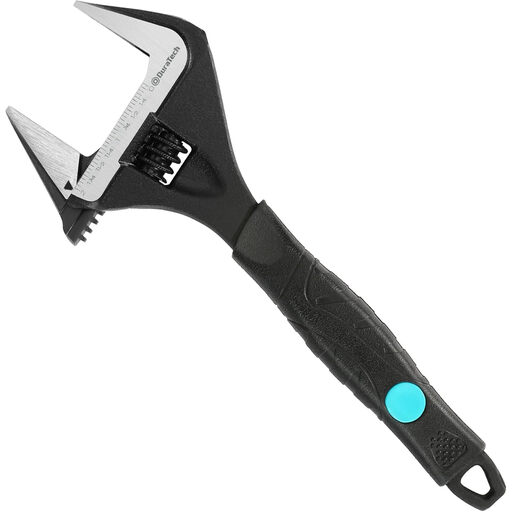
Why this choice suits this profile : Its adjustable jaw is suitable for plumbers, electricians, maintenance technicians and private users who need to work with nuts of different sizes.
The advertised maximum opening of 50 mm and metric and SAE graduations make it possible to check compatibility before arriving on site.
250 mm length, chrome vanadium steel, black finish and textured non-slip handle.
A multi-purpose painter’s tool fits easily alongside a wrench set in a toolbox dedicated to renovation work. The ROLLINGDOG model combines a 420 stainless steel blade, beechwood handle, hammer end, scraper, putty knife, nail puller and bottle opener.
It can be used on plasterboard, walls, render and filler. Lock the blade before each use, then clean and dry the tool once the job is finished. It must of course never be used on a live electrical installation or to prepare food.
If you are looking for a more comprehensive assortment, the FX Tools Batch wrench set 51 pcs includes 51 pieces with storage. It is particularly aimed at automotive repairs, mechanical assembly, household maintenance and DIY work. Take the time to compare its detailed contents with your needs before ordering.
We have put together a complete, real-time updated list of products that fully meet these strict selection criteria and European safety regulations.
For routine maintenance, opt for metric combination spanners, sockets suited to the square drive and storage that makes it easy to find the right size quickly. A ratchet set can also simplify work in tight spaces. Always check the sizes required and the tightening torques specified by the manufacturer.
Not in every situation. Thanks to its adjustable opening, an adjustable spanner is practical for plumbing or when dealing with nuts of varying sizes. However, a fixed spanner limits play around the fastener and will often be better suited to repetitive tightening. Above all, avoid applying force with a poorly adjusted jaw.
Wipe your tools after every use, remove traces of grease or plaster and store them in a dry place. A wrench should never be used as a hammer, and you must never exceed the capacity specified by the manufacturer. Replace any tool showing a crack or deformation, or any ratchet that operates irregularly. Store power tools with their batteries in accordance with the manufacturer’s recommendations.