
Livraison le jour même ou le lendemain

Qualité garantie

Débloquez vos offres de bienvenue: Livraison GRATUITE | Jusqu'à -80 % | 30 jours d'essai gratuits à JoyPlus
Téléchargez l'application
Equipping yourself for home workouts can quickly become overwhelming. Between the different types of equipment, the vast array of weights, and the marketing promises, it's easy to get lost. Yet the goal is simple: find the right fitness equipment for your home that is effective, convenient, and suited to both your space and your strength training goals.
This guide is here to help you see things more clearly. Our mission? To give you concrete advice and objective recommendations to make the right choice, without unnecessary jargon. Let's review the essential criteria for choosing your workout weights and discover a selection of products perfectly suited for your sessions at home.
Before you pull out your credit card, let's go over a few key points to ensure your investment is a lasting one that's tailored to your needs.
There are several main categories of weights. Here are the most common for home training:
The choice of weight is crucial. A load that is too heavy increases the risk of injury, while a weight that is too light will not be stimulating enough for your muscles. For a beginner, it is recommended to start with light loads (between 1 and 5?kg per dumbbell) to master the proper form for each movement. A dumbbell set offering different loads is an excellent option to support your progress.
Most weights are made of cast iron, but it's their coating that makes all the difference in terms of comfort, grip, and durability:
Here are a few products we've selected for their practicality and suitability for home workouts.

Key features: Their main asset? Modularity. Each 2.3?kg (5?lb) strap contains five small 0.45?kg (1?lb) sandbags that can be removed. This allows you to adjust the total load from 0.9 to 4.5?kg (2 to 10?lb), enabling highly precise and tailored progression.
Benefits:
Who is it for? For those who want to add light, progressive resistance to their cardio (walking, running) or rehabilitation exercises. It's also an excellent tool for beginners or for muscle finishing work.
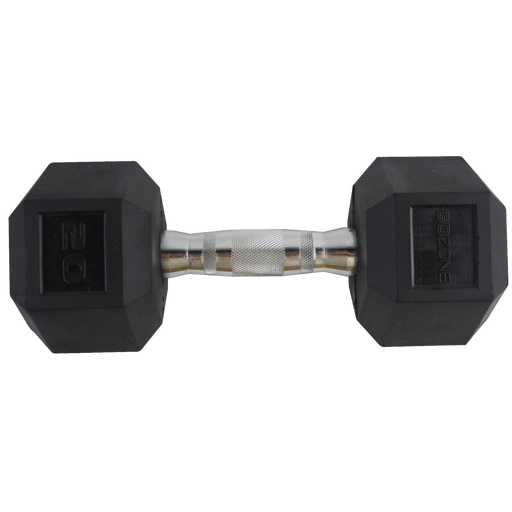
Key features: This dumbbell is a symbol of durability and reliability. Simple and effective, it's a gym staple that is perfectly suited for heavy use at home.
Benefits:
Who is it for? For intermediate-level athletes who already know which load to use for targeted exercises (goblet squats, rows...). It's also an excellent choice to expand your dumbbell collection over time.

Key features: This dumbbell kit is the perfect all-in-one solution to get started. It combines three pairs of weights and a compact storage rack. Everything you need to begin, progress, and stay organised.
Benefits:
Who is it for? For complete beginners in strength training, fitness, Pilates, or yoga enthusiasts, and generally anyone looking for a compact and ready-to-use dumbbell set.
Our selection is an excellent starting point, but every athlete has unique needs. If you're looking for different weights, bars, or other equipment, the possibilities are endless.
To explore further, feel free to browse our complete collection.
? Explore Our Full Selection of Dumbbells and Weights
For a beginner, it's wisest to start light. The priority is to master the technique and proper form of movements to avoid injury. A dumbbell kit like the Ochama set (1, 2, and 3?kg) is an excellent option. It allows you to adapt the load to each exercise (for example, legs can handle more weight than arms) and to progress at your own pace.
The main difference is stability. Round dumbbells can roll, which is not only annoying but also potentially dangerous between sets. In contrast, hex dumbbells stay put once placed on the floor. They are therefore safer, easier to store, and even allow you to perform floor exercises like dumbbell push-ups with complete stability.
Yes, especially at the beginning! To make progress, you don't just have to lift heavier. You can also make an exercise more challenging by:
However, to continue stimulating your muscles in the long term, acquiring heavier weights will eventually become necessary.