What should you look at?
If you mainly store fresh food and have limited space, look at compact models. If you also store frozen food, compare the split of a fridge-freezer with that of two separate appliances. A refurbished appliance is also an option if its condition, warranty and energy use are documented.
| What matters to you |
What to check |
Who is this for? |
| Energy use |
The measured or documented kWh/year for your old appliance and the figure given for the model you’re considering, comparing appliances with similar uses and capacities. |
I want to know whether replacing an appliance that still works will really change my energy use. Around 40% of consumers are said to make this comparison their main concern. |
| Capacity and installation |
The usable capacity of each compartment, the dimensions, the delivery route and the clearances specified in the instructions. |
My kitchen or shopping habits call for a particular capacity, and the appliance needs to fit in its intended space. This would be the top priority for around 30% of consumers. |
| Fresh and frozen food |
Whether there’s a freezer and how much space it offers, as well as the type of cooling specified for each compartment. |
I regularly freeze food, or I use almost all the available space for fresh produce. Around 20% of consumers would put this balance at the top of their list. |
| What to do with your old appliance |
Take-back or donation options; for a refurbished appliance, its condition, warranty and documented energy use. |
Before buying, I want to find a suitable solution for my old fridge, or be able to assess a refurbished appliance. This would be the main priority for around 10% of consumers. |
Fridges available on Joybuy
This selection includes fridge-freezers in a range of capacities, as well as a built-in fridge for fresh food. Before considering one as a replacement, compare its specifications with your current appliance and the space available.
 Image unavailable
Candy CFQQ5T817EPS, 467 L four-door fridge-freezer
Worth considering if you need space for fresh and frozen food in one appliance. The model name lists a capacity of 467 L, Total No Frost and an E rating. Check the capacity of each compartment, the kWh/year figure and the dimensions before comparing it with your current fridge.
View on Joybuy
 Image unavailable
Samsung RF50C530EB1, 495 L multi-door fridge
This capacity is worth comparing with your needs if you regularly store a lot of food. The model name lists a capacity of 495 L and an E rating. Check how much space is allocated to the freezer, the annual energy use and the installation space required.
View on Joybuy
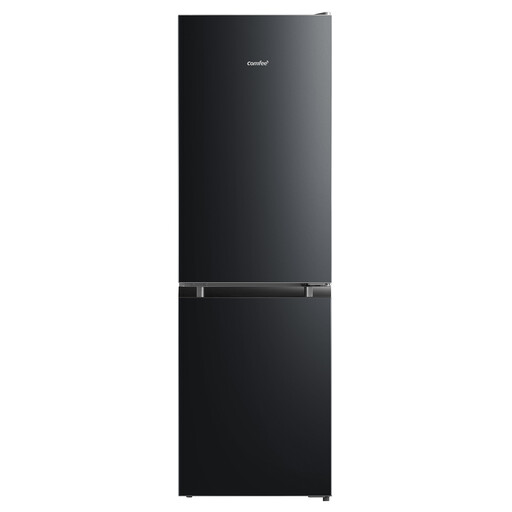 Image unavailable
Comfee' by Midea RCB230BL2EU(E), 174 L fridge-freezer
This model could suit you if a capacity of 174 L meets your needs for fresh and frozen food. The model name lists Low Frost and a reversible door; Low Frost doesn’t mean frost-free. Check the annual energy use for the exact model before comparing its energy performance.
View on Joybuy
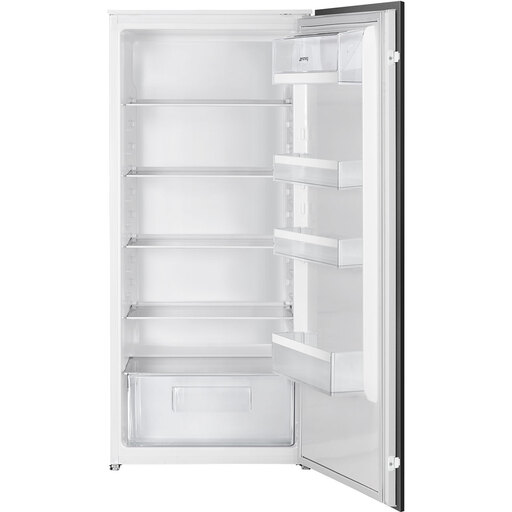 Image unavailable
SMEG S4L120E, built-in single-door fridge
Worth considering if you’re replacing a built-in fridge for fresh food. The model name lists an E rating, but the capacity given for this model differs between its title and descriptions. Confirm the usable capacity of the version being sold. Also check the alcove, ventilation requirements and annual energy use before choosing.
View on Joybuy
 Image unavailable
Sonlu CC-520WE, 444 L fridge
Worth considering if you’re looking for a large capacity, but don’t assume it’s right for your household. The model name lists a capacity of 444 L, frost-free operation, an E rating and a noise level of 40 dB. Check the split between compartments, the dimensions and the annual energy use to decide whether it’s a suitable replacement.
View on Joybuy
Frequently asked questions
How do I compare my old fridge with a new model?
Measure its energy use over a representative period using a suitable meter, or find its documented annual energy use. Compare this with the kWh/year figure for a model that meets similar needs for capacity and freezer space. ADEME points out that refrigeration appliances run continuously, so an average for the category can’t replace the figure for your own appliance.
Can I compare an old A+++ rating directly with today’s ratings?
No. The French ministry responsible for the environment explains that moving to the A to G scale can change the letter shown without changing the appliance’s performance. When deciding whether to replace it, look instead at the kWh/year figures and capacities of the specific models.
What should I check before ordering a built-in fridge?
Measure the alcove and the delivery route, then check the model’s instructions for ventilation requirements, climate class and door opening direction. Electrolux recommends allowing air to circulate around the appliance; the exact clearances depend on the model.
Does the retailer have to take back my old fridge in France?
When you buy an equivalent appliance, the retailer must offer free take-back of the old one on a “one-for-one” basis, up to the type and quantity sold or replaced, according to Service-Public.fr. Agree the take-back arrangements with the seller before delivery.
Can I donate a fridge that still works?
Yes, if a reuse organisation is willing to accept it in its current condition. Ecosystem distinguishes this option from collection for recycling refrigeration appliances that can’t be salvaged. Check which option is right for your appliance before getting rid of it.


