Teams looking for an easy way to serve
If spread is served with biscuits in a shared space, a squeeze bottle offers a way to serve it without a knife. Also compare its capacity with the amount you’re likely to use.


For a biscuit tin at work, choose a squeeze bottle if serving the spread directly, without a knife, is your priority. Check the cap and choose a size that suits how much you expect to use. A jar is a good option if you’d prefer a larger pack, provided you have a utensil for serving. In either case, compare the ingredients, allergens and nutritional values per 100 g. Nutri-Score can be a useful additional guide if it’s shown, but it isn’t a requirement.
If spread is served with biscuits in a shared space, a squeeze bottle offers a way to serve it without a knife. Also compare its capacity with the amount you’re likely to use.
The packaging format doesn’t replace reading the label: compare the ingredients, sugars and fat on the same basis, per 100 g.
When several people share a product, keep its packaging accessible and check the allergens in the specific product you choose. The recipes listed by L’Amandaie and Auchan include hazelnuts and milk; Auchan’s Nutella listing also mentions soya.
First decide whether you need to serve the spread without a utensil or want a size suited to repeated servings. Then compare the labels of the products you’re considering.
| Criteria | What to check | Who is it for? |
|---|---|---|
| Serving directly | Ready-to-serve bottle format; how the cap closes and dispenses the spread. | If the spread needs to be served alongside biscuits without a shared knife, ease of serving comes first. Around 36% of consumers would make this their top priority. |
| Ingredients | Ingredients list and nutritional values per 100 g; Nutri-Score, if shown on the product. | When comparing two recipes, I want to check the sugars and fat on the same basis. Around 29% of consumers would prioritise comparing the ingredients. |
| Allergens | Allergens highlighted on the label and any ‘may contain’ warnings. | In a shared space, everyone should be able to check the ingredients before helping themselves. Around 21% of consumers would put checking allergens ahead of other criteria. |
| Restocking | Net weight and how much the workplace expects to use. | If the container could run out quickly, I’d rather plan ahead and replace it. Around 14% of consumers would make capacity and restocking their main concern. |
According to the DGCCRF, a nutrition declaration is required for prepacked foods in cases covered by regulations, whereas displaying Nutri-Score is voluntary.
Use the logo as an additional guide when it appears, and compare the nutritional information per 100 g and the ingredients too.
An easy-to-serve bottle may contain ingredients that need to be flagged to people sharing the workplace. The recipes listed by L’Amandaie and Auchan include allergens that vary from one product to another.
Check the label on the product you buy and leave it accessible near the serving area.
L’Amandaie lists a 270 g squeeze bottle, while Carrefour’s range includes Nutella jars in 630 g and 1 kg sizes. Depending on how much your workplace uses, the bottle may need replacing more often.
Estimate how much you’ll use before choosing a size, and check that the cap works for the way you want to serve it.
The brand offers ‘La Classique – Squeezer’, a hazelnut and cocoa spread in a 270 g bottle.
A jar to compare with a bottle if a larger container suits how much your workplace uses.
Carrefour’s range includes several spreads in jars, including Nutella in 630 g and 1 kg sizes.
These jar options let you serve spread with a utensil alongside the workplace biscuit tin. Choose a size to suit how much you expect to use; if serving directly without a knife is essential, consider a squeeze bottle instead.
 Image unavailable
This large size could be a good option if your workplace uses spread regularly. Make sure you have a utensil for serving, and check the ingredients and allergens for this product before sharing it.
 Image unavailable
Consider the 1 kg jar if its size suits how much your workplace uses. Sharing a jar means using a separate utensil; check the label for allergens and nutritional values.
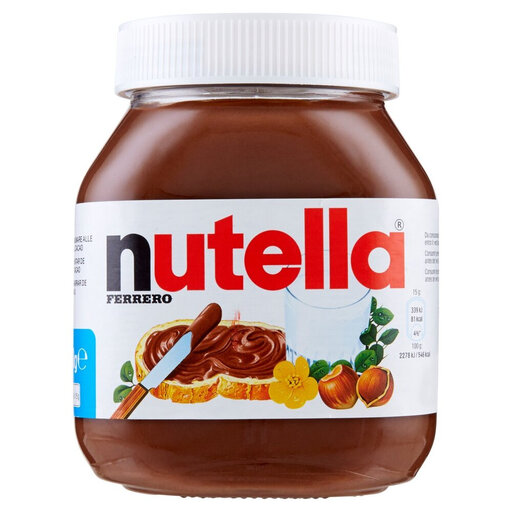 Image unavailable
This size offers a smaller jar for the workplace biscuit tin. Arrange for it to be served with a utensil, and read the label on this product before making it available.
 Image unavailable
Consider this 250 g jar if a smaller size suits how much you expect to use. You’ll need a utensil for serving, and should check the ingredients and allergens on the product you buy.
No. According to the DGCCRF, displaying Nutri-Score is voluntary and separate from the nutrition declaration required for prepacked foods in cases covered by regulations. If it isn’t shown, compare the nutritional values per 100 g and the ingredients list.
Read the label for the specific product and keep it accessible to everyone using it. The DGCCRF notes that allergenic ingredients must be highlighted. The L’Amandaie and Auchan product information mentioned here lists hazelnuts and milk, while Auchan’s Nutella jar listing also includes soya.
No. The format alone doesn’t tell you whether less will be wasted. For serving at work, check how easily the spread comes out, how securely the cap closes and how easy it is to use all the contents.
Start with how much your workplace expects to use and how often you’re happy to restock. L’Amandaie offers a 270 g bottle, while Carrefour’s range includes Nutella jars in 630 g and 1 kg sizes. These formats also need different serving arrangements.