What should you check before filling the box?
First, distinguish between plain nuts, dried fruit and mixes. When choosing a work snack, compare the portion you plan to serve, the nutritional information and the exact ingredients in the pack.
| What to consider |
What to check |
Who this matters to |
| Amount per break |
Compare the energy per 100 g and decide how much to serve, rather than leaving a large bag open for everyone to help themselves. |
When the box stays on my desk all day, I want to take a set portion without losing track of how much I’ve eaten. Around 42% of consumers would prioritise portion control above all. |
| Sugars in the recipe |
Read the ingredients, particularly to spot sweetened dried fruit, then compare the sugars per 100 g. |
I’d like a sweet-tasting snack, but I want to distinguish simple dried fruit from a mix containing added sweetening ingredients. Around 33% of consumers would prioritise limiting sugars. |
| What goes into a shared box |
Check the ingredients list, the ‘salt’ entry, declared allergens and any possible traces for the product you’re buying. |
If several colleagues use the box, I need a recipe that suits their needs. A ‘no added salt’ claim doesn’t tell me about allergens. Around 25% of consumers would put suitability for this use first. |
Dried fruit can play a different role from plain nuts in this box. Manger Bouger states that dates, raisins and dried apricots are naturally high in sugars and can be eaten occasionally. In a mix, ‘no added salt’ does not tell you about the sugars: E.Leclerc’s product information for Tokapi No Added Salt lists dried, sweetened cranberries and 35.7 g of sugars per 100 g.
Retailers to compare
The products below are examples of recipes to check, not a guarantee that any one product will suit every workplace box. Check the variant and its label when you buy.
Carrefour
The retailer offers mixes combining dried fruit, nuts and peanuts.
- Carrefour’s product information for the Vico L’Impec mix lists raisins, hazelnuts, peanuts, almonds and cashews among its ingredients.
- This product contains 546 kcal per 100 g. Check its ingredients too before putting it in a shared box.
E.Leclerc
Its range includes mixes whose salt claims need to be read alongside the rest of the label.
- The product information for the Tokapi mix lets you check its ingredients and values per 100 g.
- The no added salt variant contains dried, sweetened cranberries and has 510 kcal and 35.7 g of sugars per 100 g.
Auchan
The retailer offers Frutsy Mix & Go, a mix of nuts and raisins.
- Auchan’s product information lists 381 kcal per 100 g and gives storage instructions for this particular product.
- For a shared box, check the ingredients and allergen information on the product you actually buy.
Lidl
Lidl France’s Alesto range includes plain nuts, dried fruit and spicy savoury snacks.
- The range gives you the option to look for a plain product if that’s the type of recipe you want.
- The Alesto name alone doesn’t tell you the ingredients or nutritional information for each variant.
Aldi
Aldi France’s product listings include a nut mix and Trader Joe’s raisins.
- These categories let you compare a nut recipe and a dried fruit recipe separately.
- Check the label of the product you choose: you can’t infer the ingredients or nutritional values of a mix from those of raisins.
Monoprix
The retailer offers L’Atelier des Fruits Secs blanched almonds.
- A recipe based on almonds is more straightforward to check than a mix of several ingredients.
- Monoprix’s product information lists almonds and several possible traces. Even with a simple recipe, check these details.
Chestnuts to consider on Joybuy
These three ready-to-eat chestnut products can be compared as options for a break at work. They don’t represent the other choices mentioned above, such as plain almonds, raisins or mixes. The values listed on Joybuy make it easier to compare the products; none of them meets the EU threshold for a ‘low energy’ claim.
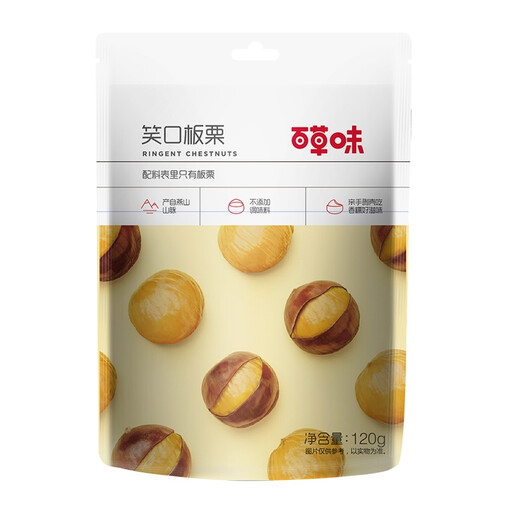 Image unavailable
Be&Cheery Smiling Chestnuts 120 g
These pre-cooked chestnuts are ready to eat, making them a handy snack with no preparation needed. Joybuy’s product information lists chestnuts as the ingredient, with 200 kcal and 10.2 g of sugars per 100 g. The 120 g pack isn’t described as containing individual portions, so decide how much to serve if that matters for your box.
View on Joybuy
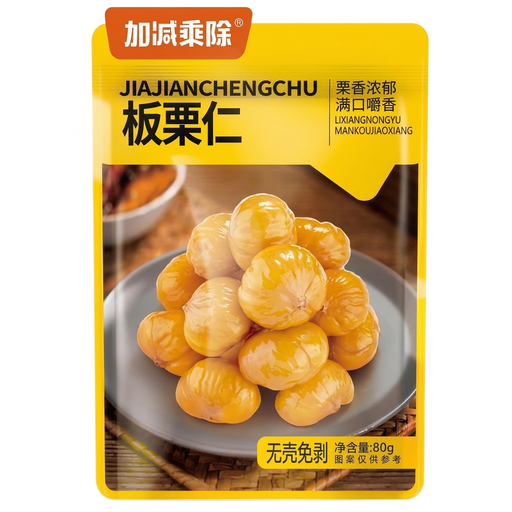 Image unavailable
Jia Jian Cheng Chu Peeled Chestnuts 80 g
This pack of ready-to-eat chestnuts is a convenient option for work, with no preparation required. Joybuy’s product information lists 166 kcal and 7.0 g of sugars per 100 g, and also includes sugar in the ingredients. The 80 g pack isn’t described as containing individual portions, so check the recipe if you want to avoid added sweetening ingredients.
View on Joybuy
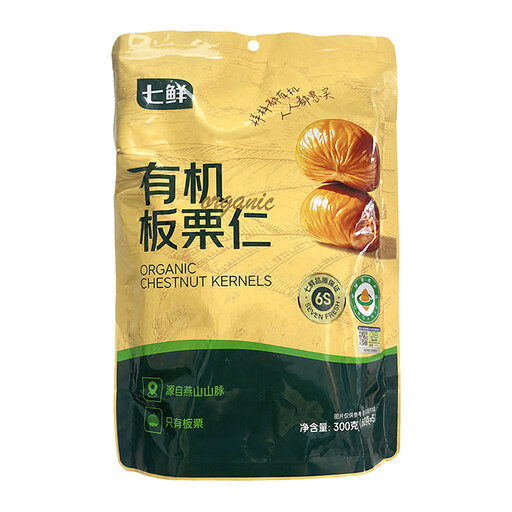 Image unavailable
7FRESH Peeled Chestnuts 300 g
These ready-to-eat chestnuts are worth considering if you’re putting the box together yourself. Joybuy’s product information lists chestnuts as the only ingredient, with 185 kcal, 8.8 g of sugars and 0.0 g of salt per 100 g. It advises eating the product immediately after opening, so bear this in mind before choosing the 300 g pack for several breaks.
View on Joybuy
Frequently asked questions
Is a small portion of dried fruit and nuts ‘low in calories’?
No. The size of the portion isn’t enough to justify this claim for the product. Under EU Regulation (EC) No 1924/2006, solid food must contain no more than 40 kcal per 100 g to carry a low energy claim or one with the same meaning. The product information for each of the three chestnut products shown here lists a higher value.
Which parts of the label should you compare for a box at work?
First compare the energy and sugars per 100 g, then check the ingredients, the ‘salt’ entry and the allergen information. The DGCCRF explains that nutritional information per 100 g makes it easier to compare prepacked products. The portion you plan to serve is a separate decision.
How should you store a mix at work once it’s opened?
Follow the instructions on the product you choose rather than assuming the same storage time applies to every mix. Auchan’s product information for Frutsy Mix & Go says to store it in a cool, dry place and eat it soon after opening. Joybuy’s information for 7FRESH chestnuts, on the other hand, advises eating them immediately after opening.
Are raisins and dates suitable as the main contents of the box?
If you choose this dried fruit for its sweet taste, plan how it will fit into the box, taking the portion you serve and the label into account. Manger Bouger explains that raisins, dates and dried apricots are naturally high in sugars and can be eaten occasionally. A mix containing them may also include added sweetening ingredients.


