
Livraison le jour même ou le lendemain

Qualité garantie

Débloquez vos offres de bienvenue: Livraison GRATUITE | Jusqu'à -80 % | 30 jours d'essai gratuits à JoyPlus
Téléchargez l'application
With the rise of remote work and home study spaces, choosing the right work desk is no longer a luxury—it's a necessity. The wrong model guarantees constant discomfort, declining productivity, and ever-present clutter. This guide is here to help you navigate the options, with clear selection criteria and a curated list of desks designed for every need.
Before you dive in, take a moment to analyse your needs. Here are three crucial points for making an informed choice.
Spending hours in front of a screen puts a strain on your body. So, paying attention to your posture isn't optional. The height-adjustable desk stands out as the ultimate solution. It allows you to alternate between sitting and standing, an excellent way to combat a sedentary lifestyle, fatigue, and muscle pain. For a fixed model, aim for a desktop height between 72 and 76?cm. The test is simple: when seated, your forearms should rest horizontally on the desk, and your feet should be flat on the floor.
A tidy desk means a clear mind. Organisation is the key to productivity. A desk with built-in storage (drawers, shelves, cabinets) is essential for keeping your work surface clear and available. In a small room or to maximise a large work area, the corner desk is a remarkably efficient solution. It optimises square footage without taking over your living space. Take stock of your equipment: one or two monitors? A laptop? Files? The size of the desktop will depend directly on this.
Far from being just a functional piece of furniture, the desk is now a centrepiece of our home decor. Its design and materials are therefore key selection criteria in their own right. An industrial-style desk, which combines raw wood and black metal, instantly gives the room a modern, confident look. Check the quality of the materials (high-density particleboard, sturdy steel…): they guarantee the stability and longevity of your desk, especially with heavy use.
To help you in your search, we have selected three models that stand out for their functionality, design, and construction.
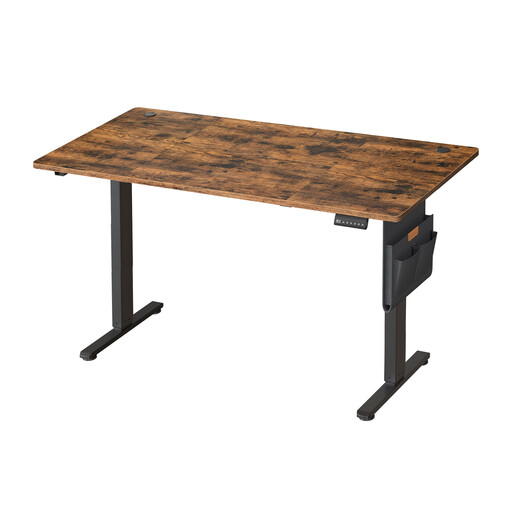
Why We Love It
This sit-stand desk is for anyone who wants to put an end to a sedentary workday. Its motor provides smooth and silent height adjustment (from 72 to 120?cm). With its memory presets and built-in USB-C port, it's the perfect companion for the modern, connected remote work office.
Key Features
Who Is It For? For dedicated remote workers who want to invest in their comfort and health with a well-designed, ergonomic solution.
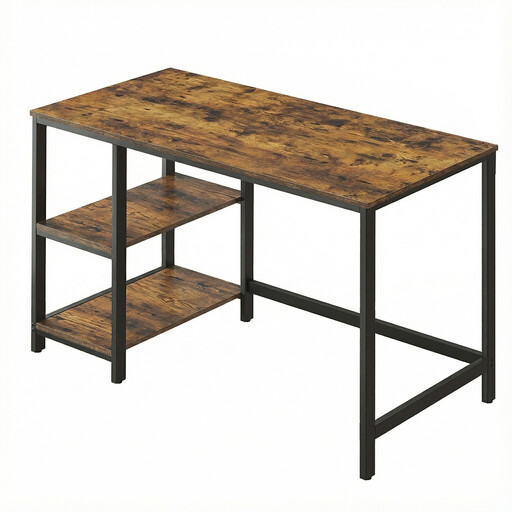
Why We Love It
This computer desk gets straight to the point: a bold industrial design, a sturdy build, and welcome modularity. It combines aesthetics and practicality without any frills, featuring two shelves that can be arranged as you wish.
Key Features
Who Is It For? For students and remote workers looking for a stylish, efficient, and durable desk without paying for unnecessary extras.
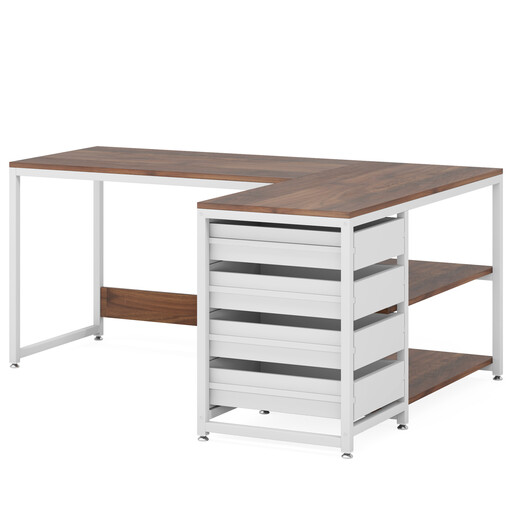
Why We Love It
More than just a desk, this is a complete workstation. This L-shaped model is the ultimate solution for anyone who needs space and organisation. It's reversible to fit your room's layout, and its ample storage ensures your space stays immaculate.
Key Features
Who Is It For? For those lucky enough to have a dedicated office and who are looking for an all-in-one solution that combines a massive work surface with maximum storage.
Is your space truly limited, or are you looking for a secondary solution? A folding desk is an excellent alternative. Discover our selection of white folding desks for compact and clever models.
For a fixed desk, the standard height is between 72 and 76?cm. The golden rule: when seated, your elbows should form a 90-degree angle when your forearms are resting on the desktop. This is where a height-adjustable desk truly shines, as it adapts perfectly to your body and allows you to alternate postures.
A depth of 60?cm is the absolute minimum for a computer desk. This ensures a comfortable viewing distance from the screen (about an arm's length) while still leaving room for your keyboard and mouse. If you have a large monitor (over 27 inches) or a multi-monitor setup, aim for 70 or 80?cm instead.
The key to good organisation is hierarchy. Use drawers for items you use infrequently or for confidential documents. Shelves should hold files and everyday items that you need to grab at a moment's notice. The ultimate goal: a desktop that is as clutter-free as possible to help you stay focused.