
Livraison le jour même ou le lendemain

Qualité garantie

Débloquez vos offres de bienvenue: Livraison GRATUITE | Jusqu'à -80 % | 30 jours d'essai gratuits à JoyPlus
Téléchargez l'application
A wooden cutting board is used to prepare food, protect your worktop and even serve an assortment of cheeses or cured meats. Yet some purchases quickly disappoint: the surface is too small, maintenance is demanding or the material is poorly suited to everyday use.
Before choosing an oak, bamboo or solid-wood cutting board, it is worth separating marketing claims from the features that genuinely matter.
A very thick board or one with striking wood grain is not necessarily suitable for intensive chopping. Its stability also depends on its dimensions, construction and the consistency of its surface. If it is too light, it may slide; if it is very large, it can become difficult to clean or store.
Wood and bamboo do not tolerate prolonged exposure to moisture. A board marketed as easy to use cannot necessarily go in the dishwasher. Hot water, heat and repeated dishwasher cycles can encourage warping, cracking or delamination.
A serving board or charcuterie board is generally designed for serving bread, cheese, fruit or cold foods. It is not always intended for cutting meat with a serrated knife or for holding a hot dish. Check the recommended uses before using the product outside its original purpose.
A smooth finish, a splinter-free surface and an appropriate thickness are far more meaningful than marketing language such as “premium” or “professional”.
For a family kitchen, a surface of around 40 × 28 cm offers a good balance between chopping space and convenient storage. Smaller formats are practical for fruit, cheese or bread, but can quickly feel restrictive when handling larger vegetables.
A large serving board, such as a 58 cm model, is better suited to sociable meals and buffets. Its footprint should nevertheless be compatible with your sink, cupboards and worktop.
A juice groove can catch some of the liquid released when cutting fruit or meat. It is, of course, no substitute for thorough cleaning. An integrated handle makes the board easier to carry, particularly when it also serves as a tray.
To minimise the risk of cross-contamination, wash the board thoroughly after preparing raw meat, poultry or fish. If you regularly use boards for different purposes, a set of cutting boards makes it easier to separate food preparation from serving.
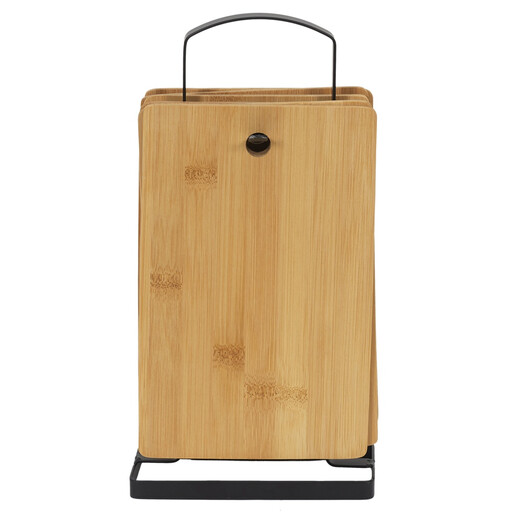
Why this choice suits this profile : The four 14 × 22 cm boards are ideal for smaller preparations, while the metal stand keeps them within easy reach on the worktop.
The set avoids relying on a single board that is expected to do everything. The individual boards can also be used for bread, cheese or appetisers.
Four bamboo boards, stand included, vertical storage and clearly specified hand washing.
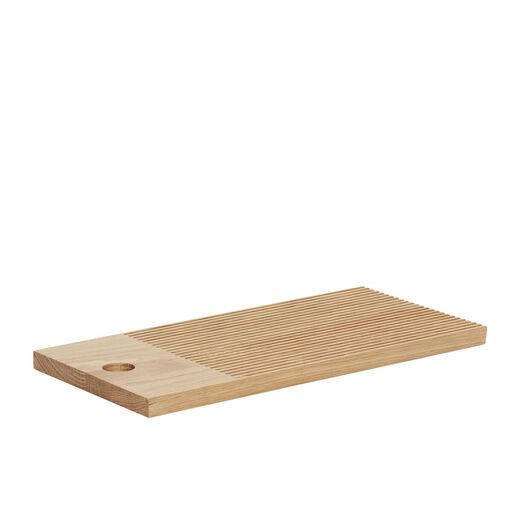
Why this choice suits this profile : This 20 × 40 cm FSC natural oak board combines food preparation and presentation in a clean-lined rectangular format.
The FSC certification and stated dimensions provide verifiable points of reference rather than relying solely on decorative appeal.
Solid oak, 2 cm thickness, stated weight of 1.2 kg and dual use for chopping or serving.

Why this choice suits this profile : The three formats, handles and juice grooves meet the needs of a kitchen that alternates between preparation and serving.
The different sizes mean you do not need to bring out a large board for small tasks. The groove helps contain liquids, but does not replace thorough cleaning.
Set of three carbonised bamboo boards, integrated handles and juice grooves specified on each model.
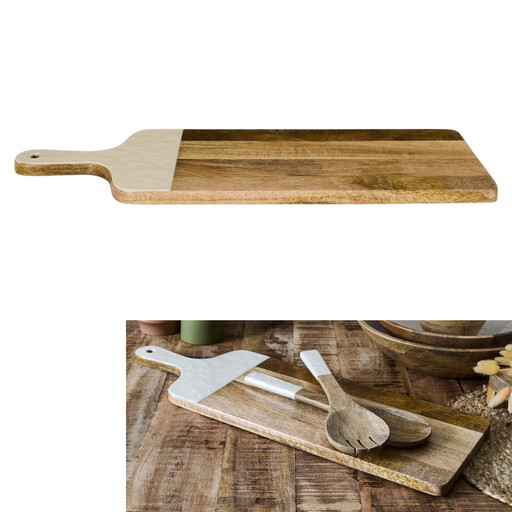
Why this choice suits this profile : At 58 cm long, it offers a generous surface for charcuterie, cheese or an appetiser buffet.
Its primary role is decorative and focused on serving: avoid placing a hot dish on it or using it for demanding cuts with a serrated knife.
Natural mango wood, extra-long surface, smooth finish and grain unique to each piece.
We have compiled a complete, real-time updated list of products that meet these demanding selection criteria and European safety requirements.
To keep a durable kitchen cutting board in good condition, a few simple habits are all it takes:
No precise service life can be guaranteed: it depends on how often the board is used, the type of knife and the care it receives. A board reserved for serving will generally retain its appearance longer than a surface used every day for intensive chopping.
Generally, no. The manufacturer should specify whether it is dishwasher-safe, but hand washing remains the most common recommendation for wood and bamboo. Heat and prolonged moisture can cause warping or cracks.
A format of around 40 × 28 cm is suitable for vegetables, fruit and everyday preparation. For occasional use, a small model may be sufficient. For serving a buffet or assembling a large cheese board, a longer model may be worthwhile, provided you have suitable storage space.
Yes, provided you wash it thoroughly between uses. To minimise the risk of cross-contamination, using several boards or a set that separates preparation from serving remains a simple and practical solution.